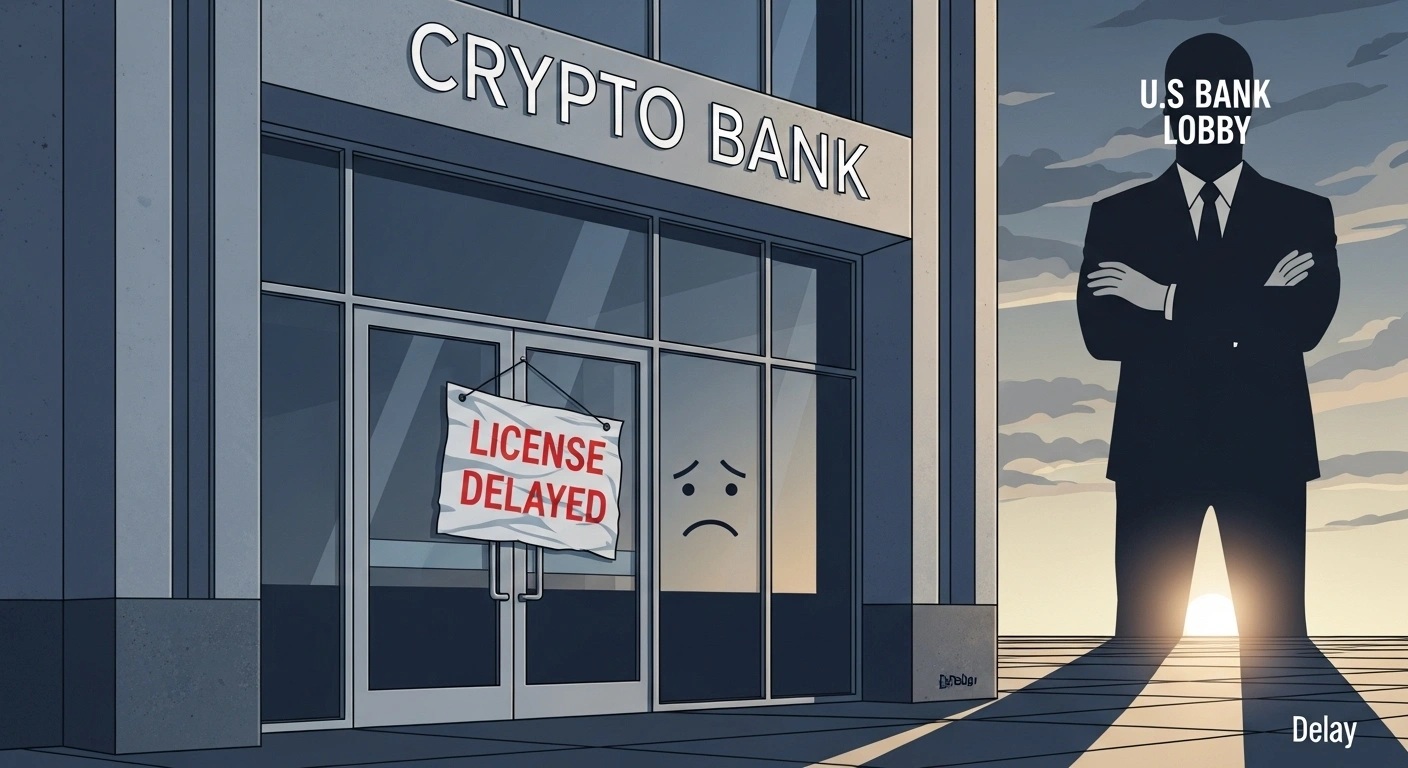
US banking groups have asked the OCC to postpone decisions on crypto firms’ bank license bids, warning of major policy and financial risks if approvals proceed without thorough public review.
US banking groups in the United States are pressing regulators to postpone decisions on crypto companies’ applications for national bank charters.
The American Bankers Association and multiple credit union groups demand that the Office of the Comptroller of the Currency (OCC) halt approvals for firms like Circle Internet Group and Ripple Labs, citing unresolved policy and legal concerns.
The banks argue that these crypto entities’ business models diverge sharply from the fiduciary activities traditionally associated with national trust banks. They claim the current applications lack transparency and fail to offer sufficient detail for meaningful public scrutiny.
Banks Seek Transparency and Caution in Crypto Bank Licenses
Industry groups maintain that allowing crypto firms to become national trust banks under existing or new frameworks represents a significant regulatory departure.
They emphasize that providing custodial services for digital assets does not constitute fiduciary activity, and granting charters absent traditional fiduciary roles undermines longstanding policy.
Such changes could set a precedent, enabling not only crypto firms but potentially other companies to gain similar charters. This, according to the banking lobby, poses a "material risk" to the US financial system by blurring regulatory boundaries.
The groups strongly urge the OCC to conduct a full public notice and comment period before finalizing any policy shifts that would permit these crypto charters. They argue this process is critical to maintaining oversight integrity and protecting the broader banking ecosystem.
Crypto Sector Pushes Back Amid Rising Demand for National Charters
Meanwhile, the crypto industry sees these charters as vital for streamlining operations and achieving federal regulation across all states.
Firms like Circle, Ripple, and Fidelity Digital Assets have applied for these charters to gain faster payment settlement capabilities and broader operational scope.
Experts note recent legislative changes incentivize stablecoin issuers to seek national bank charters rather than relying on multiple state licenses.
This shift reflects a move by crypto firms to integrate more deeply into traditional finance frameworks while expanding their service offerings.
Observers expect more crypto companies to pursue these licenses in the near future despite resistance from established banks.
The push highlights growing competition between traditional financial players and innovative fintech companies aiming to reshape the future of banking.
Stay updated on the latest cryptocurrency news on our homepage.
Explore more in Latest News Category.
Related reading:
Key Topics
Crypto New Live
admin@cryptonewslive.org
Ethereum Fusaka Hard Fork Set for November 2025
Ethereum’s Fusaka fork launches Nov 2025 with higher gas limits, improved scalability, and EIP-7825 to boost network efficiency and security.