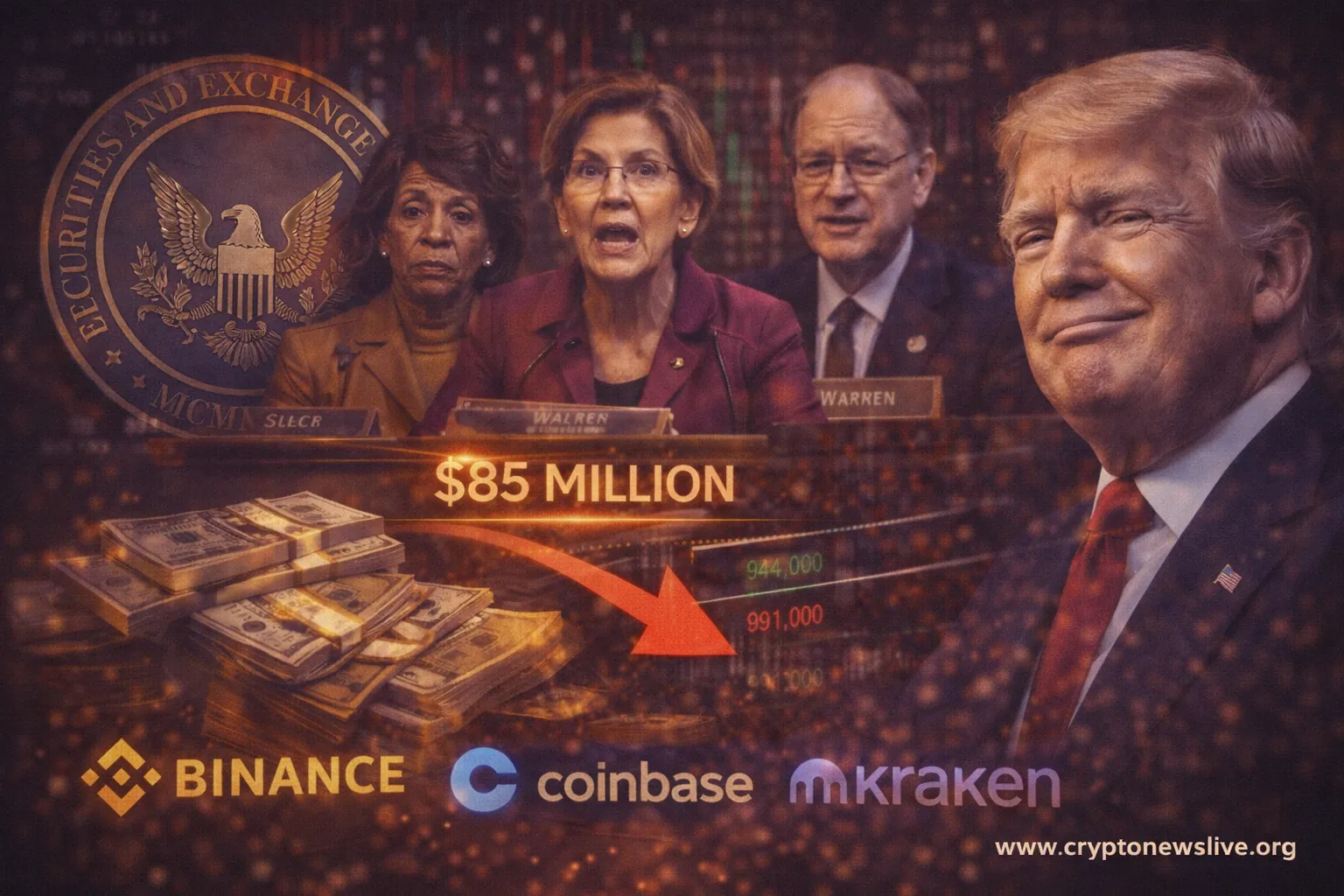
Congressional Democrats accuse the SEC of operating a pay-to-play scheme after dismissing major crypto enforcement cases against Binance, Coinbase, and Kraken following $85 million in industry donations to Trump
Congress has fired a warning shot at the Securities and Exchange Commission over what lawmakers are calling an "unmistakable" pay-to-play scheme in crypto enforcement. The explosive allegations center on the agency's stunning reversal after crypto firms poured $85 million into Trump's campaign and inauguration.
House Democrats Maxine Waters, Sean Casten, and Brad Sherman released a scathing letter targeting SEC Chairman Paul Atkins. Their core claim: the SEC has abandoned at least a dozen strong enforcement cases against major crypto platforms since January 2025, all while those same companies flooded Trump-linked ventures with cash.
The timeline reveals a pattern. Binance, Coinbase, and Kraken each faced serious fraud allegations. Courts rejected their dismissal motions. Then Trump won. The SEC suddenly walked away from all three cases, citing "regulatory reform" rather than merit concerns.
Must Read: Ripple Crushes SEC: Is History About To Repeat?
$75M Buys Regulatory Silence?
The Justin Sun case exemplifies the alleged corruption. The Tron founder faces accusations of orchestrating hundreds of thousands of wash trades to artificially inflate TRX prices, enabling him to dump $31 million worth of tokens on unsuspecting buyers.
Sun's response? Invest $75 million in World Liberty Financial, the Trump family's crypto venture. He became the top holder of Trump's $TRUMP memecoin. He attended exclusive White House dinners.
Then the SEC requested a stay. The case has been frozen for 11 months despite staff recommendations to litigate.
According to Representative Maxine Waters on X, "These activities create the unmistakable appearance of a pay-to-play arrangement: a defendant pours tens of millions into ventures tied to the President's family, and shortly thereafter his case is stayed."
The lawmakers revealed that companies whose cases were dismissed—including Coinbase, Kraken, Ripple, and Robinhood—each donated at least $1 million to Trump's inauguration. Binance benefited from a separate $2 billion Abu Dhabi investment into World Liberty Financial's stablecoin, estimated to generate $80 million annually for the Trump family.
Two months later, the SEC dropped the Binance case entirely.
You Might Also Like: Big Banks vs Crypto: Why The Clarity Act Just Hit A Wall
Binance, Coinbase, Kraken: Strong Cases Vanish
The SEC had compiled damning evidence against these platforms. Judge Amy Berman Jackson found the agency sufficiently alleged Binance engaged in fraud and operated unregistered securities exchanges. Binance founder Changpeng Zhao had already pleaded guilty to criminal Bank Secrecy Act violations.
The SEC dismissed the case anyway in May 2025 "as an exercise of discretion." Trump pardoned CZ five months later.
Coinbase fared no better in court. Judge Katherine Polk Failla ruled in March 2024 that certain tokens on the platform qualified as securities. The SEC defeated Coinbase's dismissal motion. Then in February 2025, citing the "Crypto Task Force," the agency filed to dismiss.
Kraken's story mirrors the others. Judge William Orrick concluded the SEC "plausibly alleged" Kraken facilitated investment contract transactions subject to securities laws. The agency won. Then abandoned the case in March 2025.
Waters' letter states bluntly: "The SEC's failure to hold these companies accountable suggests it may be part of a pay-to-play scheme."
China Connection Deepens Concerns
The Sun case carries national security implications. Lawmakers highlighted his documented ties to the Chinese Communist Party, including a research position at China's Central Party School and publications in CCP propaganda platforms.
Sun allegedly bragged about membership in the Chinese People's Political Consultative Conference. On-chain analysis suggests 17 of the top 20 wallets from Tron's 2017 ICO connected to what investigators called a "Chinese criminal syndicate with CCP ties."
The congressional letter demands the SEC either resume litigation or negotiate a settlement reflecting the case's strength. It also requests preservation of all documents regarding communications with third parties seeking to influence enforcement decisions.
Commissioner Hester Peirce defended the reversals, claiming the moves reflect a shift toward "clearer rulemaking after years of ambiguity." She insisted on CNBC: "It is not time for people to think, 'I have a free pass to go rip people off in the name of crypto.'"
Yet the optics remain toxic. A defendant invests tens of millions in presidential family ventures. The case gets paused. More money flows. The investigation stalls indefinitely.
Waters and her colleagues want answers. The American public deserves to know whether securities enforcement has been subordinated to political interests. The SEC's independence hangs in the balance.
3 Key Takeaways:
- SEC dismissed 12+ crypto cases after firms donated $85M to Trump's campaign and inauguration funds
- Justin Sun invested $75M in Trump ventures while his fraud case remains frozen for 11 months
- Lawmakers demand answers on alleged pay-to-play corruption undermining investor protection
Key Topics
Crypto New Live
admin@cryptonewslive.org
SEC Crypto Scandal: $85M Pay-to-Play Exposed
Congress accuses SEC of pay-to-play after dropping Binance, Coinbase cases while crypto firms donate $85M to Trump. Justin Sun's $75M investment raises alarms.