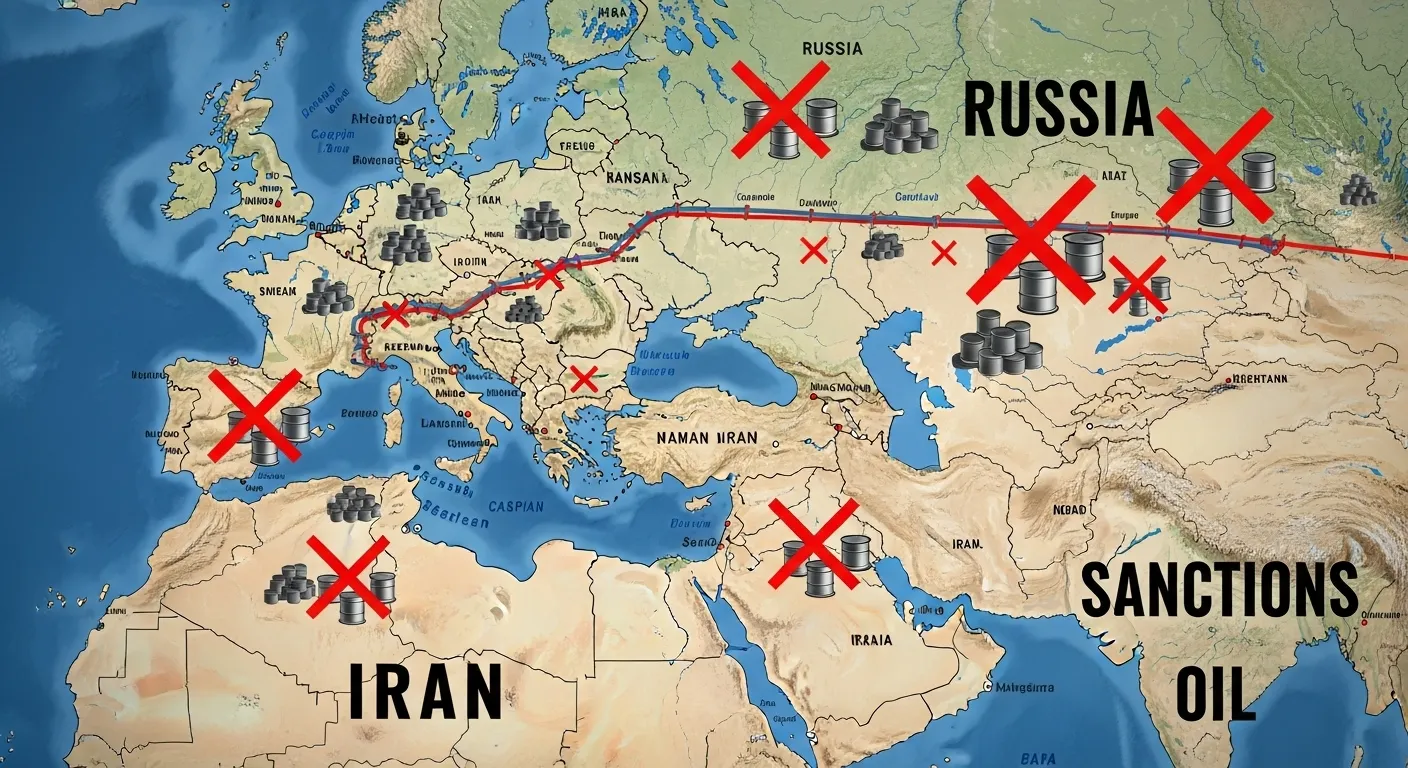
The EU targets Iranian oil trader Hossein Shamkhani and linked firms in a new sanctions round hitting Russia’s hidden oil networks financing its Ukraine war. This broadened crackdown also hits banks, pipelines, and shadow tanker fleets.
The European Union has imposed fresh sanctions on Hossein Shamkhani, a leading Iranian oil trader deeply enmeshed in Russia’s clandestine oil operations, marking a significant escalation in efforts to cut off revenue streams fueling Moscow’s war machine in Ukraine.
Brussels officially blacklisted Shamkhani along with his Dubai-based firms, Admiral Group and Milavous Group Ltd, identifying him as “a central player” in Russia’s elusive shadow fleet—a covert network that moves Russian crude oil while evading Western sanctions.
Shamkhani’s familial ties to Iran’s Supreme Leader Ayatollah Ali Khamenei amplify the sanctions’ geopolitical weight, spotlighting Tehran’s integral role in sustaining Russian oil exports.
Expanding the Sanctions Battlefield: Banks, Tankers, and Pipelines
This move forms part of the EU’s 18th sanctions package, a multipronged crackdown designed to choke off key financial arteries supporting the Kremlin’s invasion.
Beyond targeting Shamkhani, the package enforces a sweeping ban on about 20 Russian banks, disconnecting them from the SWIFT payment system and blocking all financial transactions to limit Moscow’s economic maneuverability.
Permanent sanctions were also confirmed on the Nord Stream gas pipelines, eliminating prospects of their future operation. Furthermore, the EU revised the Russian oil price cap from a fixed $60 per barrel to a flexible level set $15 below market prices, currently hovering between $45 and $50. This price cap will be reviewed biannually to maintain pressure amid shifting market conditions.
The scope of sanctions extends heavily into maritime logistics, with over 400 vessels linked to the shadow fleet now blacklisted and numerous oil traders operating through third countries like Dubai and China included on the sanction lists.
The crackdown explicitly names companies and traders facilitating Russia’s oil exports abroad, sending a message that complicity in evading sanctions carries severe consequences.
Crippling the War Machine: Export Controls and Industry Disruptions
The EU also tightened controls on exports to Russia, adding more dual-use goods to the forbidden list to hamper military and weapons production. These targeted materials aim to further degrade Russia’s capabilities to sustain its conflict in Ukraine.
After weeks of delay due to Slovakia’s resistance over the energy phase-out plan, the sanction package gained full approval following diplomatic negotiations, clearing the final political hurdles and underscoring the EU's determination to maintain unity in restricting Moscow.
By naming Shamkhani, the EU expands its focus beyond Russia’s borders, underscoring Iran’s pivotal role in Russia’s illicit oil trade infrastructure.
The sanctions reveal a sprawling network of finance and logistics, weaving through Gulf trading hubs and involving senior figures connected to Iran’s highest levels of power.
This move signals that more entities aligned with Russia’s shadow operations are likely to be targeted in the near term.
Stay updated on the latest cryptocurrency news on our homepage.
Explore more in Latest News Category.
Related reading:
Key Topics
Crypto New Live
admin@cryptonewslive.org
EU Sanctions Iranian Trader Shamkhani Over Russian Oil
The EU blacklists Hossein Shamkhani and Dubai firms for aiding Russia’s shadow oil fleet, tightening sanctions to curb Moscow’s Ukraine war funding.