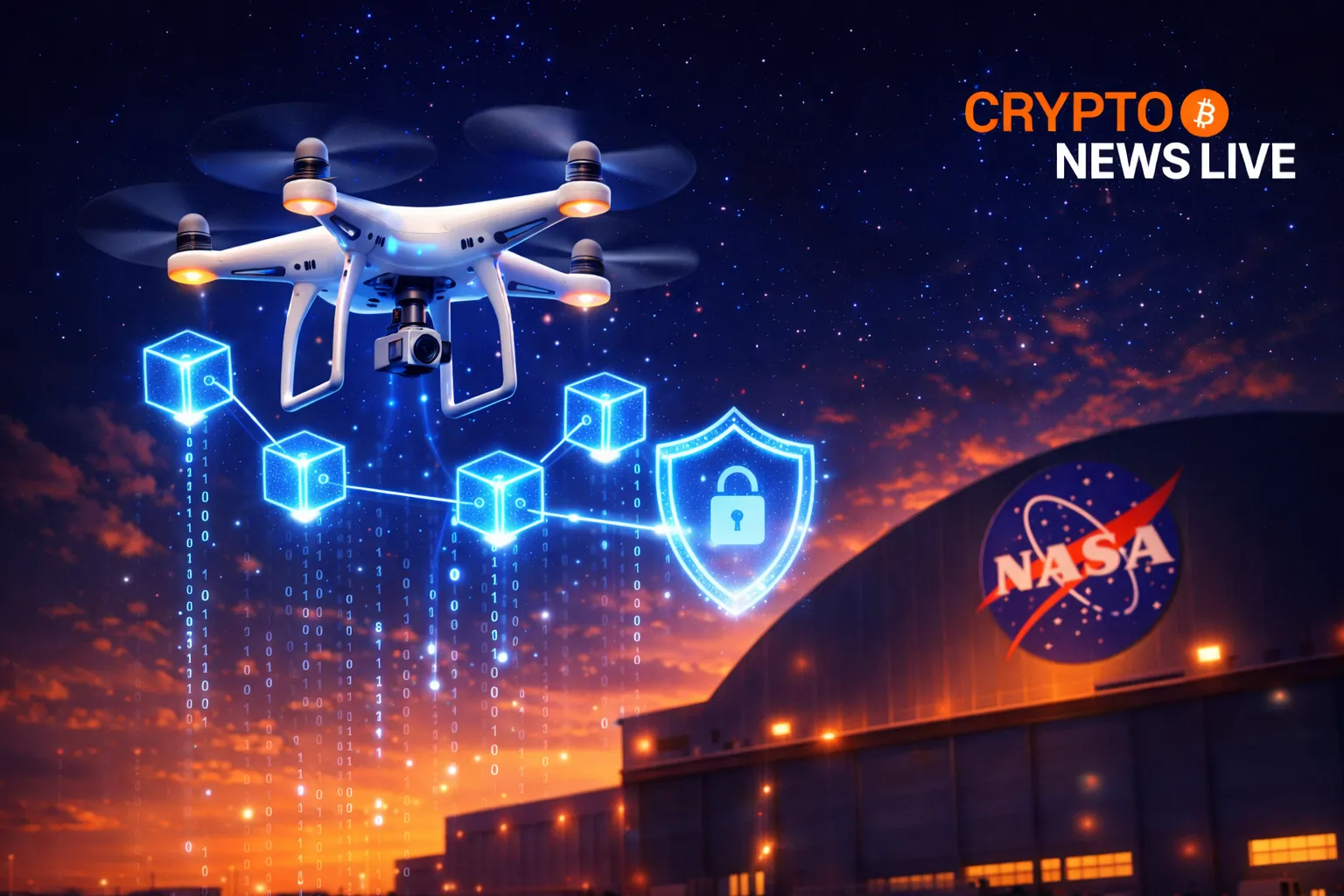
NASA successfully tested blockchain technology during a drone flight at Ames Research Center, demonstrating how decentralized systems can protect aviation data from cyber threats while enabling real-time transmission safety.
NASA researchers successfully tested blockchain technology during a drone flight at Ames Research Center in California's Silicon Valley, marking a breakthrough in aviation cybersecurity. The system protects flight data from interception and manipulation while ensuring real-time transmission safety.
The blockchain-based framework addresses evolving cyberthreats that traditional security systems struggle to counter. Unlike centralized databases, blockchain distributes information across vast networks, recording and verifying every dataset change to maintain accuracy and trustworthiness.
Decentralized Security Takes Flight
NASA's approach differs from previous layered security architectures by implementing blockchain to combat potential threats directly. The open-source framework enables trusted users to share and store critical data including aircraft registration, flight plans, and telemetry in real time.
During the August flight test, an Alta-X drone equipped with custom software, hardware, radio, GPS, and battery systems demonstrated the technology's capabilities. Researchers including Terrence D. Lewis, Kale Dunlap, and Aidan Jones monitored telemetry from actual and simulated flights.
You might also like: ProShares Files Cardano ETF as Midnight Cracks Top Privacy Ranks
The framework restricts data access to approved users only, creating a trusted ecosystem for aviation operations. Cybersecurity tests assessed system resilience during airspace operations, reinforcing security protocols for real-world conditions.
High-Altitude Operations and Urban Mobility
The blockchain infrastructure extends beyond standard flight operations. NASA designed the system to support high-altitude operations at 60,000 feet and higher, plus Urban Air Mobility scenarios requiring secure, scalable solutions.
Must read: Coinbase CEO Brian Armstrong Issues Ultimatum: Banks Must Embrace Crypto Infrastructure
The test simulated an environment with ground control stations, blockchain infrastructure, and security protocols working simultaneously. This demonstrates how autonomous air traffic management systems can benefit from decentralized technology.
NASA's Air Traffic Management and Safety project falls under the Airspace Operations and Safety Program within the Aeronautics Research Mission Directorate. The research aims to transform air traffic systems to accommodate growing demand from new air vehicles safely.
Related: T7X Secures SEC Approval to Operate as Licensed Transfer Agent
U.S. aviation stakeholders gain access to new tools for improving operations as NASA continues analyzing test data. The blockchain framework's success in aviation could accelerate adoption across industries requiring secure, transparent data management.
The research team will apply findings to future work, potentially revolutionizing how aircraft communicate with ground stations and each other. This development positions blockchain as essential infrastructure for next-generation aviation safety.
Key Takeaways
- NASA tested blockchain on Alta-X drone at Ames Research Center protecting flight data from cyber manipulation threats
- Blockchain framework enables trusted real-time sharing of aircraft registration flight plans and telemetry data
- System supports high-altitude operations and Urban Air Mobility creating secure scalable aviation ecosystem
Key Topics
Andreas Alfred
admin@cryptonewslive.org
Senior Crypto Analyst & Blockchain Journalist
I am a seasoned cryptocurrency analyst and blockchain journalist with over 7 years of hands-on experience in Crypto Industry. I cover Bitcoin and altcoin markets, on-chain data analysis, decentralized finance (DeFi), and crypto regulation. I have tracked multiple market cycles and focus on delivering data-driven, unbiased insights for global crypto audiences.