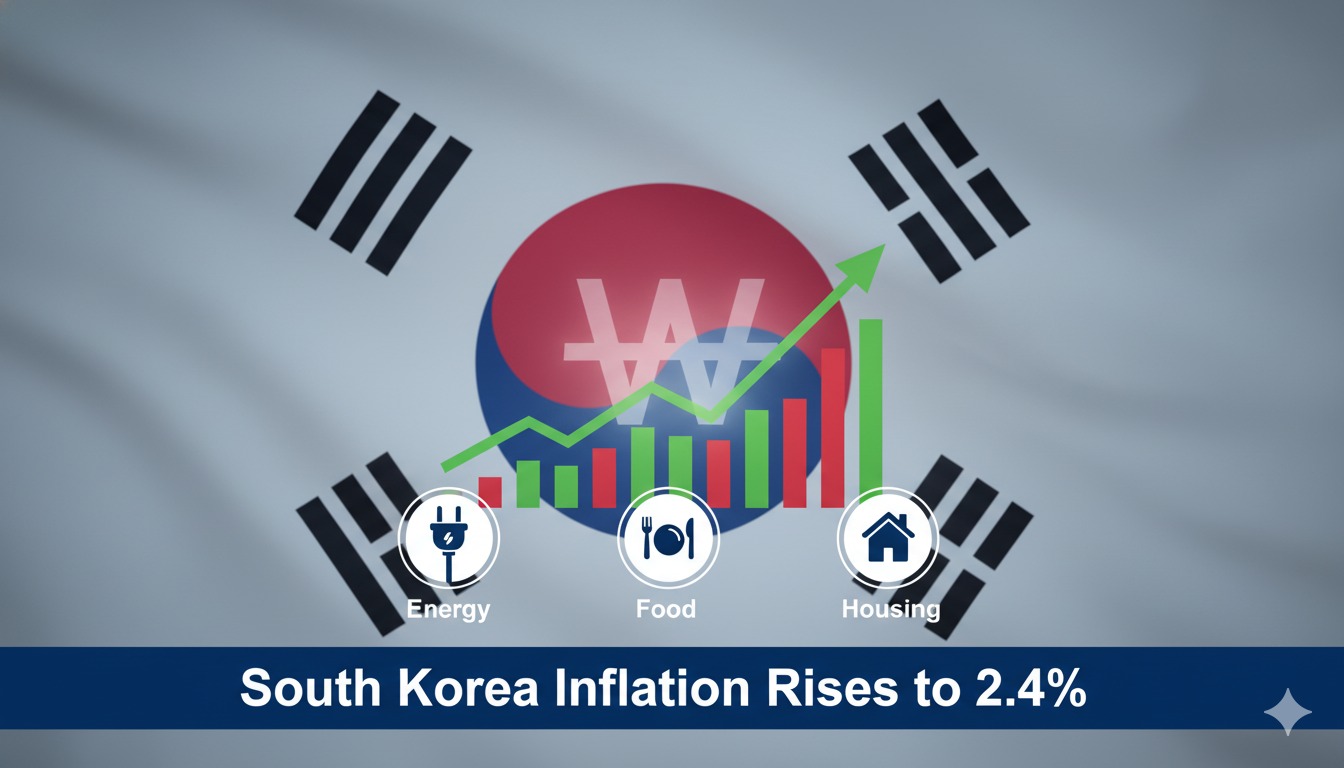
South Korea's consumer inflation surged to 2.4% in October, fueled by a weaker won, rising energy and food prices, and continued housing cost increases, pushing inflation above the central bank's target.
South Korea's consumer inflation accelerated to 2.4% year-on-year in October, exceeding economists’ forecasts and marking the fastest rise since July 2024, according to the Ministry of Data and Statistics.
The figure surpassed September's 2.1% increase and outpaced the predicted 2.2%, driven largely by a weakening won and rising energy prices amid reduced government fuel tax subsidies.
A weaker won raised import costs for food and energy, pushing the currency to its lowest level since March and making it one of Asia's weakest against the dollar since October 1.
Fuel prices climbed as tax subsidies were lowered, adding more strain on gasoline costs.
Concurrently, apartment prices in Seoul surged for the 39th consecutive week, continuing to push housing expenses upward.
Core inflation, which excludes food and energy, also ticked up to 2.2% from 2% in September, remaining above the Bank of Korea's (BOK) 2% inflation target.
Food and non-alcoholic beverage prices jumped 5% compared to the previous year, while housing and utilities increased by 1.2%.
Prices for food and lodging rose 3.2%, and transportation costs were up 3.4%.
The inflation report reinforces the Bank of Korea's decision to keep its key interest rate unchanged for the past three meetings.
Despite external pressures including the impact of US tariffs weighing on growth and concerns about asset bubbles and household debt risks, monetary policymakers appear inclined to maintain their cautious stance.
The recent inflation surge partly reflects seasonal factors such as increased spending related to Chuseok, as well as adjustments in imported car prices.
An economist noted that the BOK is likely to emphasize long-term inflation forecasts over temporary price shifts when considering future policy steps.
However, the central bank faces challenges in its decision-making due to the prevailing US tariffs estimated to reduce economic growth by roughly 0.45 percentage points this year and 0.6 points in 2026.
This inflation surge arrives amid efforts to cool a rapidly rising housing market while navigating a delicate economic balance.
Key Topics
Crypto New Live
admin@cryptonewslive.org
South Korea Inflation Surges to 2.4% in October
South Korea's consumer inflation rose to 2.4% in October driven by a weaker won, higher fuel and food prices, and soaring housing costs, exceeding forecasts.