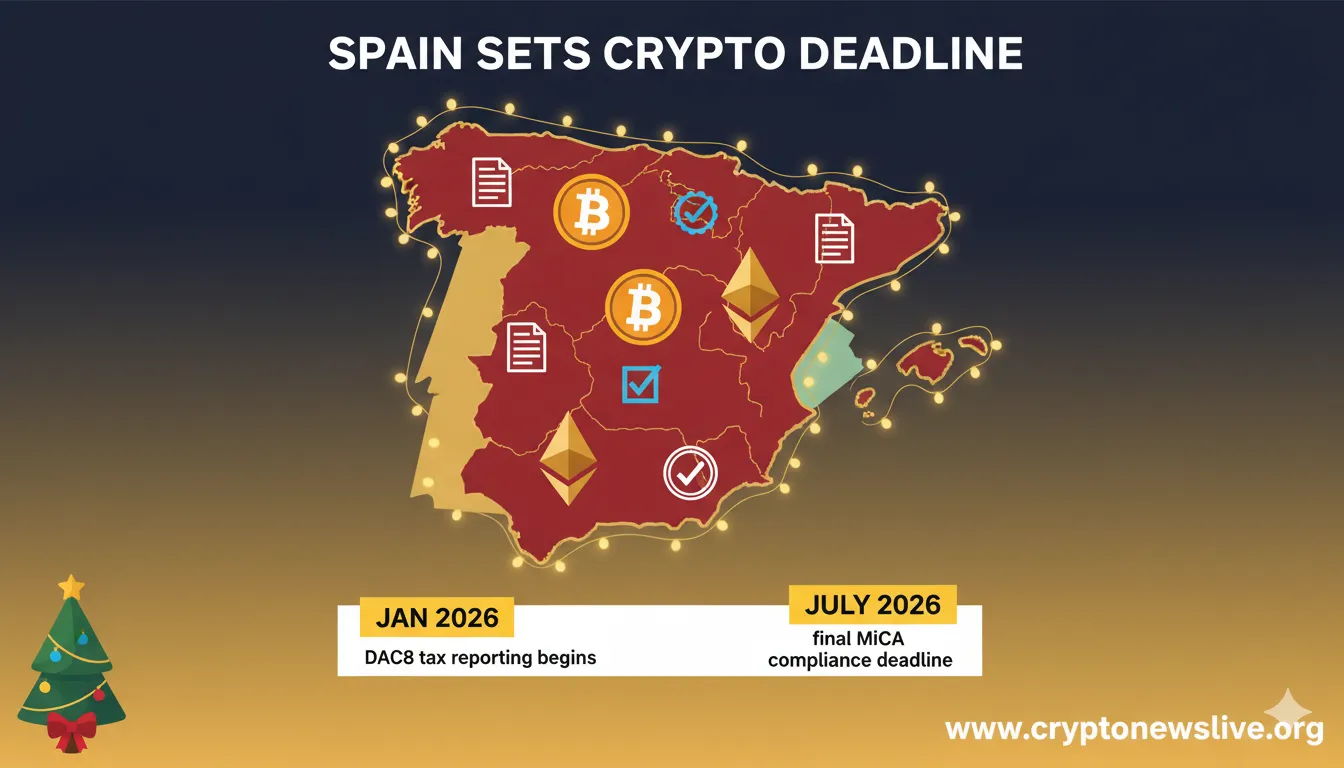
Spain activates maximum transition period for crypto firms, setting July 2026 as final compliance deadline under EU's MiCA framework while DAC8 tax reporting begins January 2026.
Spain is preparing for a radical transformation of its cryptocurrency landscape as two major European Union regulations converge in 2026. The nation has activated its full transition period, giving digital asset firms until mid-2026 to meet stringent new requirements or face forced closure.
According to The Crypto Basic, on X, Spain targets 2026 for complete crypto compliance as the country prepares for sweeping regulatory changes under MiCA and DAC8 frameworks.
The Markets in Crypto-Assets Regulation became effective across the EU in December 2024, but Spanish authorities opted for maximum breathing room. The government extended the adjustment window to July 1, 2026, allowing existing providers temporary reprieve. Once this deadline passes, only firms holding complete MiCA authorization will continue operations. Companies unable to comply face mandatory shutdown, marking a watershed moment for Spain's digital asset sector.
Spain's National Securities Market Commission now oversees more than 60 registered service providers. Major financial institutions including BBVA, Renta 4 Banco, and Cecabank appear on the registry alongside several cryptocurrency exchanges. These entities can operate under current national rules during the transition, but full authorization becomes non-negotiable after July 2026.
Tax Authorities Gain Unprecedented Oversight Powers
The Administrative Cooperation Directive represents the taxation component of Spain's dual regulatory approach. Congress approved DAC8 in October 2025, with enforcement beginning January 1, 2026. This directive mandates automatic reporting of crypto transactions to tax authorities across EU member states.
Tax specialist José Antonio Bravo Mateu warned that authorities can seize crypto assets directly from Spanish exchanges to settle tax debts. The Treasury will receive comprehensive transaction data covering 2026 activity by September 2027, establishing unprecedented visibility into digital asset movements.
Banks typically report only balances exceeding €250,000, while crypto platforms must capture even minor exchanges. Bravo emphasized that occasional peer-to-peer Bitcoin purchases remain lawful, but daily trading could trigger scrutiny as potential economic activity. Self-custody wallets fall outside DAC8 scope since third parties don't hold these assets.
Digital Assets Face Strict Classification System
MiCA introduces standardized categories for digital assets throughout the European Union. The regulation divides cryptocurrencies into utility tokens, security tokens, and stablecoins, establishing uniform compliance requirements for issuers operating across member states. Service providers must implement robust governance structures, maintain detailed risk management systems, and publish comprehensive token disclosures.
The framework simultaneously addresses market integrity and consumer protection while eliminating regulatory ambiguity for serious operators. Spanish firms must restructure internal record-keeping, custody controls, and onboarding procedures to meet prudential reporting standards. The transition will likely result in stronger identification checks and increased transparency requirements.
Companies face substantial compliance costs under the new regime. Research indicates that 42% of crypto service providers report cost increases of 45% linked to MiCA preparations, though firms completing compliance efforts have seen institutional investment rise by 45%. Authorization applications require over 100 pages of detailed operational information, creating administrative burden particularly challenging for smaller providers.
Spanish authorities can block cryptocurrency websites instantly once enforcement begins, potentially cutting citizen access to digital funds overnight. The regulatory overhaul extends supervision to exchanges, custodians, wallet providers, and brokers offering services to the public. Firms lacking proper authorization face fines, forced shutdowns, or exclusion from Spanish and EU markets.
Together, MiCA and DAC8 form a comprehensive framework governing both market operations and taxation. The 2026 implementation signals Spain's transition from regulatory grey area to supervised financial sector. While critics warn excessive oversight could push activity toward decentralized platforms, authorities maintain the reforms will prevent fraud, money laundering, and tax evasion while attracting institutional investors seeking regulatory certainty.
The European Commission projects DAC8 implementation across all member states could generate €2.4 billion in additional revenue. Spanish authorities consider this regulatory framework among the most stringent in Europe, fundamentally reshaping how residents interact with digital currencies.
3 Key Takeaways:
- Spain extends crypto compliance deadline to July 1, 2026, after which only MiCA-authorized firms can operate legally
- DAC8 directive grants Spanish tax authorities power to seize exchange-held crypto assets starting January 2026
- Over 60 firms including BBVA and Cecabank registered with CNMV as Spain prepares regulatory overhaul
#SpainCrypto #MiCA2026 #DAC8 #CryptoRegulation #CNMV
Stay updated on the latest cryptocurrency news on our homepage.
Explore more in Latest News Category.
Related reading:
Key Topics
Crypto New Live
admin@cryptonewslive.org
Spain Crypto Rules 2026: MiCA & DAC8 Deadline
Spain sets July 2026 deadline for crypto firms under MiCA regulations. DAC8 tax reporting begins January 2026 with unprecedented oversight powers.