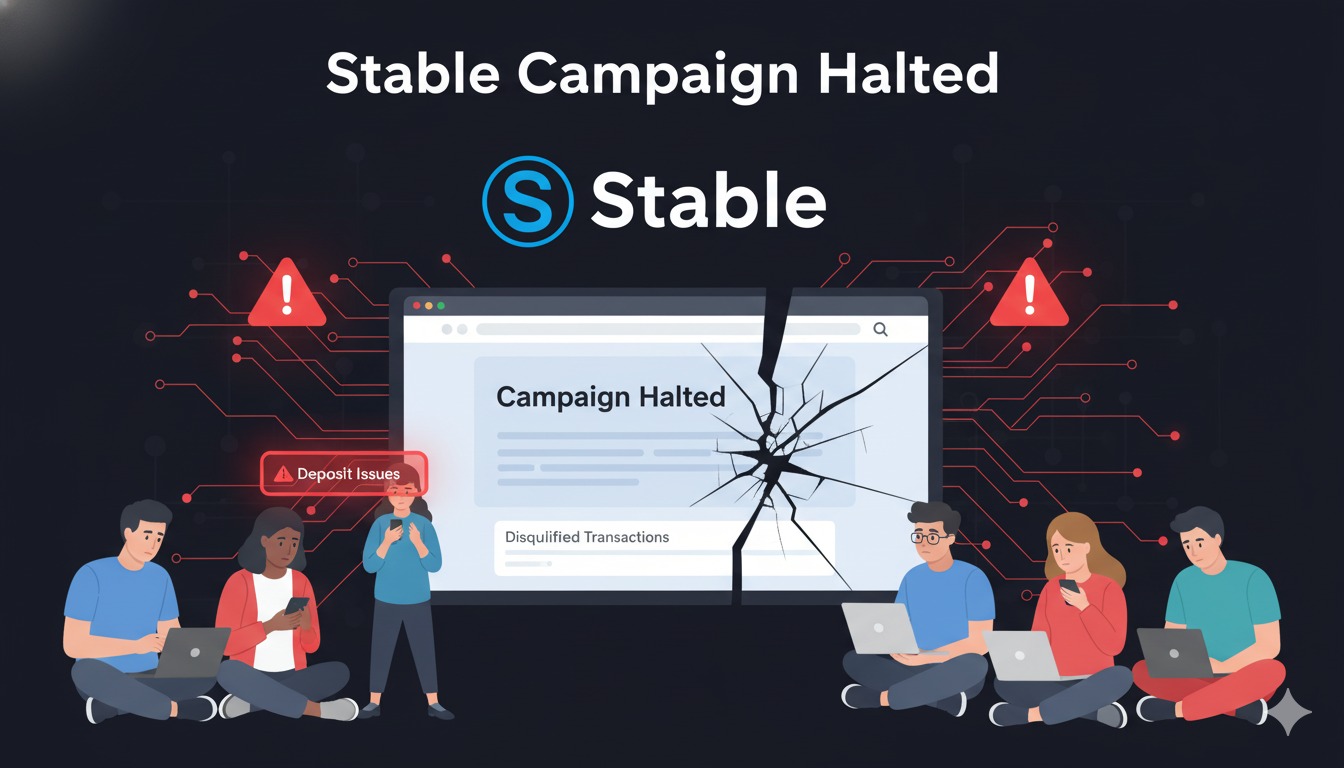
Stable’s Phase 2 deposit campaign was halted following website crashes and technical missteps during launch. User deposits outside official channels were disqualified, prompting concerns about project execution and fairness.
Stable, the Bitfinex-backed blockchain project, faced significant disruption during the launch of its Phase 2 pre-deposit campaign.
The event, scheduled for November 6, 2025, was marred by technical failures, including an unprecedented website crash caused by exceptionally high user traffic.
This prevented many participants from accessing the Hourglass platform, which facilitates the campaign.
The outage forced some users to bypass the website and deposit funds directly through smart contracts on Etherscan.
However, deposits made via Etherscan or programmatically were declared ineligible for the campaign by the Hourglass team, who advised such deposits must be withdrawn using a specific redeem function.
As a result, Stable extended the $100,000 minimum deposit window by at least one hour to accommodate users affected by the downtime.
Technical Glitches and User Outcry
Phase 2 followed a controversial Phase 1 campaign, which drew criticism for its execution, including a front-running scandal where insiders pre-filled roughly $800 million before the public launch.
This history created high expectations for improvements in Phase 2, yet users encountered repeated prompts to sign terms of service and website instability.
Stable officially paused Phase 2 deposits three hours after launch due to these ongoing issues and promised updates on the "updated path forward" .
Anonymous blockchain investor CBB voiced sharp criticism on social media, arguing the project's execution was so flawed it raised doubts about Stable’s ability to deploy a blockchain effectively.
CBB, who had invested over $15 million in Phase 1, remarked, “Stable phase 1 & 2 were executed so poorly it genuinely makes me wonder if these guys can even deploy a blockchain” on platform X (formerly Twitter).
Investors and observers are increasingly skeptical following Stable’s rapid initial fund-raising overshadowed by technical and fairness concerns.
The project's failure to manage high traffic surges and control smart contract deposit integrity has fueled debate over its readiness and governance.
The Hourglass platform, at the center of this chaos, saw user frustration multiply.
Hourglass acknowledged the intense traffic led to temporary access issues and urged patience while extending deposit periods.
Direct contract deposits—previously considered potential workarounds—were rejected for campaign eligibility, deepening confusion over participation rules.
The redeemptNonKYC function was made available on Etherscan for users needing to reclaim funds.
Stable’s Challenges in Context
Stable’s troubles reveal the complexities of executing high-profile blockchain launches, especially those involving large-scale decentralized finance (DeFi) operations.
Technical setbacks during major events are common in the industry, but repeated missteps can damage credibility.
Stable had hoped to use these pre-deposit campaigns as stepping stones for a broader rollout tied to stablecoin yield protocols.
These challenges echo broader blockchain deployment hurdles documented industry-wide, including stakeholder coordination, scaling web traffic capacity, and regulatory compliance.
Ensuring fair access under heavy demand while maintaining security and transparency remains an ongoing test for many emerging blockchain projects.
With community trust eroding over insider involvement and technical flaws, Stable faces pressure to transparently rectify issues and demonstrate robust operational capacity.
The Phase 2 pause signals a cautious reset as the firm works to stabilize user access and campaign integrity.
Key Topics
Crypto New Live
admin@cryptonewslive.org
Stable Phase 2 Deposit Crash Impacts Users
Stable's Phase 2 pre-deposit launch halted after technical glitches and high traffic crashes Hourglass site, sparking user backlash.