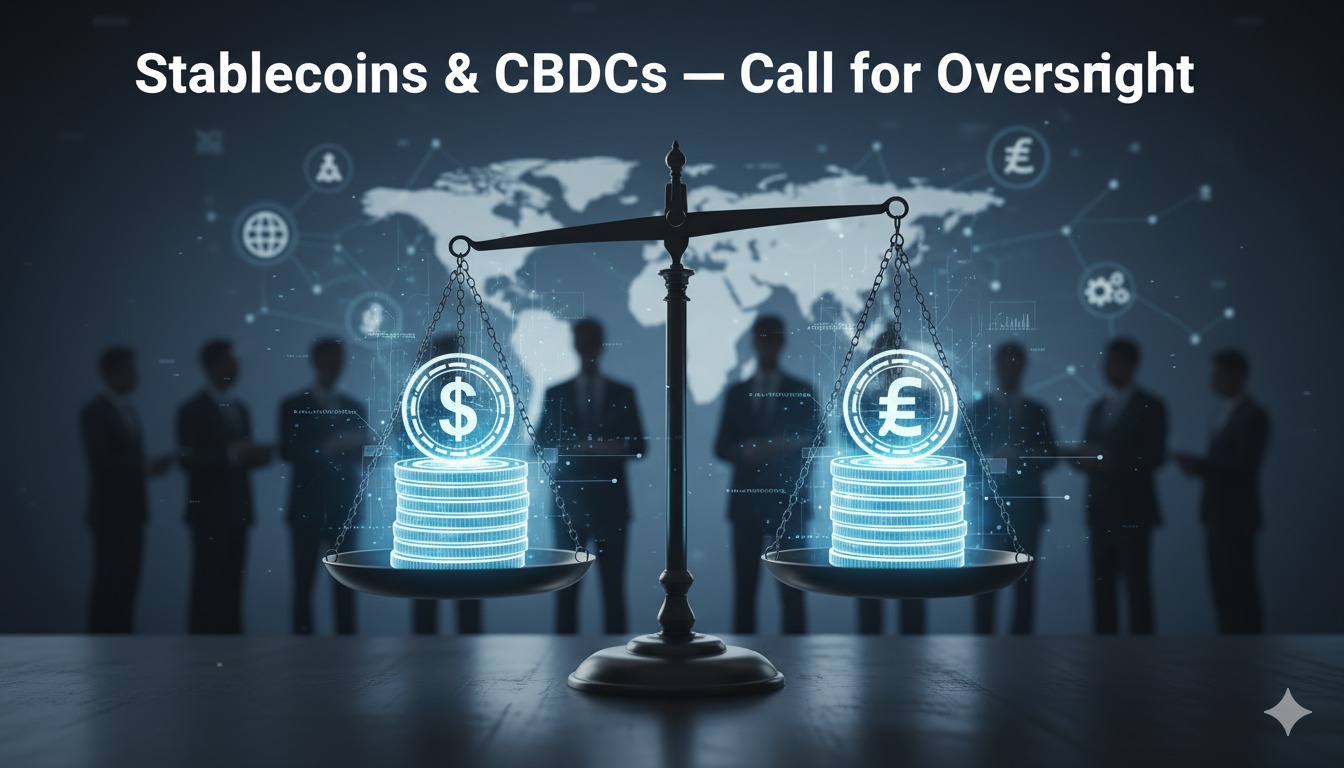
Stablecoins and CBDCs pose similar financial risks, prompting urgent oversight and regulatory measures to safeguard stability in digital currencies.
Stablecoins have soared in popularity as crypto-assets designed to maintain stable values, but their rapid growth now mirrors risks inherent in Central Bank Digital Currencies (CBDCs).
Both digital instruments challenge traditional financial systems, carrying potential contagion effects that regulators and financial authorities must urgently address.
Shared Risks Between Stablecoins and CBDCs
Central banks and financial institutions warn that stablecoins could trigger financial instability through channels including asset mismanagement and sudden loss of confidence leading to large redemption waves.
According to the European Central Bank, stablecoins must maintain robust and liquid reserve assets to prevent financial sector contagion, akin to the risks seen in money market funds.
The close parallel between stablecoins’ liquidity demands and those of CBDCs raises concerns about disintermediation risks, where retail CBDCs could pressure traditional bank deposits, threatening overall financial system stability.
Authoritative reports highlight that issuers’ asset management strategies are vital to preserving the stablecoin peg, as any failure could cascade into broader financial disruptions.
The Central Bank of Kenya also underlines worries about operational vulnerabilities in CBDC rollouts such as cyberattacks and system downtimes, as well as their potential to alter banking landscapes by diverting deposits from commercial banks to central banks.
Urgent Call for Regulatory Clarity and Oversight
The growing interconnectedness of stablecoins with traditional finance points to the necessity of strong oversight frameworks.
Market manipulation, conflicts of interest, and lack of transparency in stablecoin operations could induce market dysfunction.
The Bank for International Settlements warns of the complex roles entities play in stablecoin ecosystems that might amplify risks uncommon in conventional markets.
CBDCs bring distinct advantages, like central bank backing and consumer protection, but they are not immune to risks.
The World Economic Forum stresses that the rise of various digital currency forms, including stablecoins and CBDCs, risks fragmenting the global payment landscape unless interoperability and regulation improve.
Sources such as Cryptopolitan have discussed these growing concerns and noted the urgent need for international cooperation on standards and risk mitigation strategies for both stablecoins and CBDCs (Cryptopolitan).
The convergence of risks necessitates coordinated responses to prevent systemic shocks.
Key Topics
Crypto New Live
admin@cryptonewslive.org
Stablecoins vs CBDC: Risks Unveiled
Examining the mirrored risks of stablecoins and CBDCs reveals urgent financial stability challenges and regulatory calls.