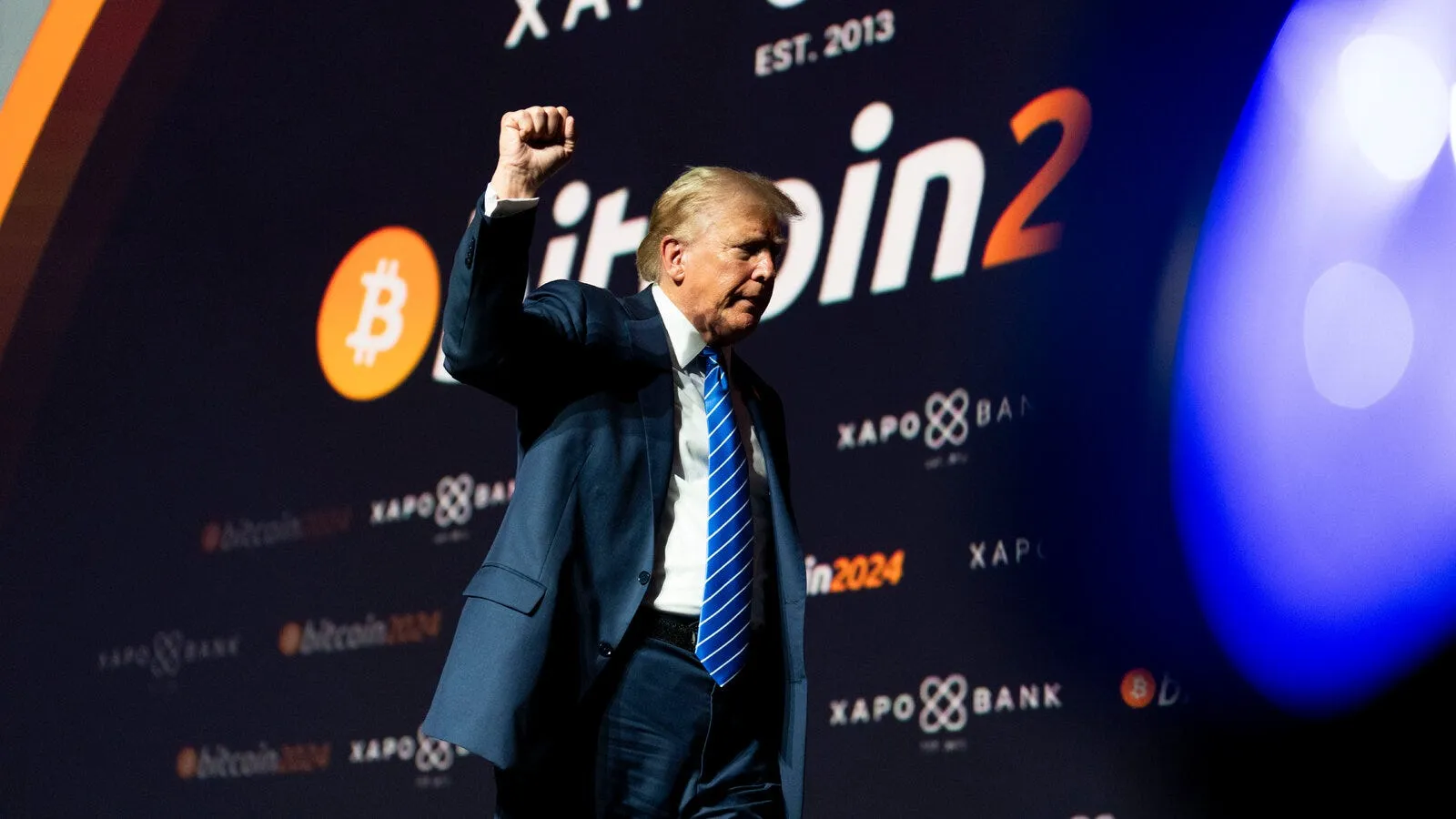
The Trump administration's 2025 crypto overhaul replaced enforcement-heavy regulation with structured integration. Federal agencies granted banking charters, recognized Bitcoin and Ethereum as commodities, and passed comprehensive stablecoin legislation.
The U.S. crypto industry underwent a transformation in 2025 that few imagined possible. President Trump's administration flipped the regulatory script, turning enforcement-heavy agencies into innovation enablers. The shift happened fast, deliberate, and coordinated across multiple federal bodies.
According to WuBlockchain on X, the executive branch, Congress, and regulators moved simultaneously to reduce market uncertainty and integrate crypto into existing financial infrastructure.
The change reflects a complete reversal from previous years when digital assets faced primarily enforcement actions. Now, regulatory frameworks are being built to absorb crypto into traditional finance rather than keep it at arm's length.
Gary Gensler's resignation marked the beginning of this shift. His successor, Paul Atkins, introduced Project Crypto, which aims to establish clear criteria for determining whether tokens qualify as securities. This replaced years of regulation through lawsuits with predictable baseline rules.
SEC and CFTC Transform Their Approach
The Securities and Exchange Commission abandoned its enforcement-first strategy. Previously, major cases against Ripple, Coinbase, Binance, and Kraken proceeded without clear legal standards. Firms spent resources managing regulatory risk instead of growing their businesses.
Under Atkins, the agency repositioned itself as inclusive rather than adversarial. The focus shifted to incorporating crypto into regulatory frameworks instead of pursuing post-hoc interpretations through litigation.
The Commodity Futures Trading Commission also expanded its role. Beyond derivatives oversight, it formally recognized Bitcoin and Ethereum as commodities. The Digital Asset Collateral Pilot Program approved these assets plus USDC as collateral for derivatives trading. Risk management standards and haircuts now apply just as they do for traditional collateral.
This designation signals that crypto assets are no longer viewed purely as speculative instruments but as stable financial tools comparable to conventional assets.
Banking Charters Unlock Nationwide Operations
The Office of the Comptroller of the Currency granted national trust bank charters to Circle and Ripple in December. This approval places crypto firms on equal footing with traditional banks for the first time.
Previously, digital asset companies needed state-by-state licenses and couldn't access federal banking supervision. Business expansion faced structural barriers, and connections to traditional finance remained blocked.
Now, a single federal regulator oversees these firms. Transfers that required intermediary banks can be processed directly. The change eliminates operational friction and legitimizes crypto companies within the established banking system.
The GENIUS Act codified stablecoin requirements, mandating 100 percent reserve backing with no rehypothecation. Federal regulators unified supervisory authority, transforming stablecoins into legally recognized digital dollars with guaranteed payment capacity.
Internal tensions still exist. Debate over Tornado Cash highlights differing views on privacy versus enforcement. The administration pursued aggressive action against illicit financial flows while SEC leadership warned against excessive privacy suppression.
These disagreements don't signal instability. Different agencies interpret issues through their mandates, creating checks and balances that refine standards over time. The system advances through competition and coordination moving in parallel.
Congress, the SEC, the CFTC, and the OCC pushed forward simultaneously on rulemaking, infrastructure integration, institutional absorption, and legal codification. Full consensus wasn't required for progress.
The U.S. neither fully deregulated nor suppressed crypto. Instead, it redesigned regulation, leadership, and market infrastructure at once. By channeling internal debate into momentum, America positioned itself to pull the global crypto industry's center of gravity toward its shores.
This year proved significant because policy moved beyond declarations into concrete execution. The integration of digital assets into traditional finance is no longer theoretical but operational and accelerating.
Stay updated on the latest cryptocurrency news on our homepage.
Explore more in Latest News Category.
Related reading:
Key Topics
Crypto New Live
admin@cryptonewslive.org
Trump Crypto Policy: One Year Revolution
Trump administration transformed U.S. crypto regulation in 2025. SEC, CFTC, and OCC shifted from enforcement to integration, granting banking charters to Circle