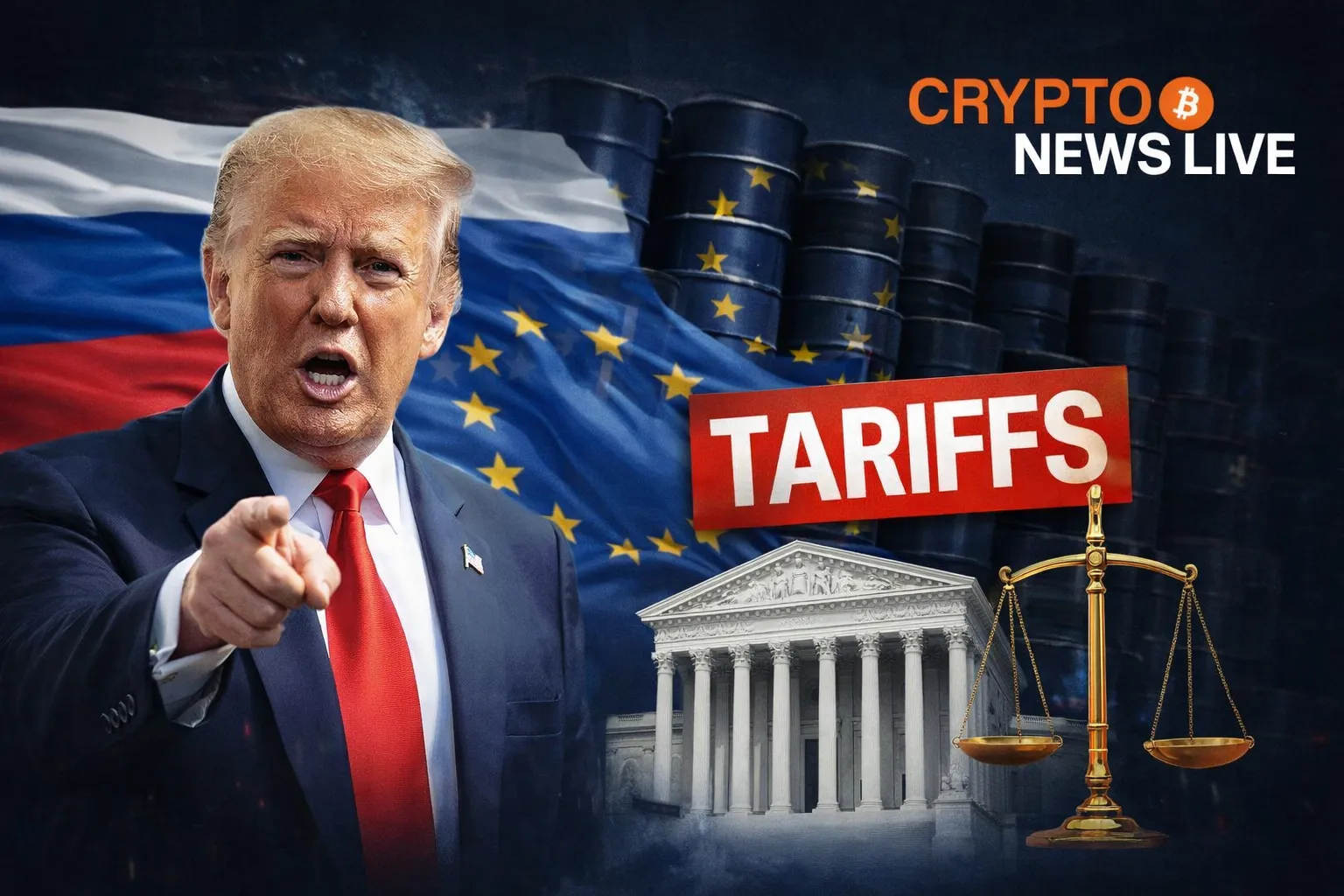
Confusion erupts as viral claims about Trump's 500% tariffs on the EU mask reality: the duties target Russian oil buyers, not Europe, while the Supreme Court prepares to potentially invalidate his trade war.
Tariff confusion gripped global markets as viral claims about Trump's 500% duties on the EU distort reality while a critical Supreme Court decision threatens to invalidate his entire tariff framework. The collision between legislative posturing and judicial scrutiny exposes the fragility of Trump's trade war strategy.
The latest wave of panic stems from the Sanctioning Russia Act of 2025, bipartisan legislation designed to punish nations purchasing Russian energy, not traditional EU partners. According to @cryptorover on X, Trump approved legislation imposing 500% tariffs on countries buying Russian oil. However, this bill specifically targets China, India, Brazil, and Turkey—not the European Union, which dramatically reduced Russian energy reliance after 2022.
Senator Lindsey Graham revealed Trump "greenlit" the bill following productive White House discussions. The legislation grants unprecedented authority to economically isolate Russia by imposing a 500% tariff on all goods from countries continuing to purchase Russian oil, petroleum products, or uranium. The measure remains stalled in committee and hasn't been signed into law.
You might also like: Armstrong Denies White House Fury Over CLARITY Clash
Supreme Court's 71% Chance to Kill Trump's Trade Arsenal
Meanwhile, speculation mounted about the Supreme Court's impending verdict on Trump's broader tariff authority. As @cryptorover tweeted on X, there's now a 71% chance Trump's tariffs will be ruled illegal by the Supreme Court. Lower courts already determined Trump exceeded his authority by invoking the 1977 International Emergency Economic Powers Act to justify sweeping reciprocal duties targeting America's trading partners.
The court appeared skeptical during November oral arguments about whether Trump possessed unilateral tariff authority under emergency powers legislation. If ruled illegal, the Court of International Trade has legal authority to require refunds paid to U.S. importers with a two-year statute of limitations period. The Trump administration acknowledges it has alternative legal provisions ready if the Supreme Court rules against its current approach.
Must read: Warren's Crypto 401(k) Warning: Workers Face Massive Losses
Trade volumes to the U.S. hang in the balance. Import companies actively restocked after a robust holiday season, demonstrating strength through January. Yet any Supreme Court ruling against tariffs could trigger increased imports as companies gain confidence about cash situations and seek inventory buffers ahead of revised Trump administration tariff plans.
According to analysis from Binance Square, the 500% tariff figure represents a significant distortion of facts. The EU doesn't fall under the Russian energy sanctions umbrella, though Trump independently proposed much lower duties ranging from 10% to 25% on specific European imports linked to diplomatic disagreements regarding Greenland.
Greenland Dispute Escalates Trade War Tensions
Reuters reported that European Union ambassadors reached broad agreement to intensify efforts to dissuade Trump from imposing tariffs on European allies while preparing retaliatory measures. Trump vowed to implement increasing tariffs from February 1 on Denmark, Sweden, France, Germany, the Netherlands, Finland, Britain, and Norway until the U.S. is allowed to buy Greenland.
Related: Bitcoin Traders Eye $18B Liquidation Storm Ahead
EU leaders scheduled an emergency summit in Brussels to discuss options including a package of tariffs on €93 billion of U.S. imports that could automatically activate on February 6 after a six-month suspension. The never-used Anti-Coercion Instrument could limit access to public tenders, investments, banking activity, or restrict trade in services where the U.S. maintains a surplus with the bloc.
European Council President Antonio Costa's consultations with EU members showed strong commitment to support Denmark and Greenland with readiness to defend against any coercion form. Danish Prime Minister Mette Frederiksen declared "Europe will not be blackmailed" as the tariff threat unsettled global markets.
Don't miss: Ethereum's $1B Liquidation Bomb: Fees Vanish Amid All-Time Frenzy
The eight targeted countries already subject to U.S. tariffs of 10% and 15% sent small military personnel numbers to Greenland as the row escalates. They issued a joint statement warning tariff threats undermine transatlantic relations and risk a dangerous downward spiral.
German Christian Democrat lawmaker Juergen Hardt suggested a potential boycott of the soccer World Cup hosted by the U.S. this year as a last resort to bring Trump to his senses on the Greenland issue. Italian Prime Minister Giorgia Meloni described the tariff threat as "a mistake" after speaking with Trump hours earlier.
The collision between viral misinformation about 500% EU tariffs, legitimate Russian sanctions legislation, Greenland territorial ambitions, and Supreme Court scrutiny creates unprecedented uncertainty for global trade. Markets brace for the court's decision that could invalidate Trump's entire IEEPA-based tariff framework while simultaneously watching new Greenland-linked threats escalate transatlantic tensions to historic levels.
3 Key Takeaways:
- Viral 500% tariff claims target Russian oil buyers like China and India, not the EU, under stalled legislation
- Supreme Court faces 71% probability of ruling Trump's IEEPA-based tariffs illegal with refunds possible
- Trump's Greenland dispute threatens 10-25% tariffs on eight NATO allies starting February 1, 2026
#TrumpTariffs #SupremeCourt #EUTrade #Greenland #TradeWar
Key Topics
Andreas Alfred
admin@cryptonewslive.org
Senior Crypto Analyst & Blockchain Journalist
I am a seasoned cryptocurrency analyst and blockchain journalist with over 7 years of hands-on experience in Crypto Industry. I cover Bitcoin and altcoin markets, on-chain data analysis, decentralized finance (DeFi), and crypto regulation. I have tracked multiple market cycles and focus on delivering data-driven, unbiased insights for global crypto audiences.