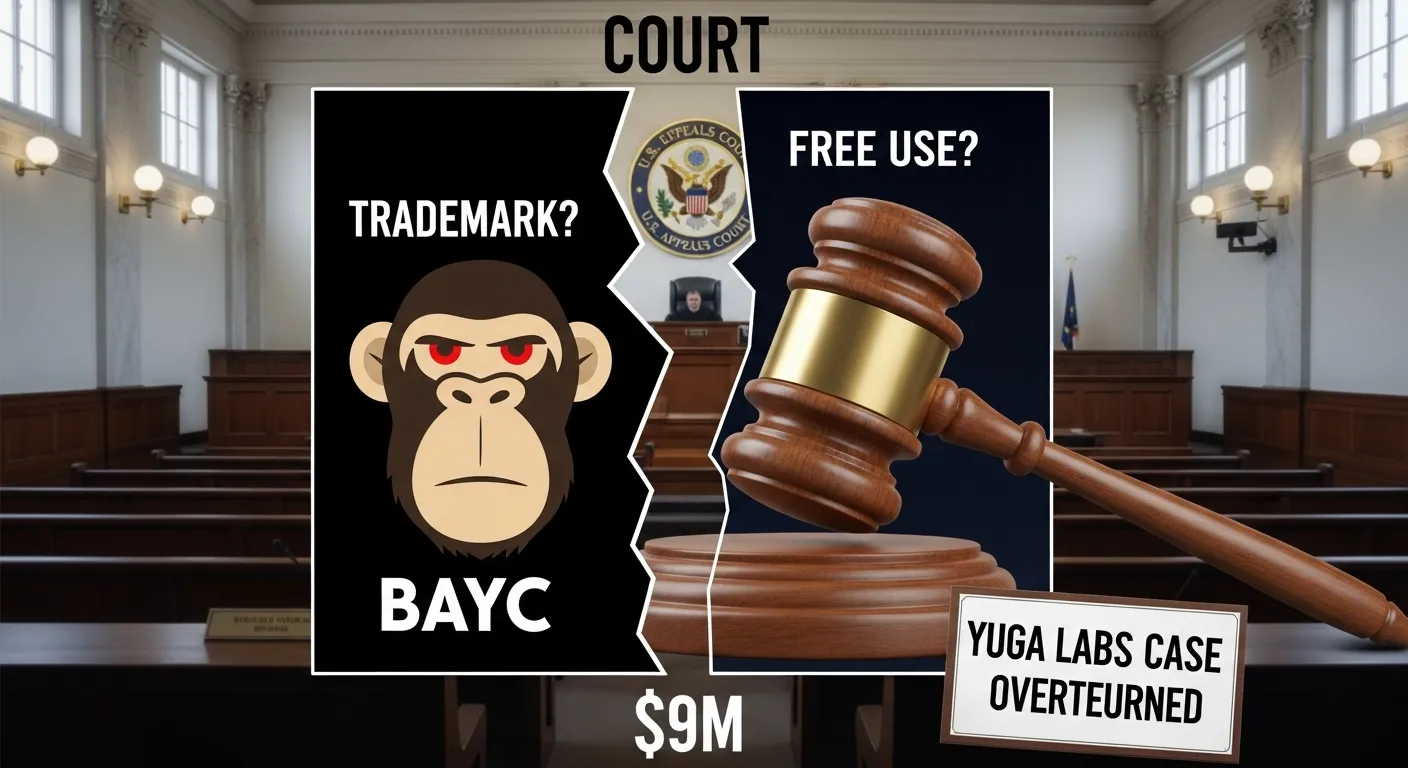
A US appeals court has overturned Yuga Labs’ landmark $9M NFT judgment, casting doubt on future NFT trademark claims and setting new legal precedent for NFT protection in US courts1.
US appeals court overturns Yuga Labs' $9M win against Ryder Ripps, sending the high-profile NFT trademark feud into uncharted waters. The ruling snatched back a blockbuster award, finding that Yuga Labs failed to prove its Bored Ape Yacht Club NFTs faced real buyer confusion from Ryder Ripps’ pointedly similar project.
Yuga Labs originally claimed its Bored Ape Yacht Club brand had been copied through the creation of the “Ryder Ripps Bored Ape Yacht Club” collection. The initial federal ruling awarded over $9 million, citing infringement and cybersquatting.
The Ninth Circuit Court of Appeals has now reversed that outcome, punctuating that actual market confusion hadn’t been firmly established.
The matter is now headed back to trial, with the court holding that “a reasonably prudent consumer in the marketplace was not necessarily likely to be confused as to the origin of the goods bearing Yuga’s marks”.
NFTs Win Trademark Shield, But the Fight Remains Open
Despite quashing the $9 million payout, the appeals court set a new legal bar. NFTs have been deemed eligible for trademark protection. The panel held that “NFTs are goods under the Lanham Act,” opening the door for brand owners to sue over lookalike digital assets.
This marks a first in appellate precedent, formally recognizing NFTs as eligible for trademark claims. The court also agreed that Yuga Labs was the first in commerce to use the Bored Ape Yacht Club marks, ensuring trademark priority.
However, the summary judgment in favor of Yuga was overturned. The judges identified unresolved factual disputes about the likelihood of consumer confusion. The presence of identical images, but divergent price points and prominent disclaimers, presented enough ambiguity for a jury to decide if buyers understood the difference.
The circuit panel also rejected arguments that Ripps and Cahen’s project qualified as artistic “expressive work” protected under the First Amendment, or as nominative fair use. The dispute now returns to district court, where both parties will press their cases with the new precedent in play.
Yuga Labs’ co-founder publicly responded by affirming the company’s resolve to continue the legal battle, hailing appellate recognition of Bored Ape NFTs as “protectable trademarks,” and calling it a “win for every NFT holder”.
Artists and creators tracking this legal saga see the reversal as a pivotal moment. Ripps, for his part, called the ruling a “huge victory for artists who seek to make expressive meaningful work,” highlighting the wider ramifications for creative protests in digital markets.
Market Impact: Questions Linger Over NFT Copyright Defenses
Previously, the lower court had permanently banned Ripps and Cahen from selling or promoting the contested NFTs, along with ordering the transfer of digital assets and online identities associated with the alleged infringement.
The appeals court affirmed that these defensive counterclaims from Ripps and Cahen—such as their DMCA and copyright assertions—lacked standing, upholding their dismissal.
With the case remanded for trial, the boundaries for NFT brand disputes and digital art as protected expression remain unsettled.
The new standard forces courts to weigh technological novelty against classic trademark protections, while NFT platforms and creators watch closely.
Stay updated on the latest cryptocurrency news on our homepage.
Explore more in Latest News Category.
Related reading:
Key Topics
Crypto New Live
admin@cryptonewslive.org
US Appeals Court Overturns Yuga Labs $9M NFT Win
Yuga Labs’ $9M NFT trademark win overturned; appeals court affirms NFTs as protectable trademarks, sending the dispute back to trial.