Two days. That is how long it took zkPass to go from its cheapest price ever to a 30% single-day gain.
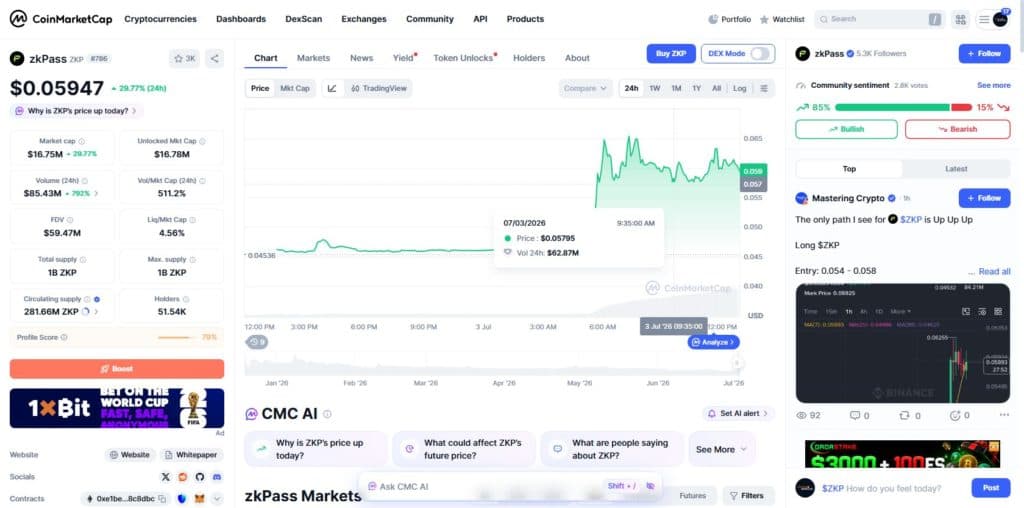
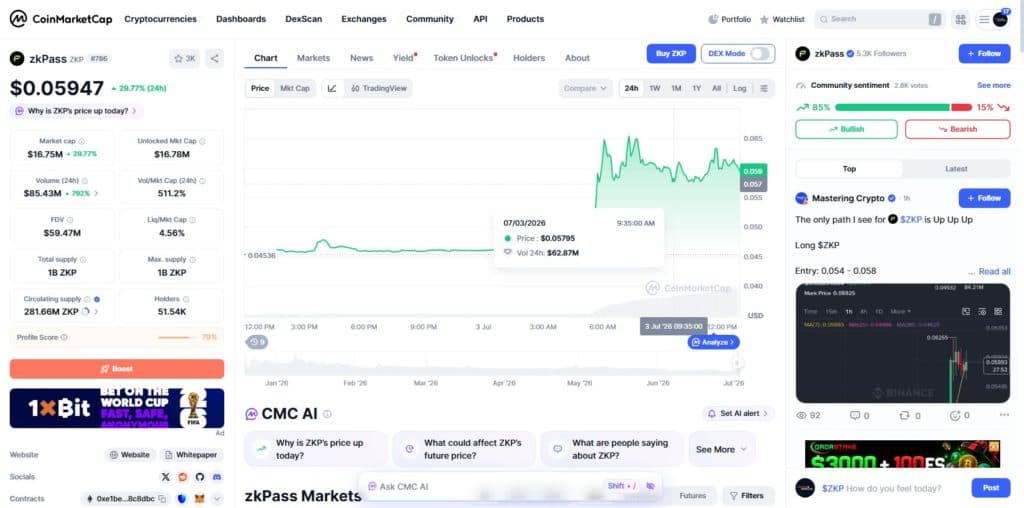
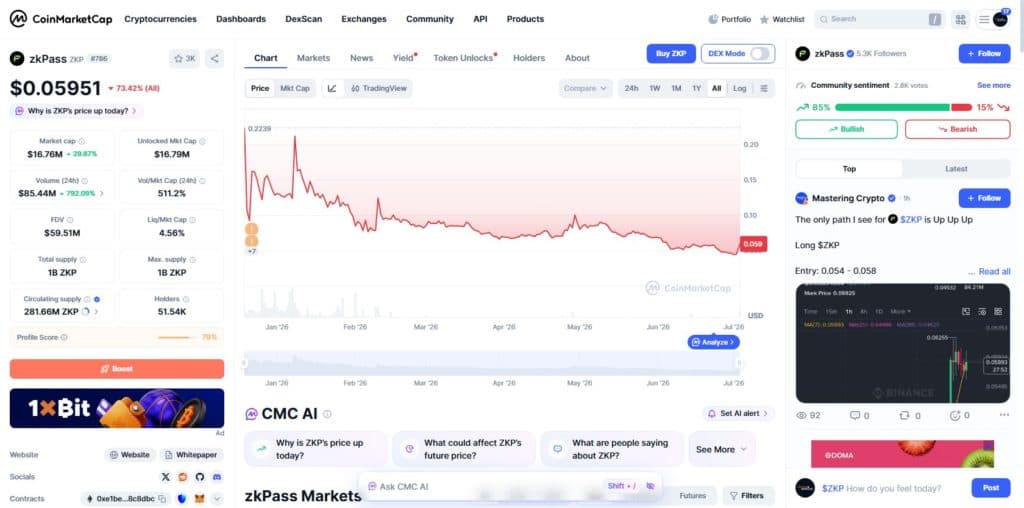
ZKP, the token behind the zkPass zkTLS identity protocol, traded near $0.0592 at the time of writing, up 29.94% on the day, according to CoinMarketCap. The all-time low of $0.04326 was set on July 1, 2026, just two days earlier. Measured from that low, ZKP now sits 36.68% higher. The all-time high, by contrast, is $0.255, set on December 19, 2025, which puts the current price 76.82% below where the token once traded.
Korea Is Doing Most Of The Buying
The reported volume is enormous next to the market cap. CoinMarketCap’s Markets tab shows $85.41 million changing hands in 24 hours against a market cap of $16.68 million, a ratio above 500%. Almost none of it happens on a decentralized exchange.
Upbit’s ZKP/KRW pair alone carries $37.14 million of that volume, 43.58% of the reported total. Binance, split across a USDT and a TRY pair, adds another $10.9 million. HTX carries $10 million more. The single PancakeSwap pool on BNB Chain, the only meaningful decentralized venue, manages $421,624, less than half a percent of the day’s activity.
Backed By Binance Labs, Then $12.5 Million More
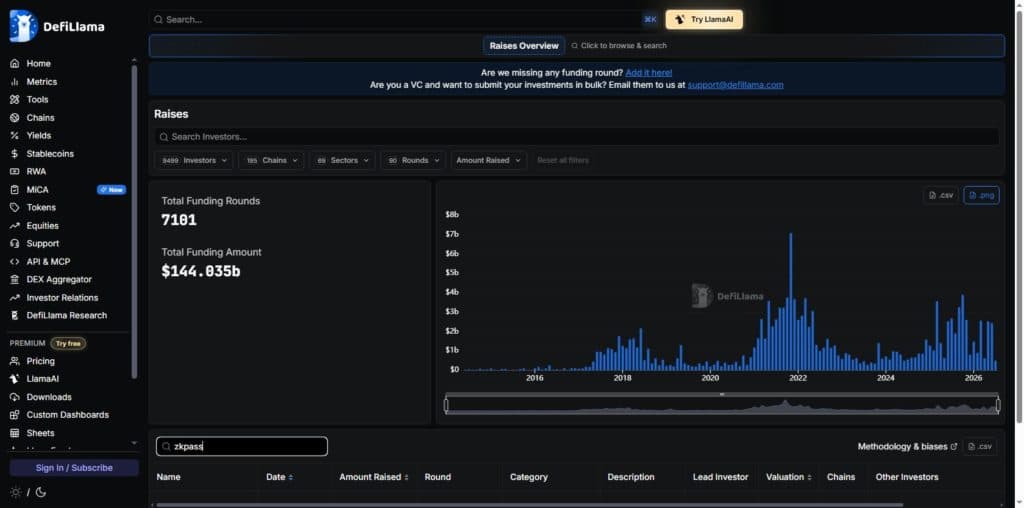
The project is not a stranger to institutional money. zkPass closed a seed round led by Binance Labs in June 2023, then raised $12.5 million in a Series A in October 2024 at a $100 million valuation, according to DeFiLlama’s raises database. Animoca Brands, Amber Group, Dao5, Flow Traders and eleven other named investors took part. A further $2 million public token sale closed in November 2025, weeks before the token began trading.
That history explains the “YZi Labs Portfolio” tag CoinMarketCap attaches to the token today. YZi Labs is the current name for what was Binance Labs.
The Token Launched Into Its Own Peak
zkPass’s earliest trading pool on BNB Chain went live December 17, 2025, according to GeckoTerminal, two days before the token’s all-time high. That timing, a peak within 48 hours of listing followed by a long decline into a fresh low more than six months later, is a common pattern for freshly launched tokens, not a signal specific to zkPass.
A $100,000 Trade Cannot Move Through This Pool Cleanly
Real liquidity tells a different story than the reported volume. The deepest on-chain pool, a PancakeSwap Infinity CLMM pair on BNB Chain, holds $706,506, per GeckoTerminal. A DEX Screener pull of every other pool on Ethereum and BNB Chain together adds under $50,000 more.
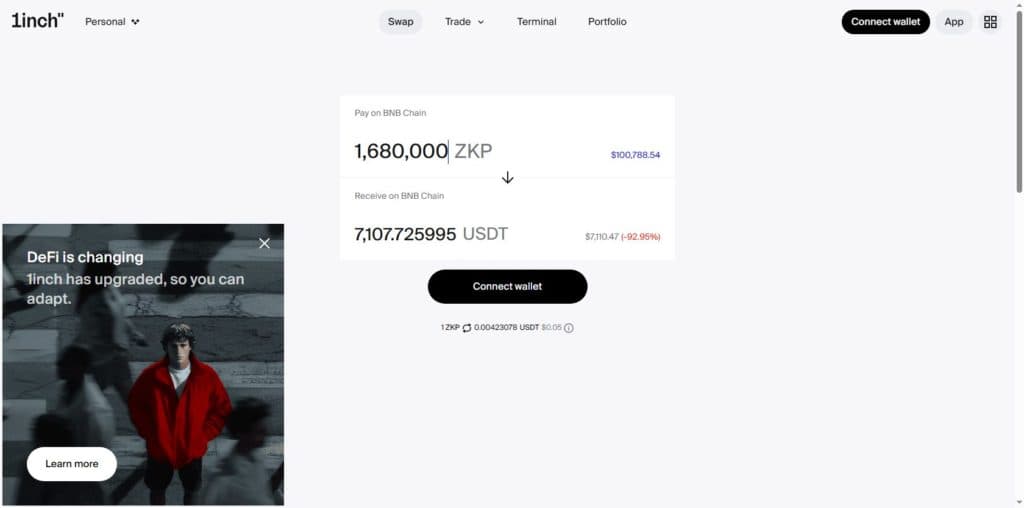
Testing that depth on 1inch produced a clear pattern. A $1,000 buy cost 2.93% in price impact. A $10,000 buy cost 22.84%. A $100,000 buy cost 67.41%, more than two-thirds of the trade value lost to slippage alone. Selling ran even worse: $1,000 cost 3.11%, $10,000 cost 39.42%, and $100,000 cost 92.95%.
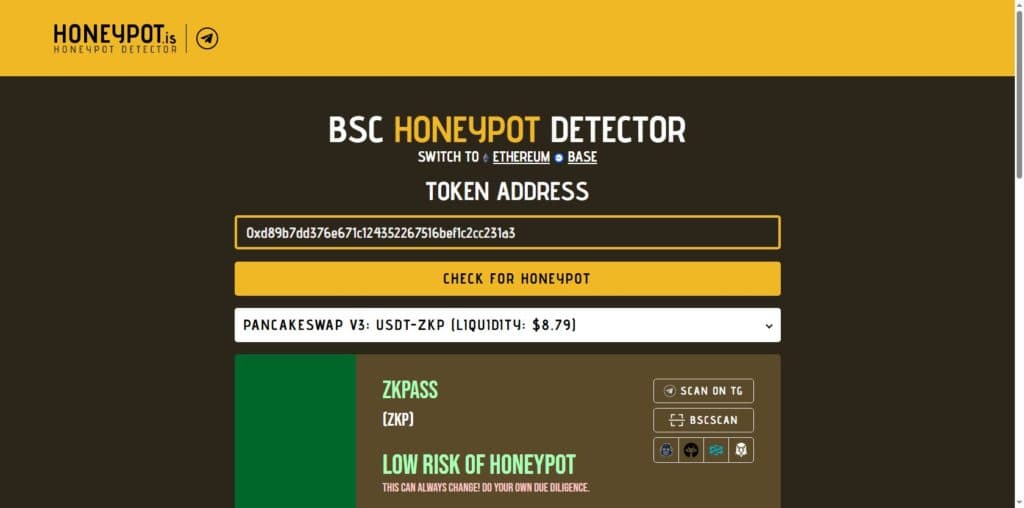
None of that means the contract itself is unsafe. A honeypot.is simulation on the BNB Chain contract came back clean: 0% buy tax, 0% sell tax, 0% transfer tax, source code open, and all 47 sampled holder wallets able to sell. 1inch’s own Shield feature flagged the token “Unknown Reputation” regardless, a warning about the token not appearing on its verified list rather than a finding about the contract’s code.
No Team Or Investor Token Has Unlocked Yet
zkPass’s published tokenomics allocate 1 billion ZKP total: 48.5% to community, 22.5% to early investors, 14% to core contributors, 10% to a DAO treasury, and 5% to liquidity. Twelve and a half percent of the community share unlocked immediately at launch, another 6% vested over the first three months, and the rest of that bucket, along with the liquidity share, vests on its own separate schedule.
Early investors and core contributors, 36.5% of the total supply between them, show zero percent unlocked as of this writing. The investor cliff runs twelve months from launch, landing around December 19, 2026. Contributors face a twenty-four month cliff, closer to December 2027.
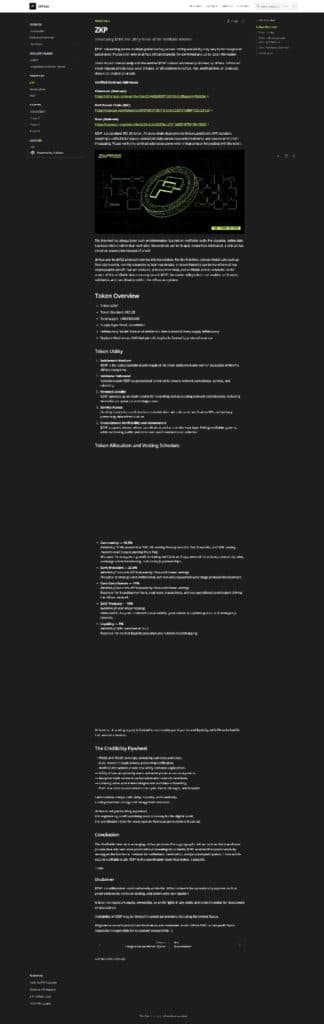
Running the schedule against today’s date puts calculated circulating supply near 267.65 million ZKP. CoinMarketCap reports 281.66 million circulating. The two land within about five percentage points of each other, consistent with the project issuing on its published schedule rather than minting ahead of it.
Four Of The Five Largest Wallets Are Treasury Vaults
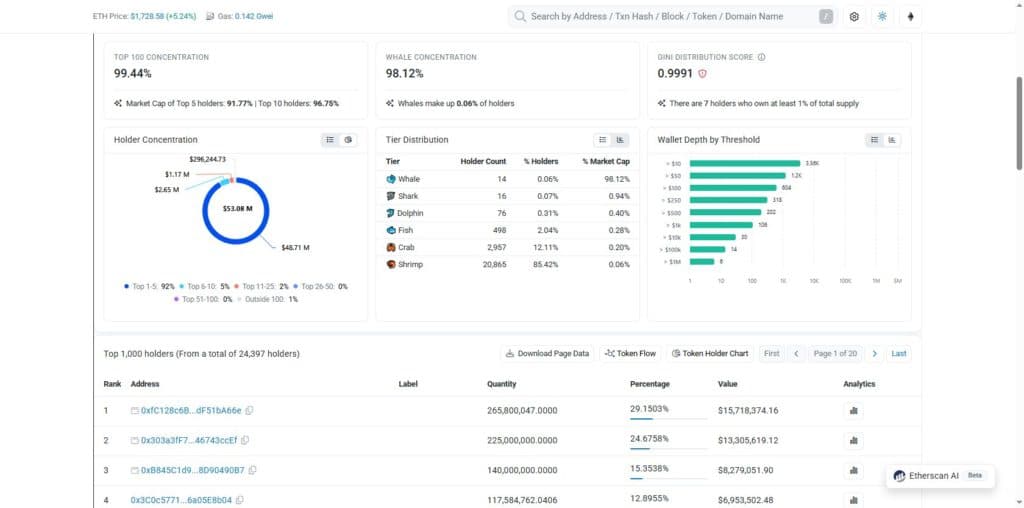
Etherscan’s holder chart for the Ethereum-side contract shows the top five wallets controlling 91.77% of that chain’s supply, a number that looks alarming until the wallets themselves are checked.
Four of the five are Gnosis Safe multisig contracts, all deployed by the same address, a pattern consistent with a team standing up separate treasury wallets for its disclosed allocation categories rather than a single actor concentrating control. The fifth, holding 12.90%, is an ordinary externally owned wallet with no label. That wallet received several inbound transfers within the hour before this research was conducted, moving tokens in rather than out.
The Contract Has No Mint Function. The Owner Still Has Keys.
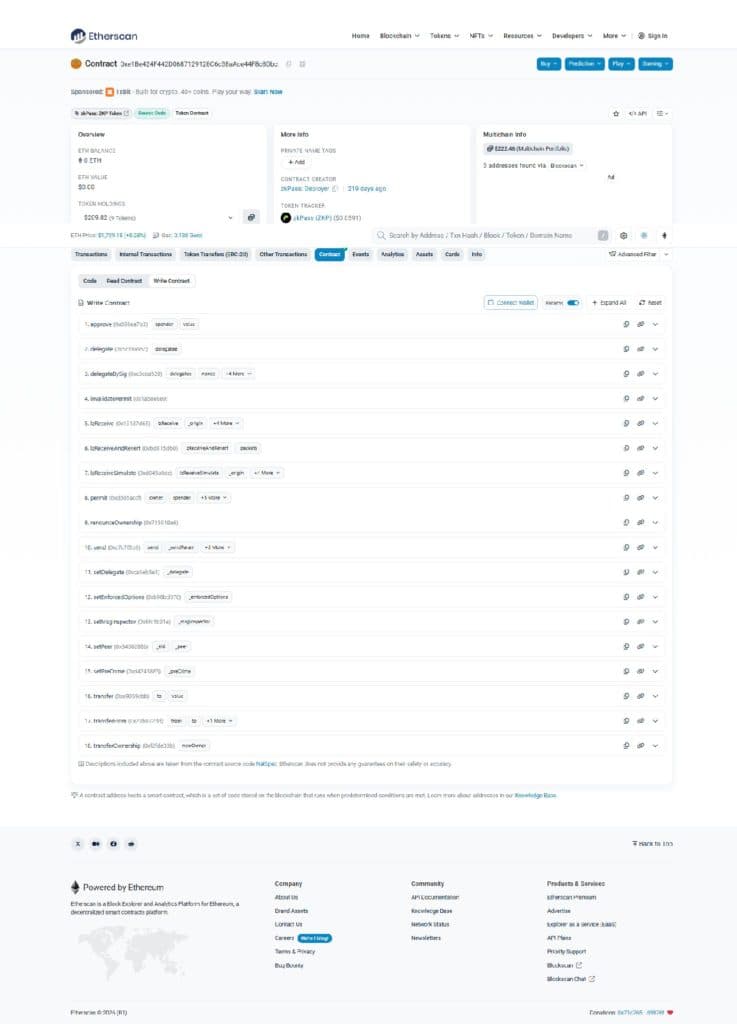
Etherscan’s Write Contract tab lists eighteen functions on the Ethereum token. None of them mint, pause, freeze or blacklist. A SUPPLY_CAP constant reads exactly 1,000,000,000, matching the tokenomics document and leaving no room for the contract to inflate beyond what the team has already disclosed.
Ownership has not been renounced, though. The owner() function returns a live address, one still able to call transferOwnership and a set of LayerZero bridge functions, including setPeer and setDelegate, that configure how the token moves between Ethereum, BNB Chain and Base. That is a narrower risk than a mint key. It gives the owner control over cross-chain routing configuration, not the ability to freeze balances or print new supply.
The DAO Has A Charter And Zero Votes
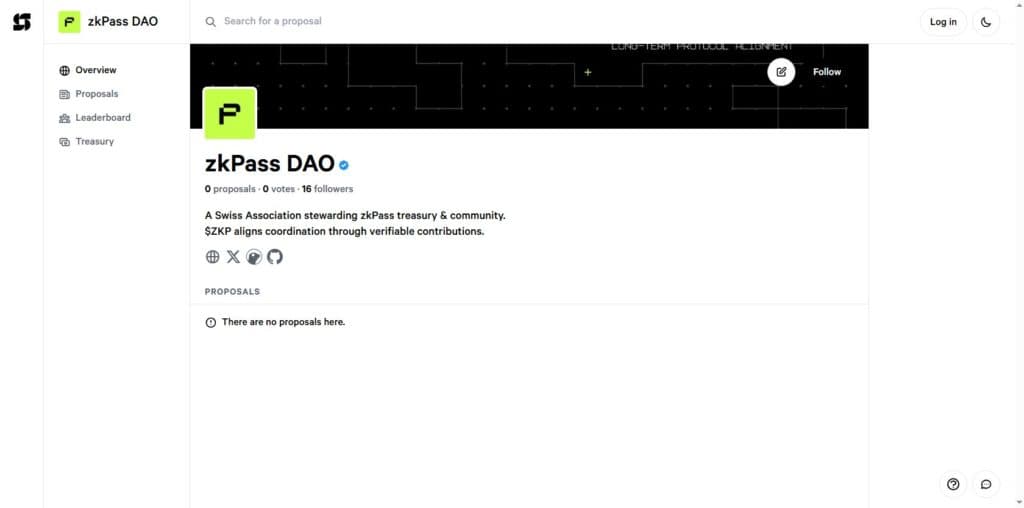
zkPass DAO published a governance framework in December 2025, a Swiss Association with a 4-of-5 treasury multisig and defined quorum rules. On Snapshot, the space run by that DAO shows zero proposals, zero votes cast, and 16 followers.
DeFiLlama’s hacks database returns no exploit history for zkPass, and no protocol page exists there at all since zkPass does not report TVL in the way a lending or DEX protocol would.
A Roadmap That Stops Six Months Ago
The project’s public roadmap lists milestones through Q4 2025, the quarter of its own token launch. No dated 2026 milestone appears on the page, despite a footer claiming it was updated three days before this research. No confirmed upcoming catalyst, such as a new exchange listing not yet live or a named partnership, was identified in the search conducted for this piece.
Peers Moved Too, Some By More
CoinMarketCap’s Zero Knowledge Proofs category shows most peers green over the past day: Worldcoin up 10.49%, Zcash up 5.73%, Starknet up 2.63%. Nexus, a smaller ZK project, gained 60.55%, outpacing even ZKP. The category is broadly positive today, but ZKP’s move sits well above the median for the group, pointing to a token-specific story layered on top of a mildly favorable sector.
What To Watch Next
Around December 19, 2026: the twelve-month cliff on the 22.5% Early Investor allocation ends, beginning an eighteen-month linear vesting period.
Around December 19, 2027: the twenty-four month cliff on the 14% Core Contributor allocation ends, beginning a twenty-four month linear vesting period.
Ongoing: whether the unlabeled Ethereum wallet holding 12.90% of that chain’s supply, which received fresh inbound transfers hours before this research, continues accumulating or begins moving tokens toward an exchange.
Where The Two Cases Diverge
If the community and liquidity allocations continue vesting on schedule without a fresh catalyst, circulating supply grows gradually while 36.5% of total supply stays locked until at least December 2026, limiting near-term sell pressure from the very holders large enough to move the market.
If the current rally draws in buyers sized for the reported $85 million daily volume rather than the roughly $706,000 of real on-chain depth, any attempt to exit a meaningful position through the BNB Chain pool directly would face the same slippage this research measured, regardless of how the price behaves on centralized exchanges in the meantime.
Disclaimer: This article is for informational purposes only and does not constitute financial advice. Cryptocurrency investments carry significant risk, including the total loss of capital. Always conduct your own research.