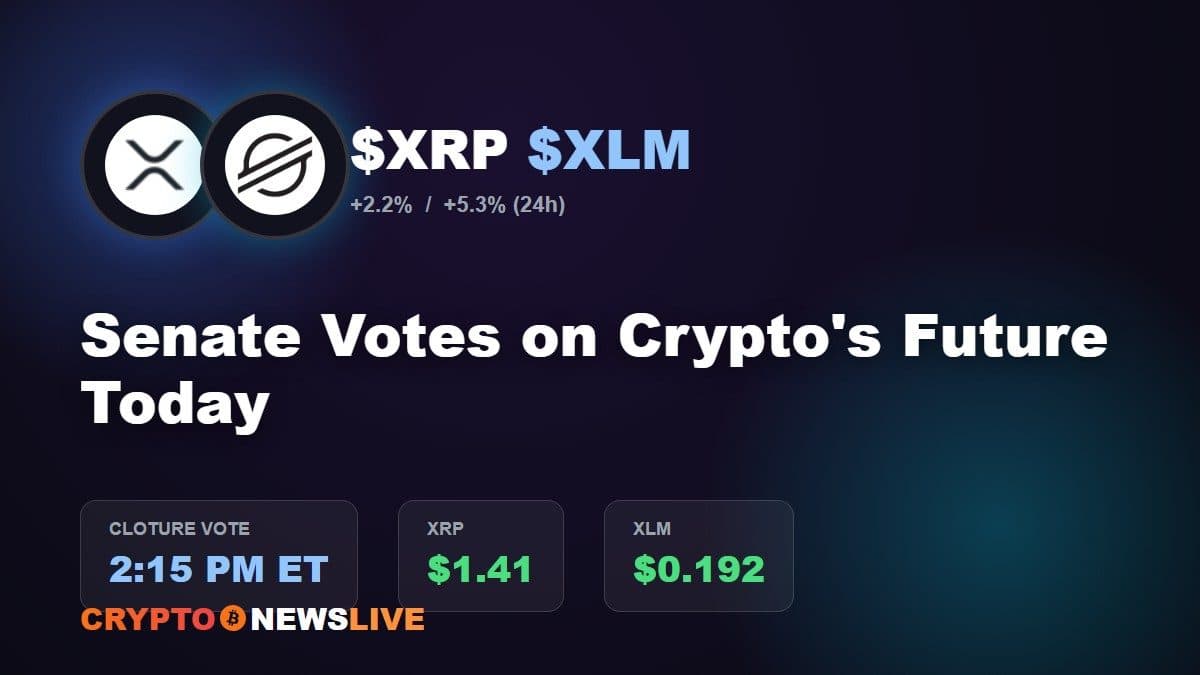
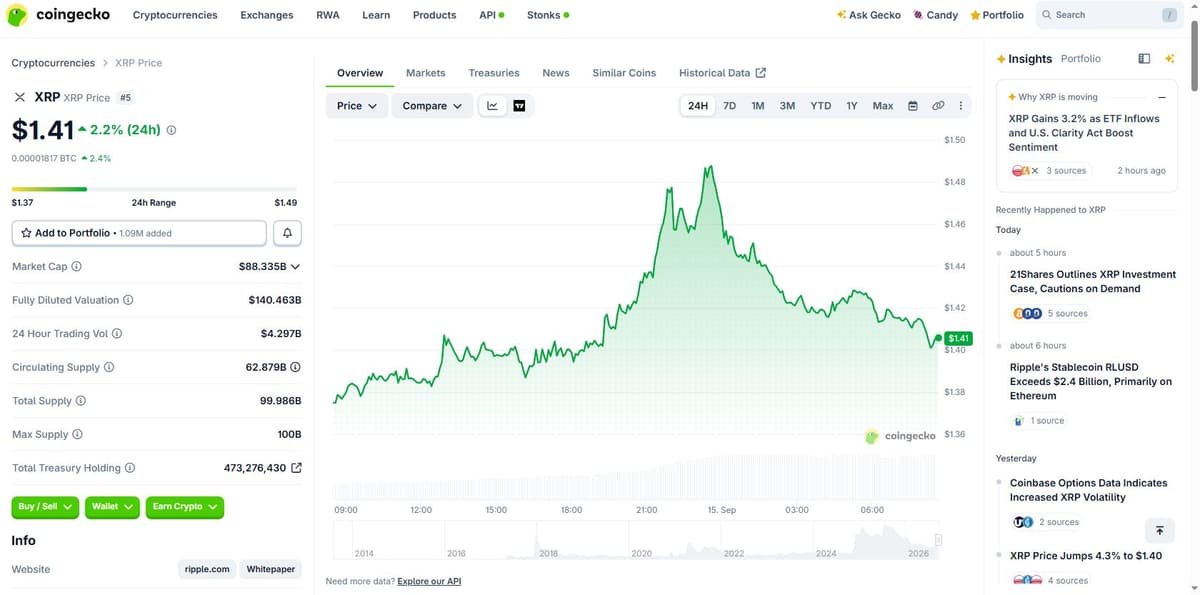
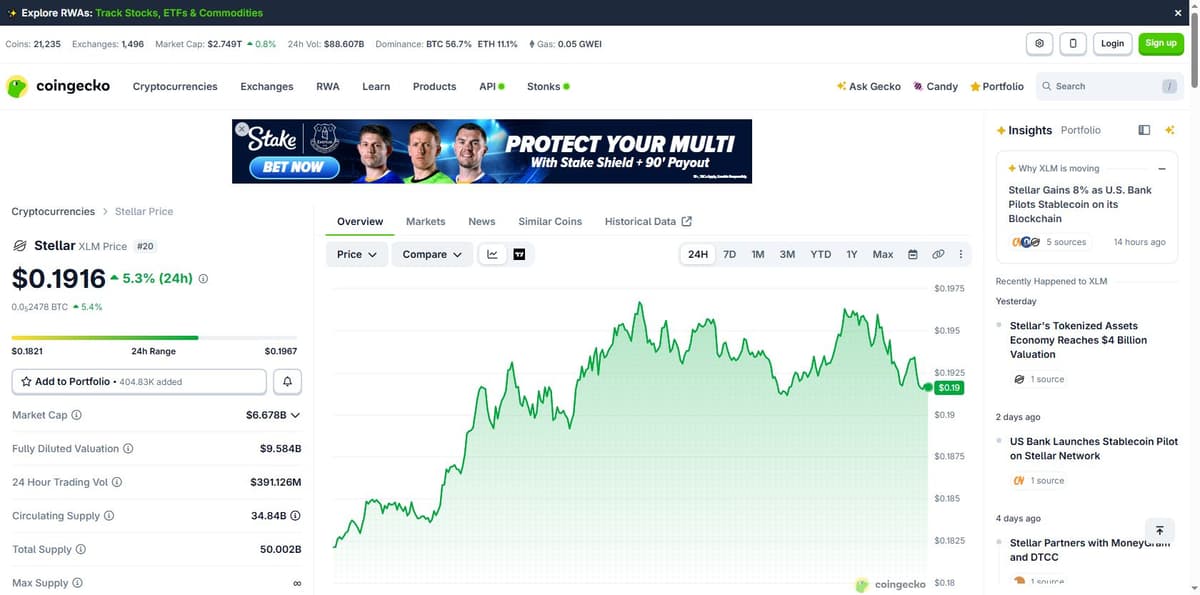
The U.S. Senate holds a cloture vote on the CLARITY Act at 2:15 p.m. ET today, and two of the tokens most exposed to years of U.S. regulatory ambiguity are already moving as if they know the answer. XRP is up 2.2% over the past 24 hours to $1.41, and XLM has jumped 5.3% to $0.1916, both outpacing the broader market by a wide margin heading into the vote.
Neither move is happening in a vacuum. This is a procedural vote, not the final word on the bill, but it’s the one that decides whether the CLARITY Act lives or stalls out for the year.
What Actually Gets Decided Today
The bill in question is H.R.3633, the Digital Asset Market Clarity Act, which already passed the House and has been sitting with a Senate cloture motion filed since August 8. Today’s vote is on the motion to proceed, not the bill itself.
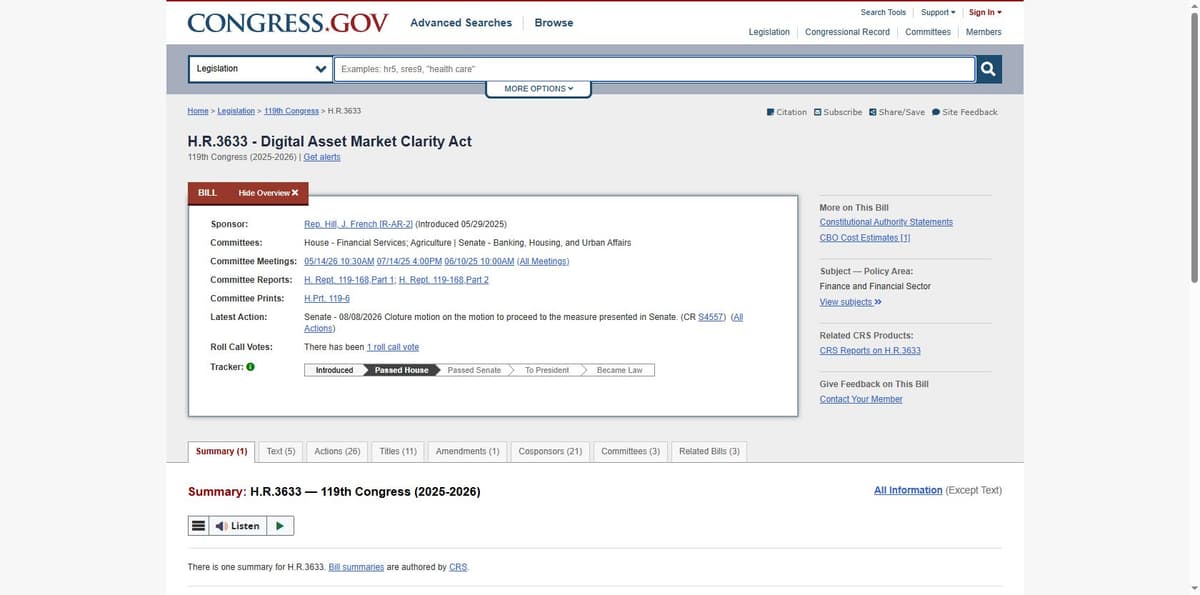
Republicans hold 53 Senate seats. Getting to the 60 votes needed for cloture means at least seven Democrats have to cross over. That math is why the vote is genuinely uncertain rather than a formality.
The bill itself would hand the CFTC and SEC clear jurisdictional lines over digital asset markets for the first time, replacing the current patchwork of enforcement-by-lawsuit. It also carries customer asset segregation rules, custody requirements, and insider-trading restrictions modeled on traditional finance, plus a recently added ethics provision requiring officials with major crypto holdings to move them into a blind trust.
Why XRP and XLM Specifically
XRP has spent years as the most litigated token in U.S. crypto history, and Stellar’s cross-border payment rails sit in the same regulatory gray zone the CLARITY Act is meant to clear up. A bill that draws a clean jurisdictional line is a disproportionately bigger deal for assets that have spent years without one, which is the straightforward case for why both are outrunning Bitcoin and Ethereum into today’s vote.
Stellar has a second, separate catalyst working in its favor this week. U.S. Bank announced on September 9 that it completed a live pilot transaction on the Stellar blockchain using USBDC, its own proprietary dollar-backed stablecoin, to settle a cross-border payment between its North American and European entities.
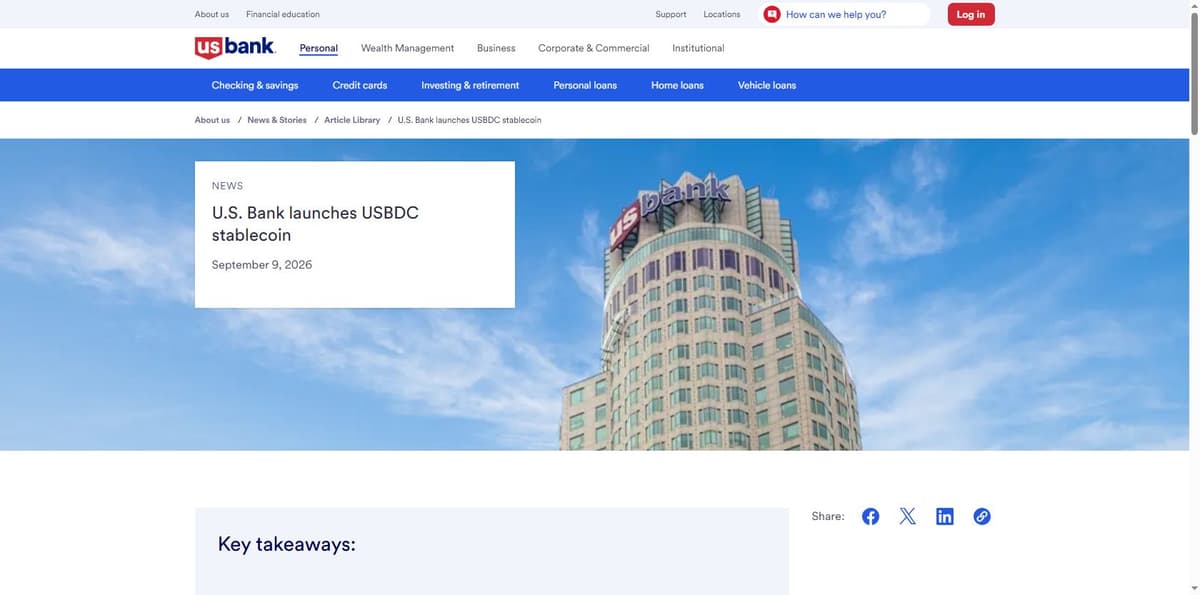
That pilot tested minting, redemption, freezing, and clawback controls on Stellar’s public chain while staying wired into U.S. Bank’s own compliance infrastructure, exactly the kind of bank-grade plumbing a CLARITY-style framework is designed to make easier to build on top of. A real, named U.S. bank moving live value on Stellar days before a Senate vote on crypto market structure isn’t a coincidence a chart alone can explain.
The Charts Are Already Pricing In Optimism
Both tokens have been grinding higher through the session, not spiking on a single headline. XRP’s intraday chart shows a steady climb from the low $1.38s up toward $1.49 before easing back, while XLM built a similar staircase pattern from the $0.182 area toward its 24-hour high near $0.197.
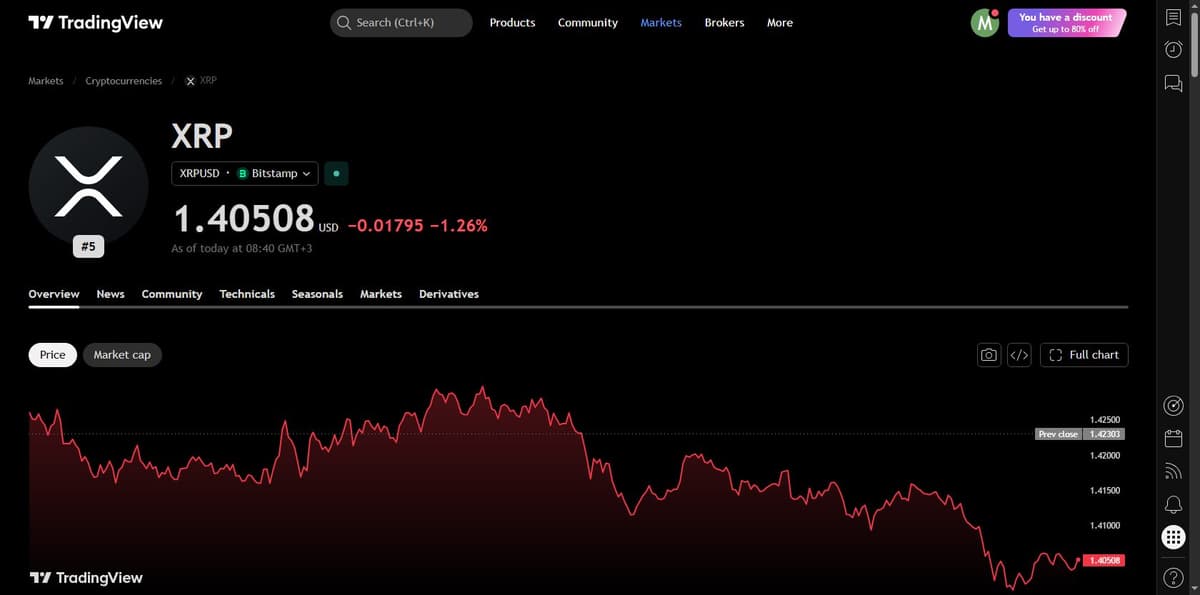
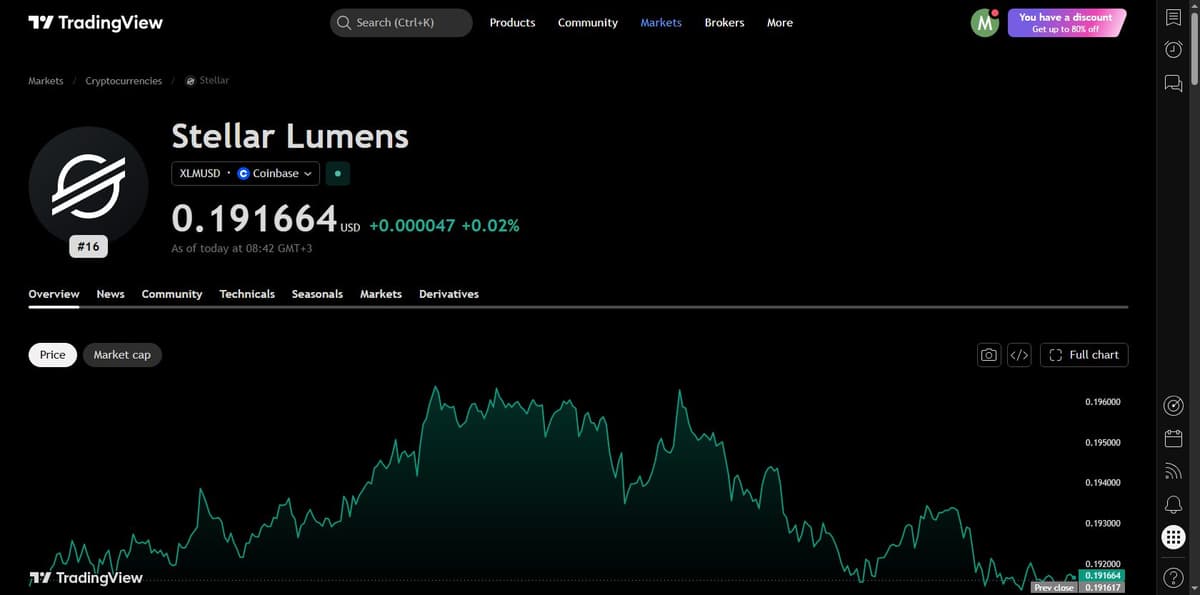
That kind of grind, rather than a single vertical spike, is generally read as accumulation rather than a pure headline pop: buyers stepping in steadily rather than one burst of momentum chasing. It also leaves both tokens more exposed to a sharp reversal if the vote actually disappoints, since a lot of the optimism is already sitting in the price before a single vote has been counted.
Tomorrow Adds a Second Catalyst
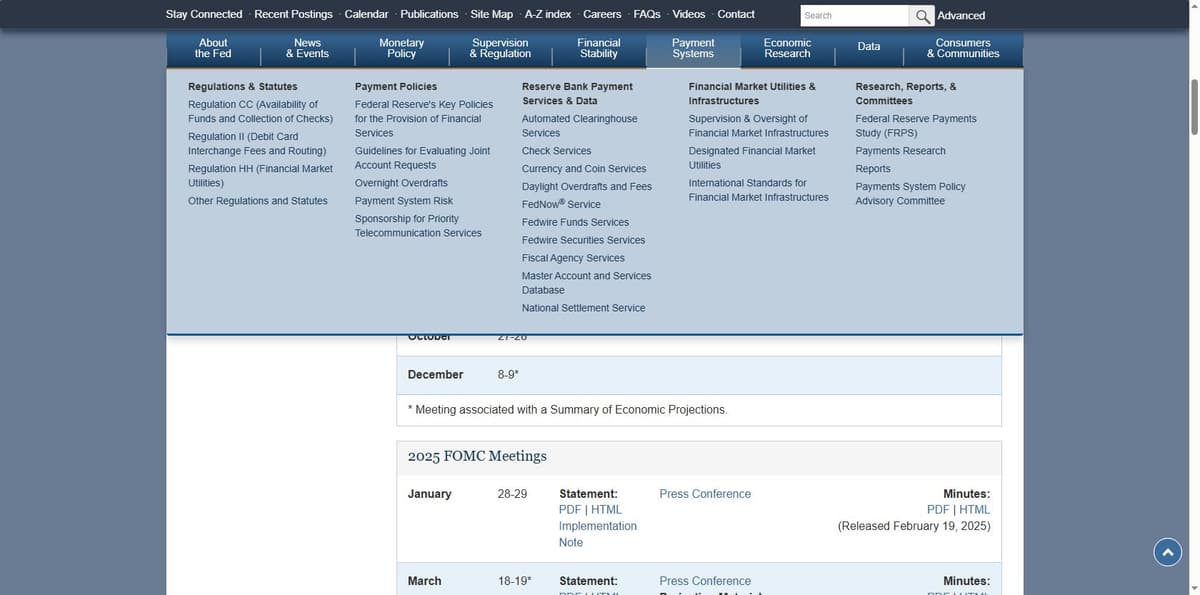
The Senate vote isn’t the only major event on the calendar this week. The Federal Reserve’s own FOMC schedule confirms the next meeting runs September 15-16, with the rate decision landing Wednesday, September 16 at 2:00 p.m. ET, one of the meetings that comes with a fresh Summary of Economic Projections, making it a higher-stakes decision than a routine hold.
A Senate vote and a Fed rate decision landing back to back puts XRP and XLM in a position where two unrelated outcomes, one legislative and one monetary, both land inside 24 hours of each other. That’s a narrow window for the market to digest a lot of new information about the same set of assets.
Whatever the Senate decides this afternoon, the fact that XRP and XLM are the two tokens moving hardest into the vote says something on its own: years of unresolved regulatory status turned out to be a bigger drag on price than any single technical setup, and the market is now betting that drag is finally about to lift.