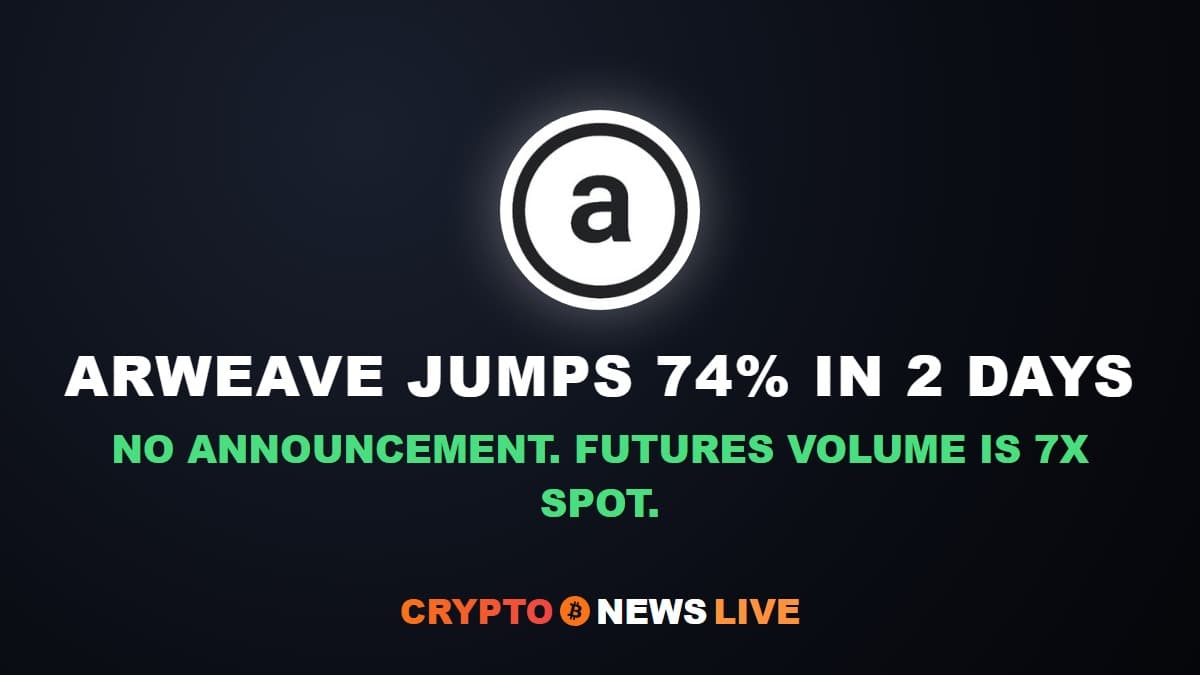
Nothing was announced. Arweave still went from $2.65 to $4.60 on Binance in two days, a gain of about 74%.
The obvious question is why. Chasing the answer turned up a wrong lead, a quiet project, and a derivatives market doing most of the trading.
Two Days, One Missing Announcement
AR closed Thursday at $2.65 on Binance. Friday it closed at $3.65, up about 38%, and on Saturday it was trading near $4.60.
Spot volume on the Binance pair jumped from a $2.1 million daily average over the prior week to $12.2 million on Friday. Saturday was already near $35 million with the day unfinished.
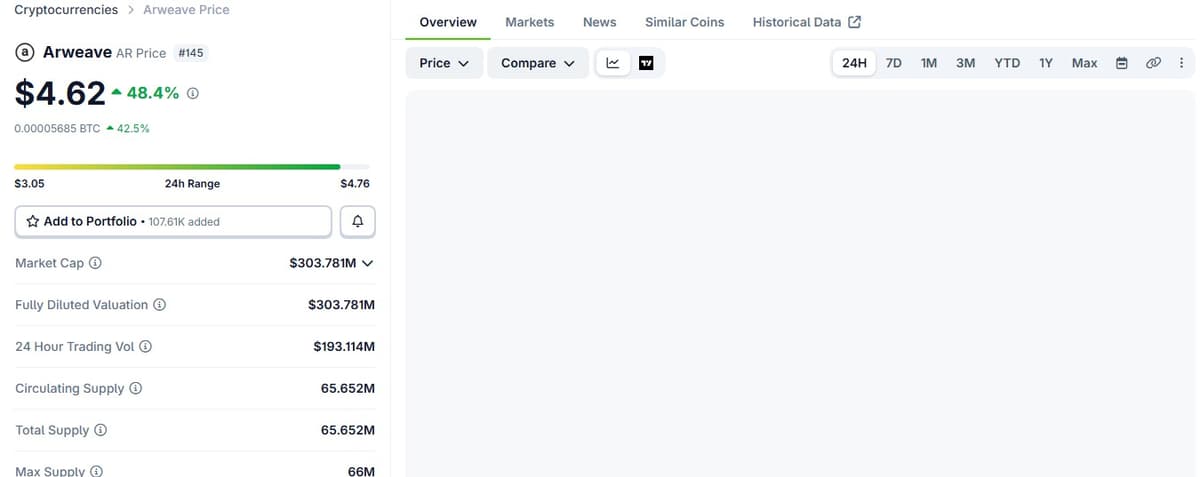
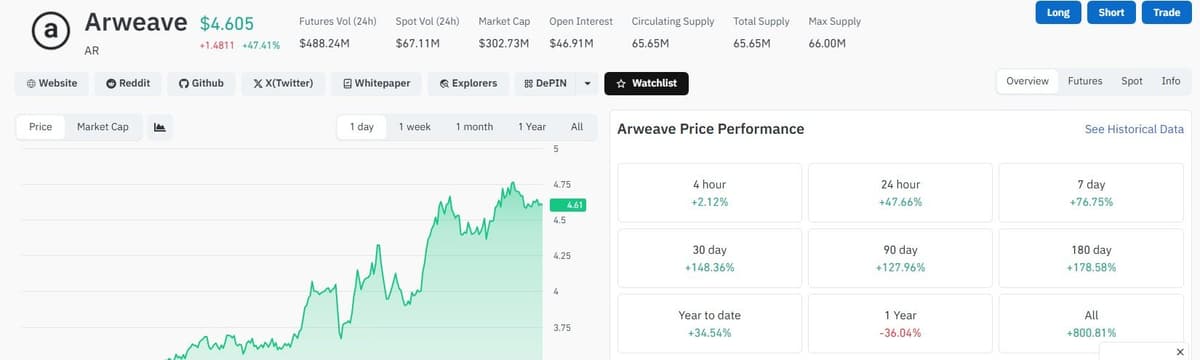
CoinGecko showed AR at $4.62, up 48.4% in 24 hours, for a market cap of about $304 million. It ranks 145th.
The AI Summary Got the Wrong AR
CoinGecko’s own category overview offers an explanation. It says Arweave’s price soared after RealGo, “a Web3 AR mobile game utilizing Arweave for storage,” announced a $6 million financing round.
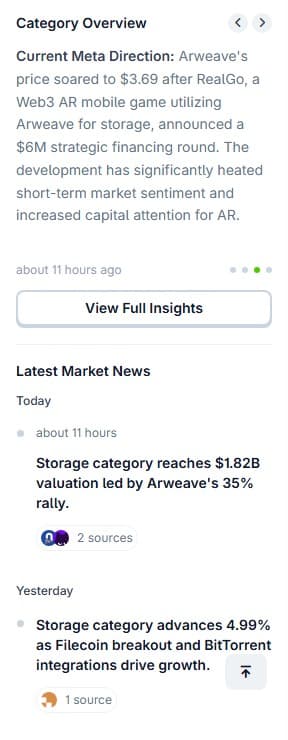
That does not hold up. In RealGo’s case, “AR” means augmented reality. The coverage of its round that I found describes a game built on AI, augmented reality and location services, and it never mentions Arweave.
The timing is also off. That coverage is dated September 11, a full week before the price moved. A search on X for RealGo and Arweave together returned no results at all.

An automated summary matched a ticker to a phrase and called it a cause. Readers who took it at face value would think they knew why AR moved. They would be wrong.
What the Project Itself Was Doing
Arweave’s community account, the main public feed for the network, has posted nothing about a launch, a listing or a partnership this week. Its newest original posts date to early August, plus a pinned note from September 2.

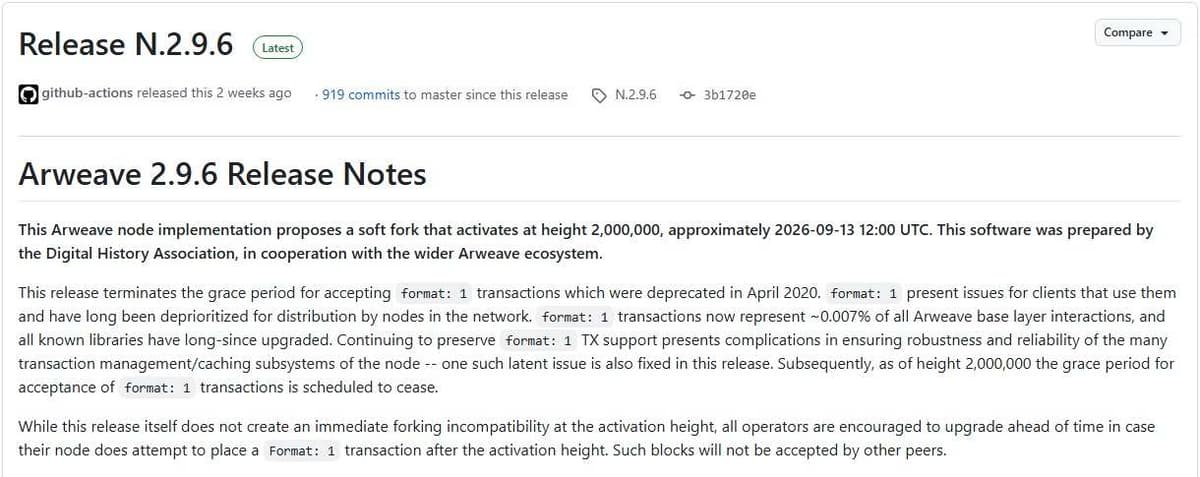
The code repository has one recent release, and it is housekeeping. Version 2.9.6 ended a grace period for a format of transaction deprecated in April 2020, which the release notes say makes up about 0.007% of base layer activity. Its activation was set for about September 13, five days before the rally began.
Supply does not explain it either. About 65.65 million of the 66 million maximum are already circulating, so no large release of new tokens is waiting to hit the market.
Futures Did the Trading
Here the numbers get loud. Coinglass showed 24-hour futures volume of $488 million against $67 million in spot volume. That is a ratio of about 7.3 to 1.
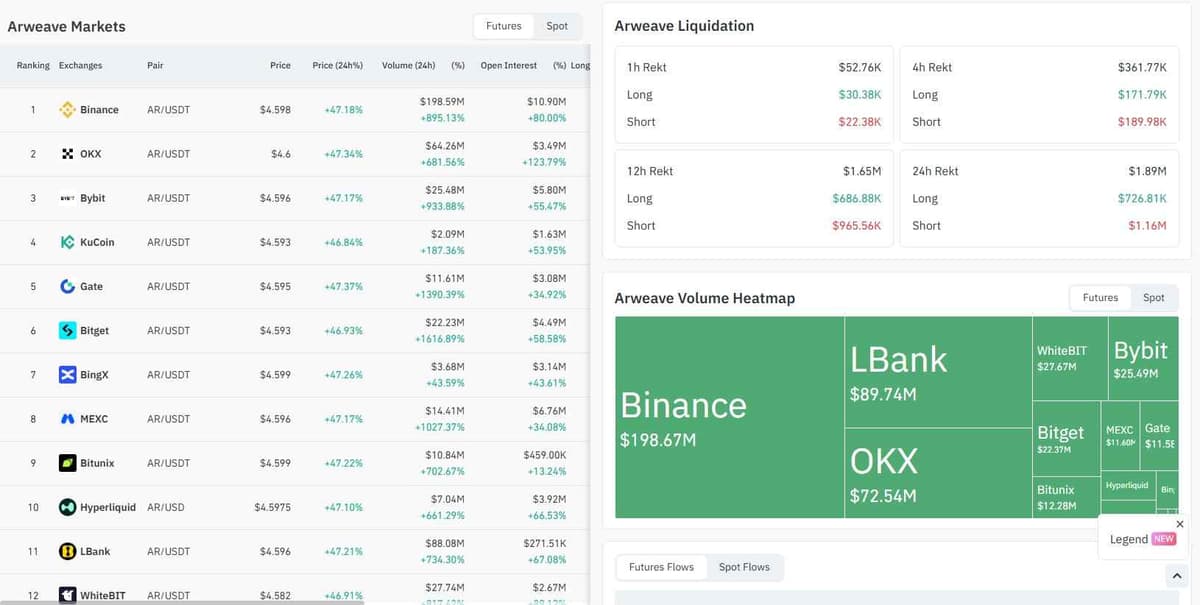
On Binance’s AR/USDT perpetual alone, volume reached $198.6 million, up 895% in a day. Open interest on that contract rose about 80% to $10.9 million.
What did not show up was forced buying. Total AR liquidations over 24 hours came to just $1.89 million, and $1.16 million of that was shorts. A short squeeze needs a pile of liquidations feeding the move, and this was not that.
So traders chose to buy, and did it with borrowed money. That is a different risk from a squeeze, and one the price can reverse without any news at all.
The Sector Rose, Arweave Tripled It
Storage tokens did climb. Filecoin gained 15.1% in 24 hours, AIOZ 17.3% and Walrus 13.0%. BitTorrent and Siacoin barely moved, up about 2% each.
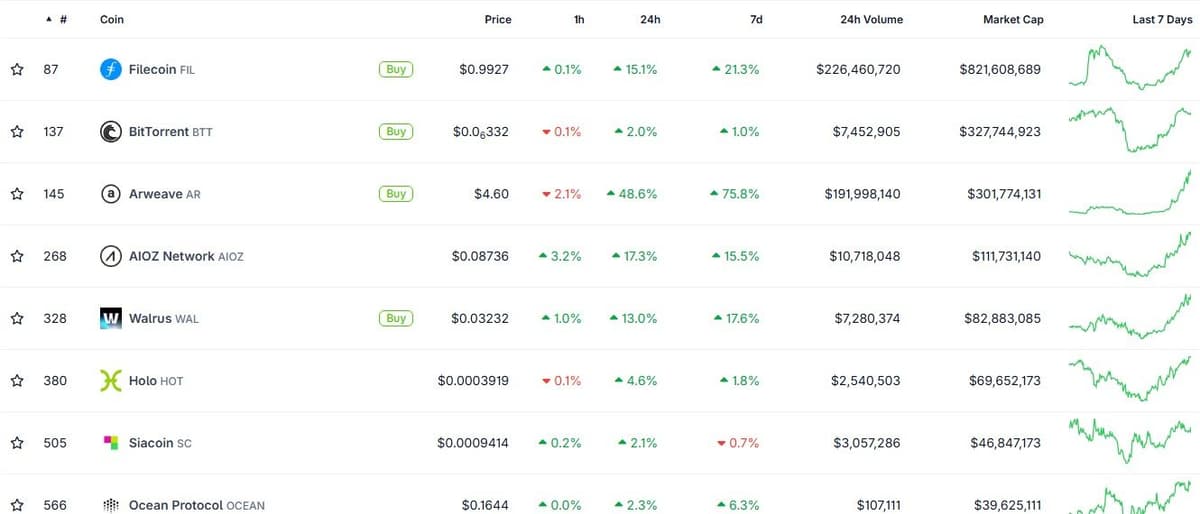
A rising sector explains part of the move. AR’s gain of 48.6% was roughly three times Filecoin’s, which leaves most of it unaccounted for.
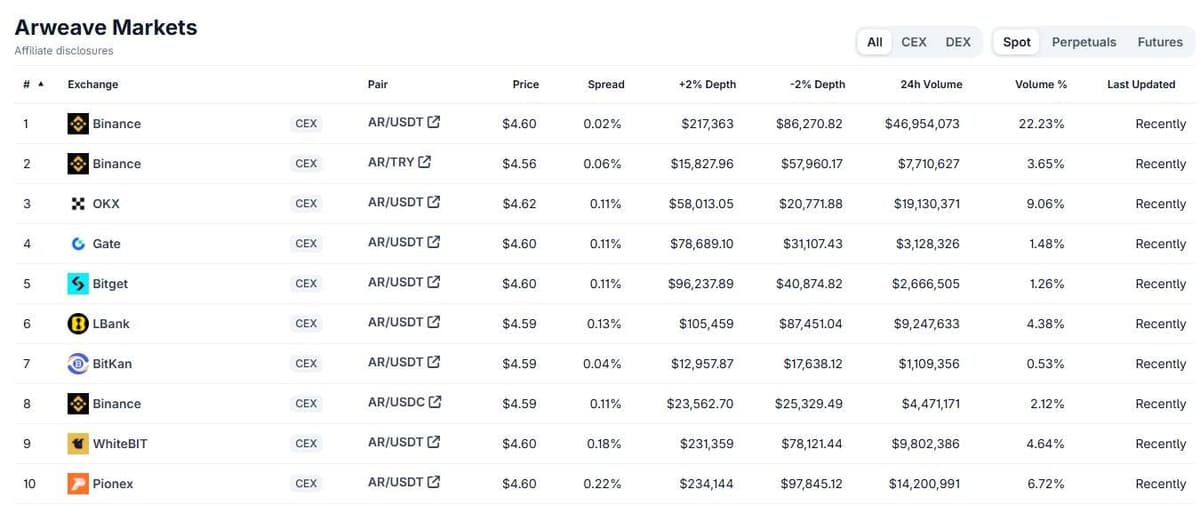
Where the volume went is clear. The top ten venues on CoinGecko’s markets tab are all centralized exchanges, with Binance’s three AR pairs alone taking about 28% of reported volume. On-chain trading is not the story here.
A Chart Running Into Old Supply
For six months AR sat in a range between roughly $1.50 and $2.80. A spike to $2.93 on September 13 failed, and the pullback ended near $2.45.
Friday’s candle took out the 60-day high of $3.16 in one session. Saturday’s high of $4.78 landed almost exactly on the November 15 high of $4.81, with a December 3 high of $4.61 sitting just under it.
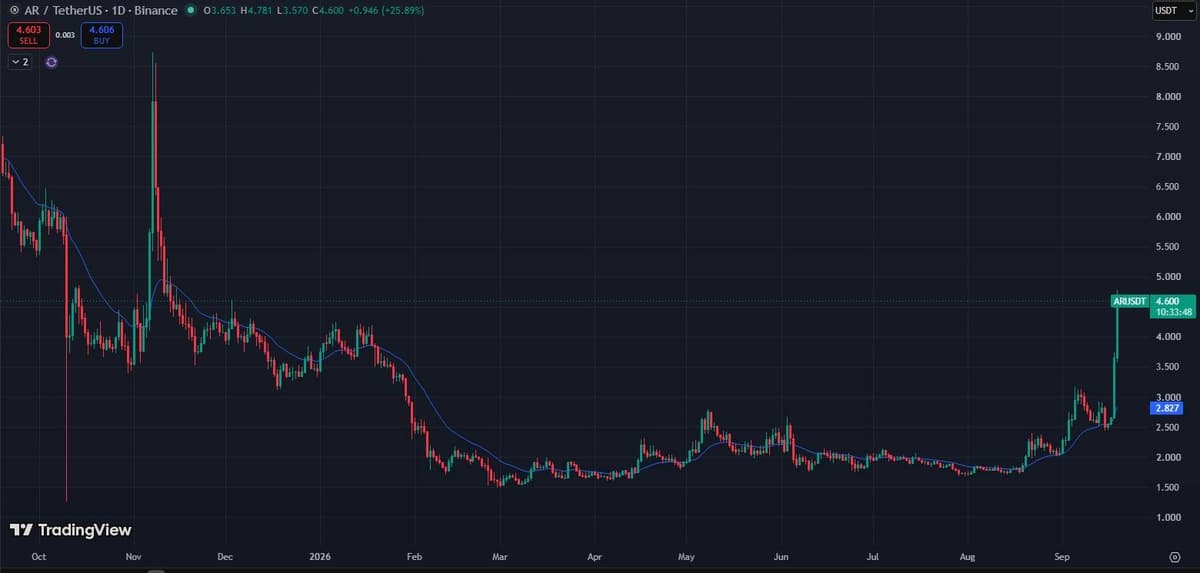
That zone is where sellers stepped in last autumn, and the price has now run into it with almost no consolidation underneath. The nearest chart support is Friday’s $3.65 close, then the failed $2.93 spike.
What Would Change the Read
A daily close above $4.81 would clear the November high and move the argument from exhaustion to trend. A close back under $3.65 would erase Friday’s entire leg.
The data I could verify points to a market-driven move with no named catalyst. If a real one exists, it has not been announced through any channel I could check, and the RealGo story is not it.