Ethereum closed Friday at $2,612, its highest daily close since January 30. It gained about 6.7% on the day, ahead of Bitcoin’s 5.9%.
Two policy events landed inside the same 24 hours. Neither one explains the move on its own, and the data shows why.
The Bank of Japan Hiked by a 7-2 Vote
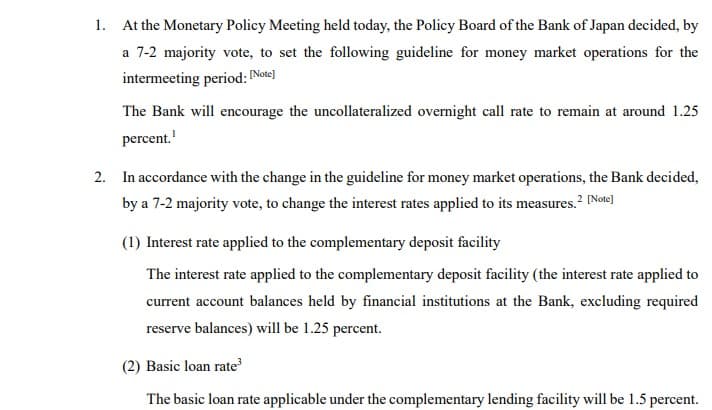
On September 18 the Bank of Japan’s Policy Board voted 7-2 to set its overnight call-rate guideline at around 1.25%. It also set the interest rate on its complementary deposit facility at 1.25%.
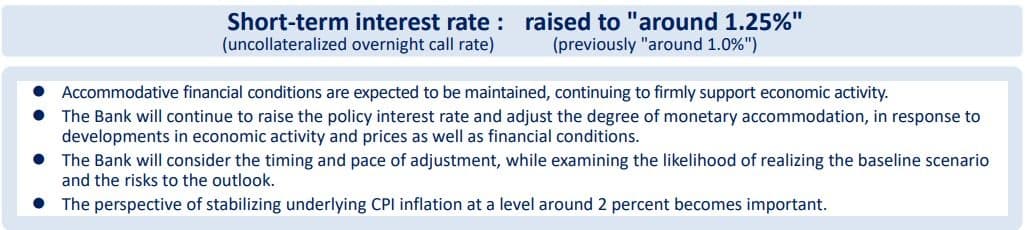
That is a quarter-point increase. The Bank’s own reference slide shows the short-term rate “raised to around 1.25%,” previously around 1.0%.
A tighter yen policy is usually read as a headwind for risk assets. The fact that ETH rallied through it suggests the market had already priced the hike, and that the vote itself held no surprise larger than the number.
What the CFTC Actually Did
On September 17 the CFTC’s Market Participants Division issued a no-action position for providers of passive software. It says staff will not recommend enforcement against such providers for failing to register as an introducing broker, subject to conditions.
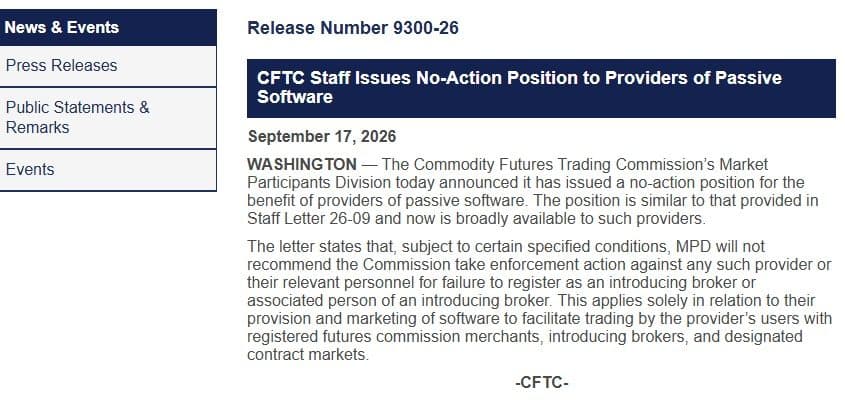
The scope is narrow. It covers software that helps users trade through registered futures commission merchants, introducing brokers and designated contract markets. It does not address tokens, exchanges or spot markets directly.
A separate filing is bigger in principle. The federal government’s OIRA review list shows the CFTC submitted “Regulation Crypto Asset Transactions and Regulation Crypto Asset Markets” on September 17.

It is listed at the “Prerule” stage, marked not economically significant, with no legal deadline. The text is not public, so nothing in it can be read yet. What the listing does confirm is that a rulemaking track for crypto asset markets is moving inside the executive branch.
What the Chart Shows
ETH has traded in a band since a mid-August breakout from below $2,000. The highest daily close inside that band, through September 17, was $2,526. The lowest print since August 20 was $2,222.
A spike to $2,666 on September 11 did not hold. Friday’s close cleared both that spike and the old closing high in one candle.
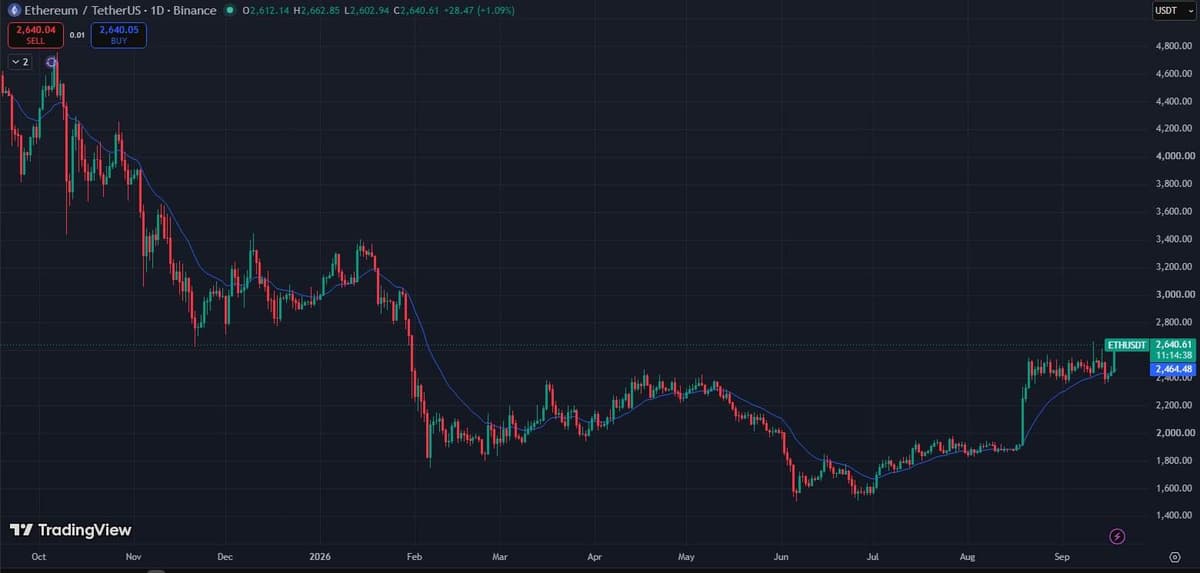
The next reference is January. ETH closed at $2,707 on January 30, with an intraday high near $2,829. Those two levels are the obvious ceiling for a second attempt, while $2,526 is the first place buyers would be expected to defend on a pullback.
Mostly a Market-Wide Move
Using daily closes, ETH’s correlation to Bitcoin is 0.98 over the last seven days and 0.92 over 30. Bitcoin gained 5.9% on Friday, so ETH’s extra 0.8 points of gain is small.
That is the honest read. A regulatory filing and a rate decision may have improved the mood, but the coin moved almost exactly with the rest of the market.
Shorts Paid for the Squeeze
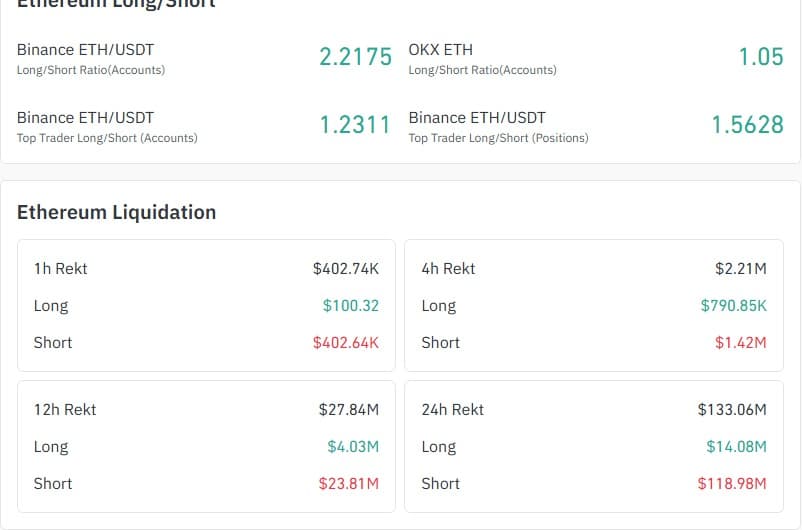
Coinglass showed about $133 million of ETH liquidations in its rolling 24-hour window on Saturday. Roughly $119 million of that was short positions, about 89%.
Binance ETHUSDT open interest rose from about $5.59 billion to $6.16 billion across Friday, up about 10%. Contract count rose only about 3%, so most of that gain is the higher price.
Funding printed 0.01% on the last three settlements, the baseline rate longs pay shorts. That is not a crowded-long signal yet, though Coinglass shows Binance’s account long/short ratio at 2.22 against 1.05 on OKX.
What Would Confirm It
A second daily close above $2,526 would show the breakout is not a one-day squeeze. A close above $2,707 would take ETH past its January closing level.
If Bitcoin gives back part of Friday’s gain, ETH’s 0.98 correlation says it will follow. Watch whether the OIRA filing gets a public text, and whether funding moves above baseline.