Kenya’s national exam board just moved millions of academic certificates onto a public blockchain, and the number in Avalanche’s own announcement post doesn’t quite match the number in Avalanche’s own blog post about it. The Avalanche blockchain now underpins a nationwide e-certification system built by the Kenya National Examinations Council, known locally as KNEC, and the numbers involved depend on which official source is doing the counting.
Avalanche’s X account called it “30M+ academic credentials on chain.” The Ava Labs blog post published the same day tells a more specific story: more than 15 million records anchored on the Avalanche C-Chain right now, dating back to 1989, with the total projected to reach roughly 35 million as more exam years and certificate types get folded in. Neither figure is wrong exactly, they’re just describing different stages of the same rollout, and only one of them, the 15 million count, comes with a stated methodology.
From Six-Month Waits to a Ten-Second Check
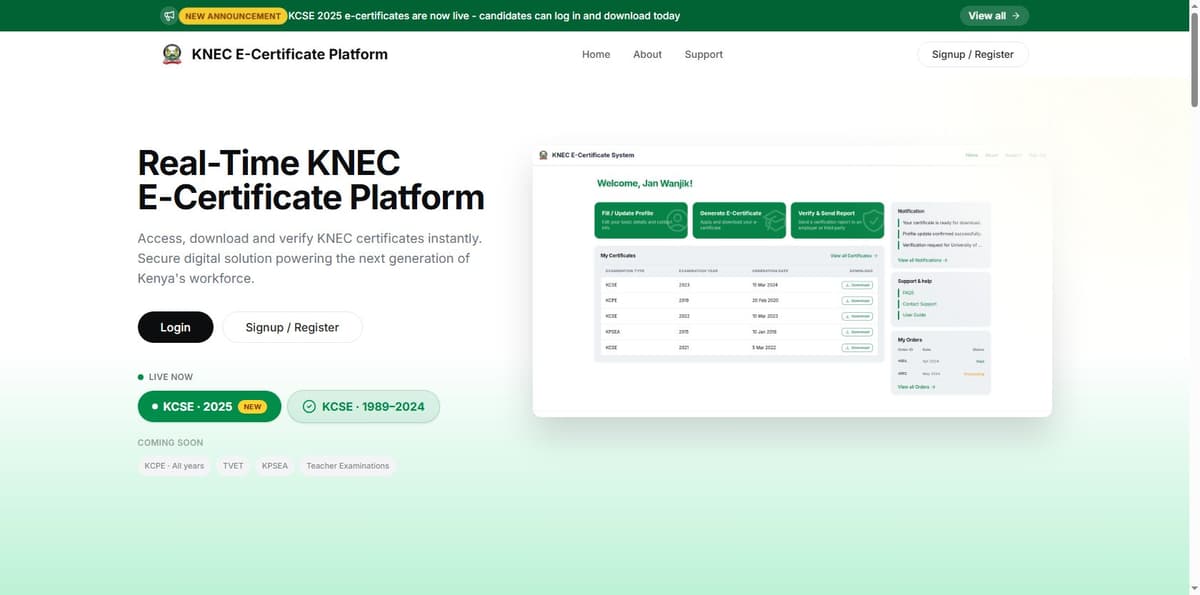
The system runs through ecertificate.knec.ac.ke, a live portal confirmed working at the time of writing. Graduates verify their identity with a national ID card and download a certificate that KNEC says never expires. Employers and universities pay per certificate to run instant checks, with a separate bulk-verification track built for mass recruiters. KCSE 2025 results for close to a million students are now available exclusively through the digital platform, meaning that cohort has no paper fallback left.
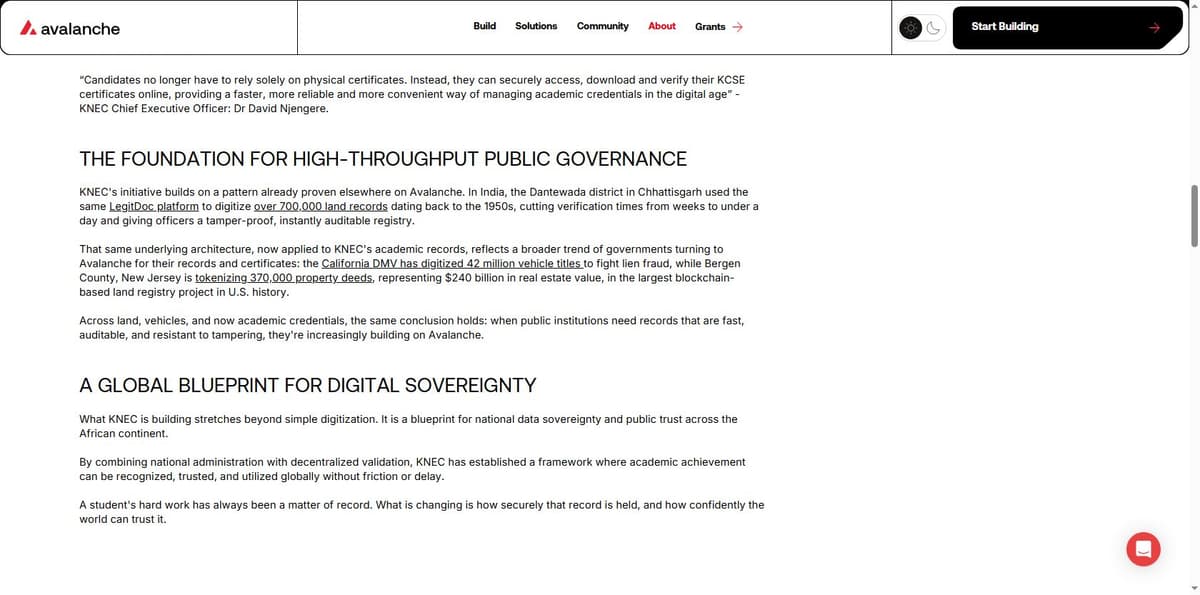
That matters because the old process was slow enough to actively cost people jobs and admissions. According to the Ava Labs blog, a single certificate check could take up to a month through KNEC’s traditional channels, and mass recruiters verifying large batches of candidates sometimes waited six months for manual confirmation against paper archives. Even the interim fix, QR codes printed on physical certificates, stayed tied to conventional databases that bad actors could spoof with lookalike verification sites. KNEC Chief Executive Officer Dr. David Njengere put the change in plain terms in the same post: candidates “no longer have to rely solely on physical certificates,” and can instead access, download and verify KCSE certificates online.
The Vendor Behind the Curtain Isn’t Avalanche-Exclusive
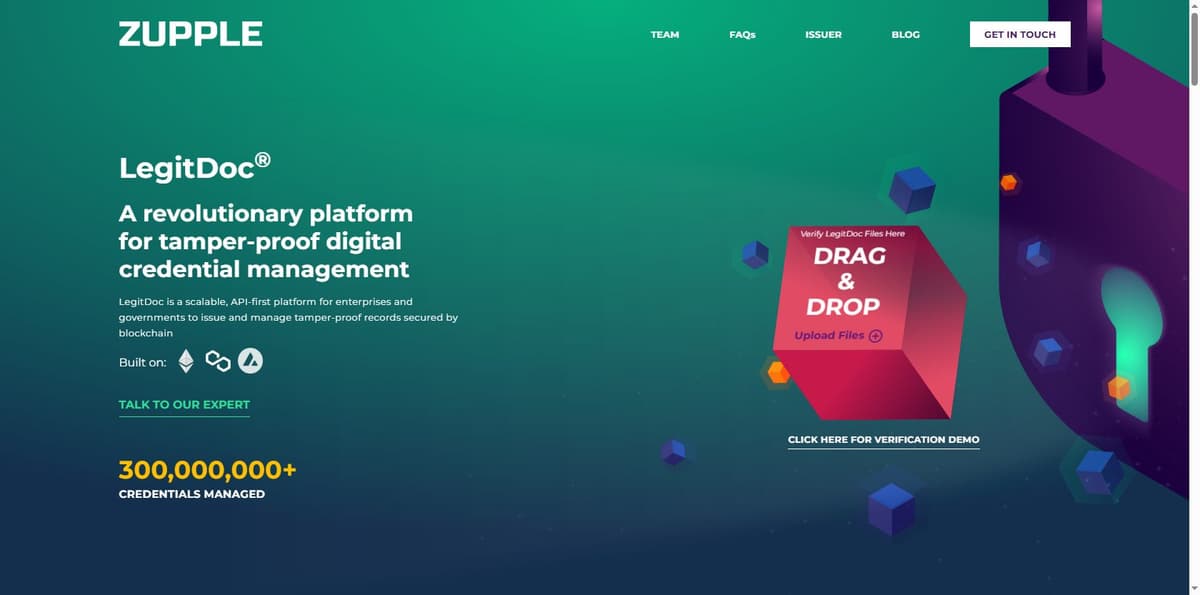
KNEC didn’t build this in-house. The infrastructure runs through LegitDoc, a credentialing platform from Indian blockchain firm Zupple Labs, deployed locally in Kenya through a domestic technology partner. LegitDoc’s own site claims more than 300 million credentials managed across its client base and lists Ethereum, Polygon and Avalanche as its supported chains, with verified contract addresses published for the Ethereum and Polygon deployments specifically. A public, discrete contract address for the Avalanche side of KNEC’s rollout isn’t listed anywhere on LegitDoc’s site as of this writing, so independent on-chain verification of the exact anchoring contract currently rests on KNEC, Ava Labs and LegitDoc’s own word rather than a link anyone can click and audit themselves.
LegitDoc has run this playbook before. The same platform digitized more than 700,000 land records for the Dantewada district administration in India’s Chhattisgarh state, cutting verification from weeks to under a day. Ava Labs’ blog ties the KNEC deal into a wider pattern of governments anchoring records on Avalanche: the California DMV has digitized 42 million vehicle titles to fight lien fraud, and Bergen County, New Jersey is tokenizing 370,000 property deeds representing $240 billion in real estate value, described as the largest blockchain-based land registry project in U.S. history.
KNEC Was Already Rolling This Out Before Avalanche Said a Word
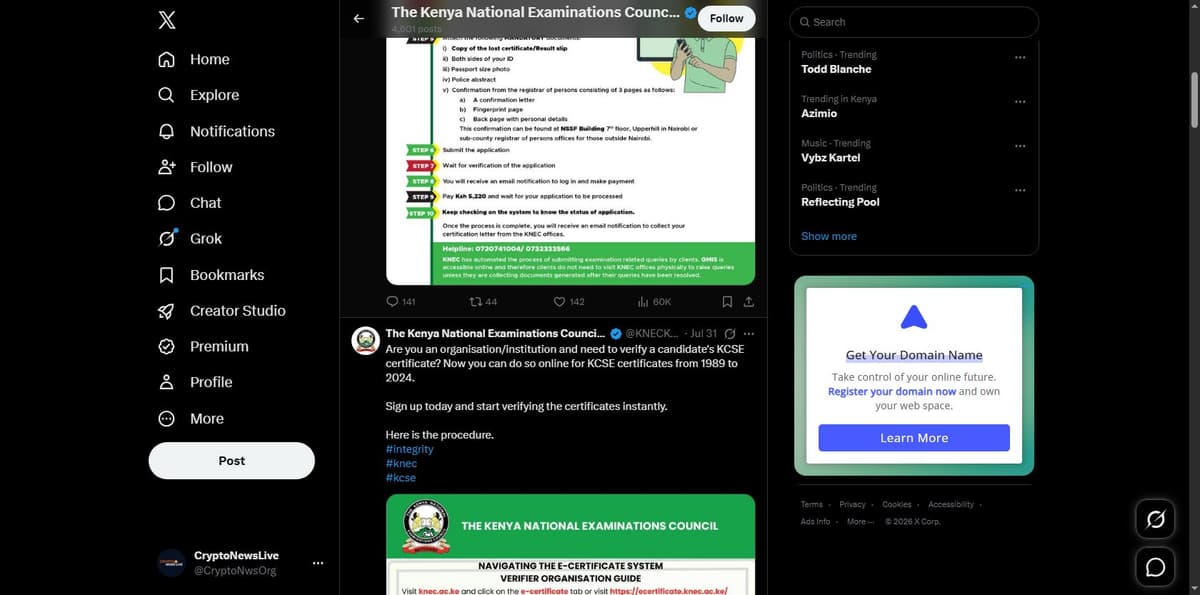
KNEC’s own X account, @KNECKenya, backs up the timeline independently of Avalanche’s promotion. On July 21, the exam board posted that candidates could now “access, download and verify” KCSE certificates online. On July 31, a second post opened the same bulk-verification tool to organizations checking KCSE certificates issued between 1989 and 2024. Neither of those posts mentions Avalanche or blockchain by name, which is itself worth noting: the government agency talks about the feature, the blockchain vendor talks about the infrastructure underneath it, and the two only fully overlap in Ava Labs’ own write-up.
AVAX Dipped First, Then Ripped 7% Once the Story Spread
The market’s first reaction undercut the announcement. Cointelegraph’s coverage of the news noted AVAX actually traded down 1.1% on the day of the announcement, still sitting roughly 69% below where it was a year earlier, and pointed out that neither KNEC nor Avalanche disclosed any adoption numbers for students, employers or institutions actually using the new portal, leaving the token-demand case entirely unstated. That’s a fair read of the announcement in isolation.
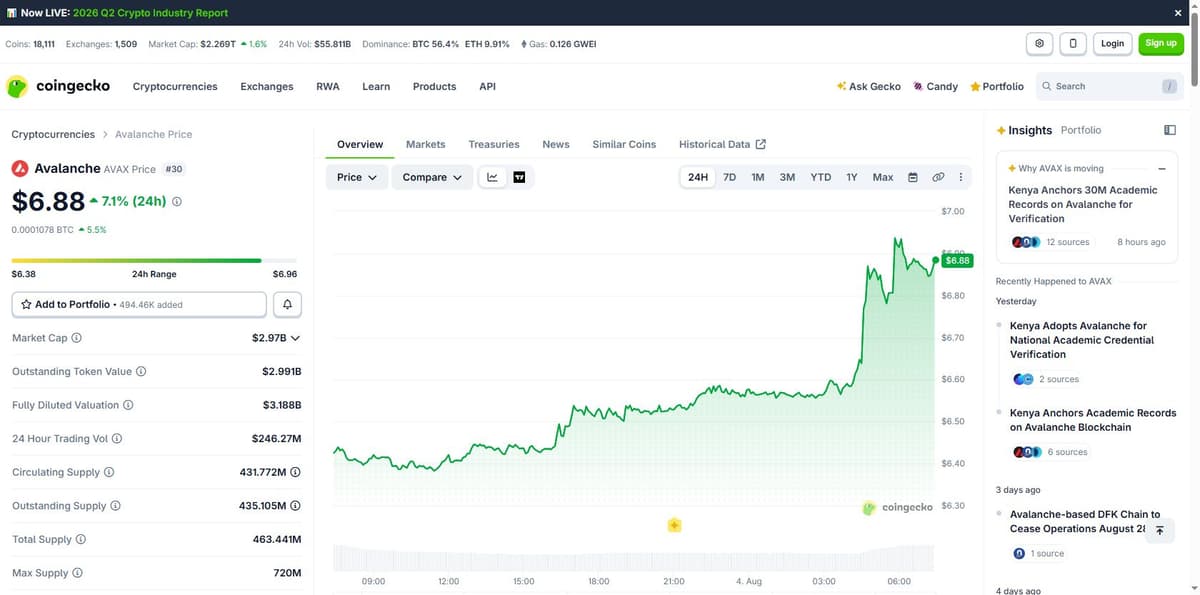
It didn’t stay the read for long. By the time this article went to print, AVAX had rallied to $6.88, up 7.1% over 24 hours, and CoinGecko’s own “Why AVAX is Moving” tracker had attributed the move directly to the Kenya news, citing it across 12 aggregated sources roughly eight hours after the story broke. Market cap sat at $2.97 billion, with $246 million in 24-hour trading volume, ranking AVAX #30 by market cap at the time of the snapshot below.
The full announcement, video included, is on Ava Labs’ own blog under the headline “Securing a Nation’s Credentials: Kenya Anchors Academic Records on Avalanche.” It frames the deal as a template for what Avalanche calls “digital sovereignty” across Africa, positioning KNEC alongside its other government wins as evidence that public institutions are picking Avalanche specifically when they need records that are fast, auditable and resistant to tampering.
What’s actually verifiable right now: the portal is live, KNEC confirms it independently, LegitDoc’s infrastructure has a real multi-country track record, and the specific number of records anchored depends on whether you trust the tweet or the blog post sitting underneath it. For a government deployment this size, that’s a gap worth closing before the 35-million-record target gets treated as already met.
Disclaimer: This article covers price movements and is for informational purposes only. It is not financial advice. Cryptocurrency markets are volatile, and readers should conduct their own research before making investment decisions.