Nillion’s roadmap post from August 12 puts its Ethereum mainnet launch on September 28. The node migration guide it published September 26 puts Blacklight L1 mainnet on October 5.
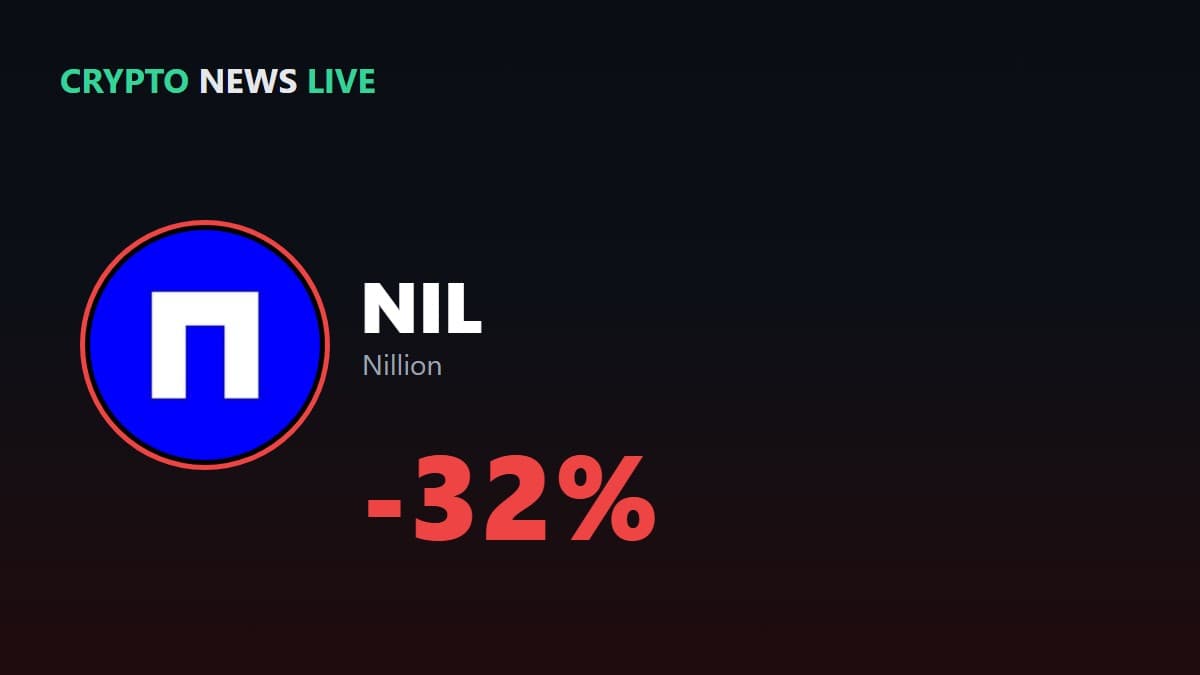
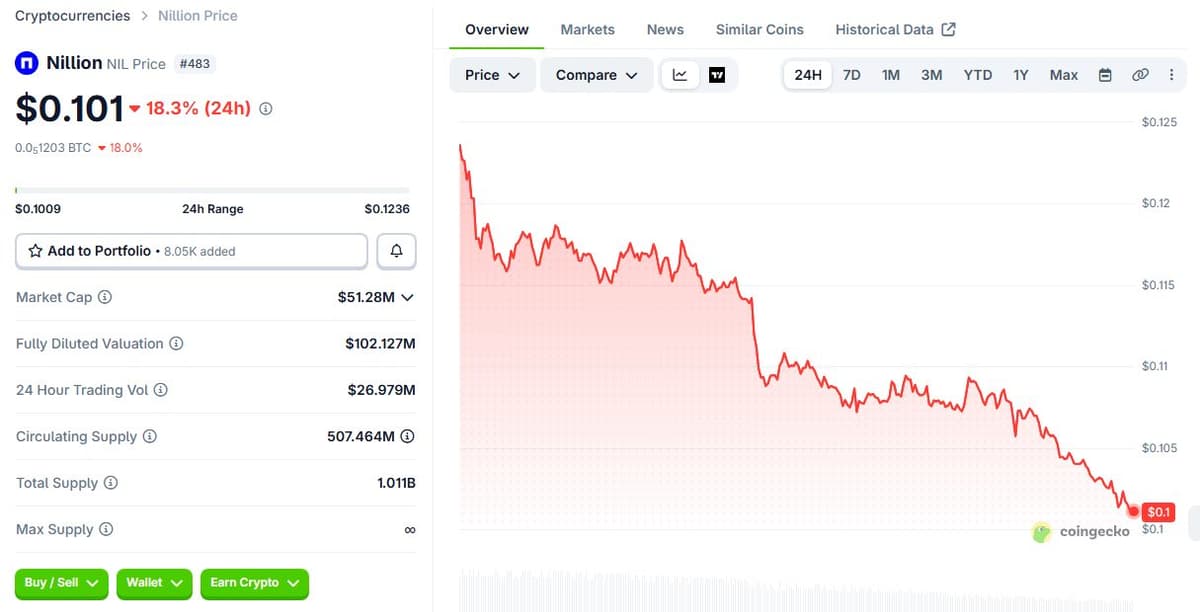
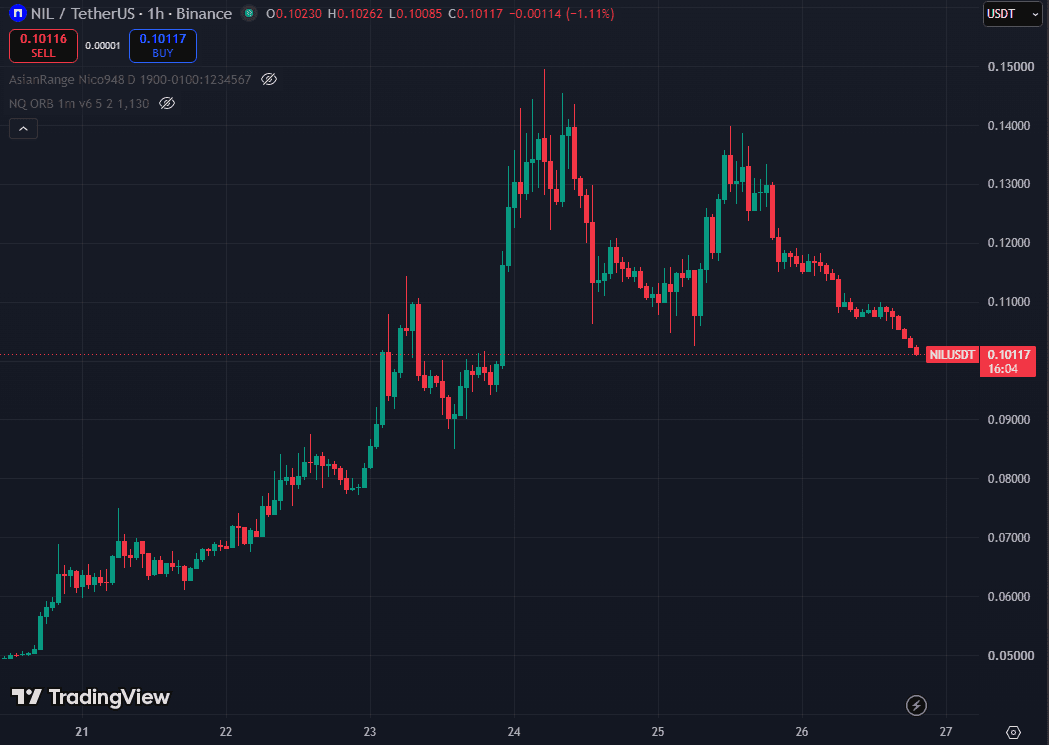
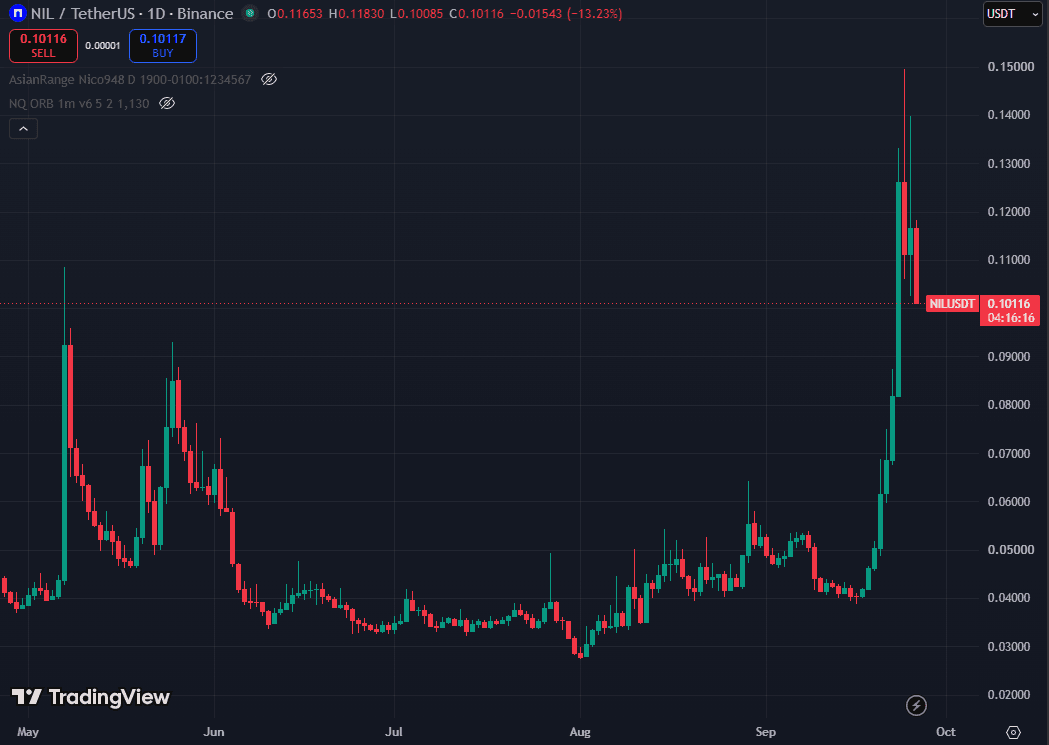
Same team, two pages, a week apart, and NIL spent that Saturday sliding. The token is down about 18% over 24 hours and roughly 32% from its September 24 high of $0.1495, per Binance’s NIL/USDT candles.
Two Pages, Two Dates
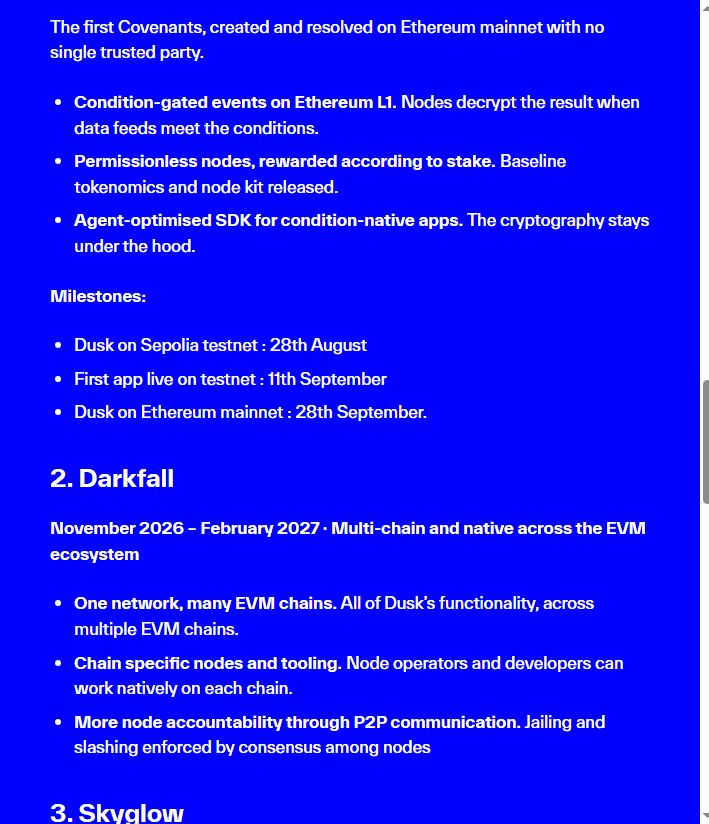
The roadmap lists a phase called Dusk, with Covenants running on Ethereum L1. Its milestones read “Dusk on Sepolia testnet : 28th August,” “First app live on testnet : 11th September” and “Dusk on Ethereum mainnet : 28th September.”
The migration guide speaks of Dusk “moving towards mainnet” and then gives its own Key Dates block: operator migration from September 26, and “Blacklight L1 mainnet: Oct 5.” Operators can migrate any time between September 26 and October 5.
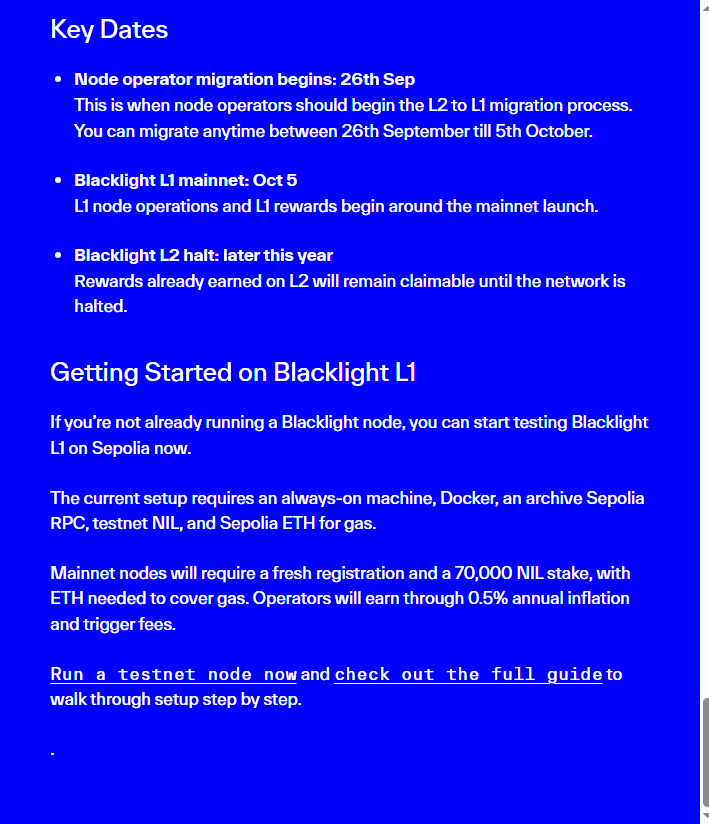
Neither page mentions the other’s date. They may describe different layers of one launch, since the guide ties the node network to Dusk, but a reader has to guess that. The gap is real either way.
What the Migration Asks of Holders
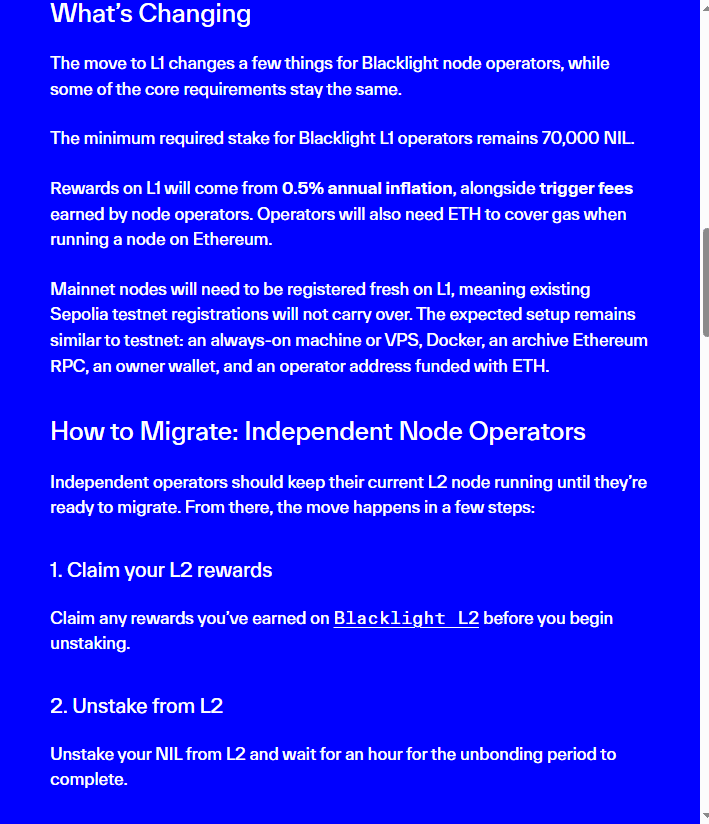
Node operators moving from the L2 have to unstake, wait one hour for unbonding, withdraw, then bridge NIL to Ethereum. The guide puts the bridge at about nine days. Coins in transit earn nothing.
The L1 rules are set out in the guide too. Minimum stake stays at 70,000 NIL, worth roughly $7,070 at $0.101. Rewards come from 0.5% annual inflation plus trigger fees.
Do the arithmetic against CoinGecko’s total supply of 1.011 billion. Half a percent is about 5.05 million NIL a year, near $510,000 at today’s price. That is the whole inflation budget for every operator on the network, against a $51.3 million market cap.
Whether operators re-stake or sell during the nine-day gap is not something the guide answers. I did not find on-chain data showing how much NIL has moved so far.
A Third of the Run Is Gone
Binance’s daily close on September 17 was $0.0418. Six days later the daily RSI closed near 90. It now reads about 67 after the pullback, computed from Binance closes.
The hourly chart shows a lower second peak. September 24 topped at $0.1495, September 25 managed about $0.14, and Saturday cut through the September 25 low near $0.1024. Price still sits 62% above its 20-day average of $0.0622.
The daily view explains why the levels matter. NIL hit $0.1085 on May 7 and $0.093 on May 25. Both spikes faded into the $0.03 to $0.04 range by July. Below here the nearest shelf on Binance’s tape is the $0.085 to $0.09 pullback zone from September 23.
Futures Bigger Than the Float Deserves
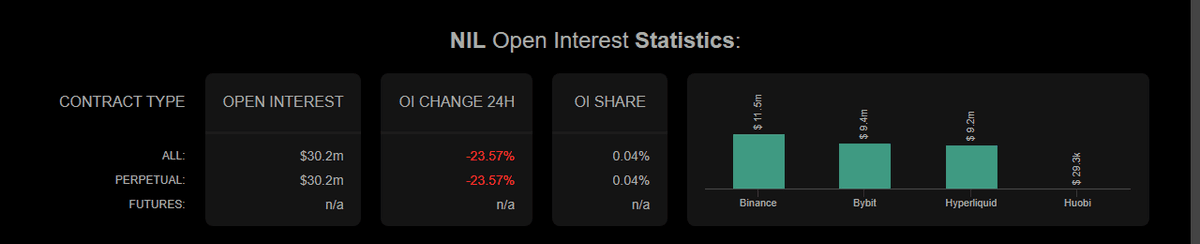
Here is the odd number. Coinalyze shows $30.2 million of perpetual open interest, down 23.57% in a day, split $11.5 million on Binance, $9.4 million on Bybit and $9.2 million on Hyperliquid. That equals about 59% of the token’s market cap.
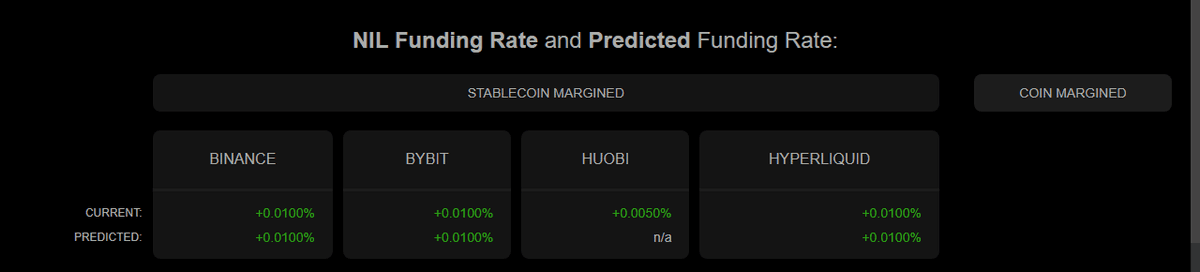
Funding is dull. Binance, Bybit and Hyperliquid all read +0.0100%, the default baseline, so nobody is paying up to hold either side. The futures crowd shrank on the way down without a squeeze.
Bitcoin was flat on the day, so nothing about this came from the majors. About half of NIL’s supply is not circulating yet, and I could not pull a vesting schedule because Tokenomist’s page would not render for me. That half remains unchecked.
Two dates now decide the story: September 28 from the roadmap, October 5 from the guide. Whichever one Nillion actually meets will tell holders which page was the plan.