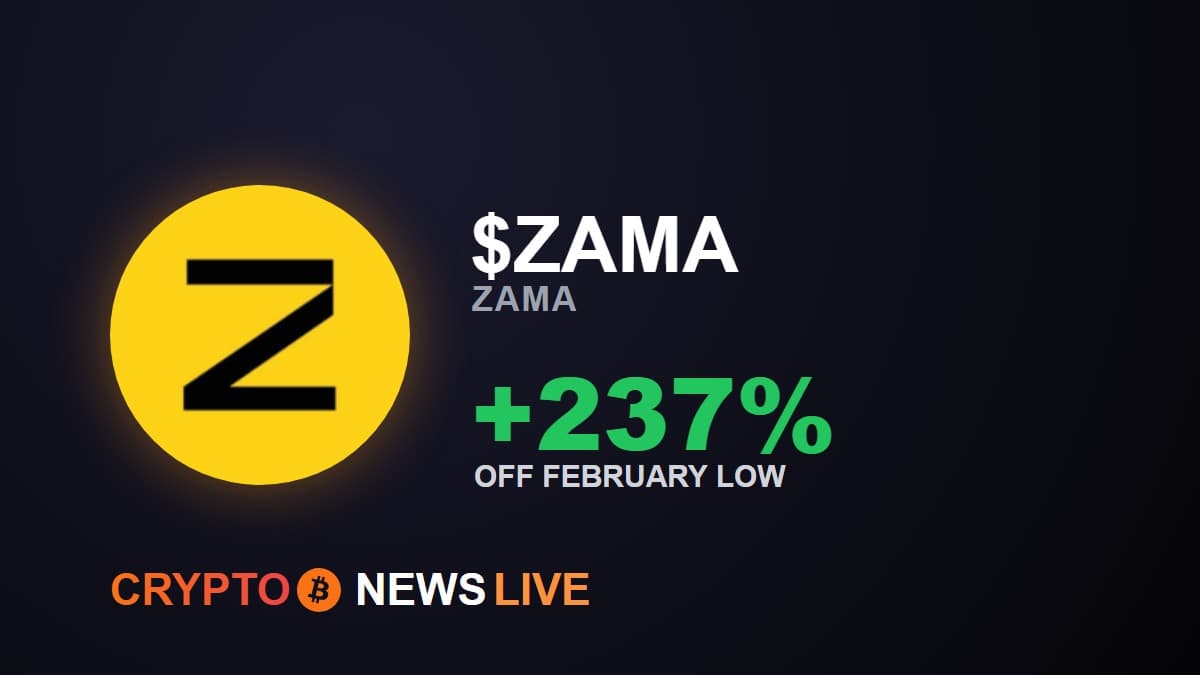
Binance traders are leaning into ZAMA’s recovery. OKX traders are leaning out of it. Coinglass puts Binance’s long/short ratio on ZAMA perpetuals at 1.50 as of Monday against OKX’s 0.65, the widest gap between the two order books since the token’s rally began last week.
The split follows a pullback sharper than most of ZAMA’s recent chart action. Price touched $0.0504 in Sunday afternoon trading, according to CoinGecko’s own hourly data, down from a fresh all-time high near $0.064 hit less than two days earlier. It has since climbed back to a session high of $0.0594 and settled near $0.057.
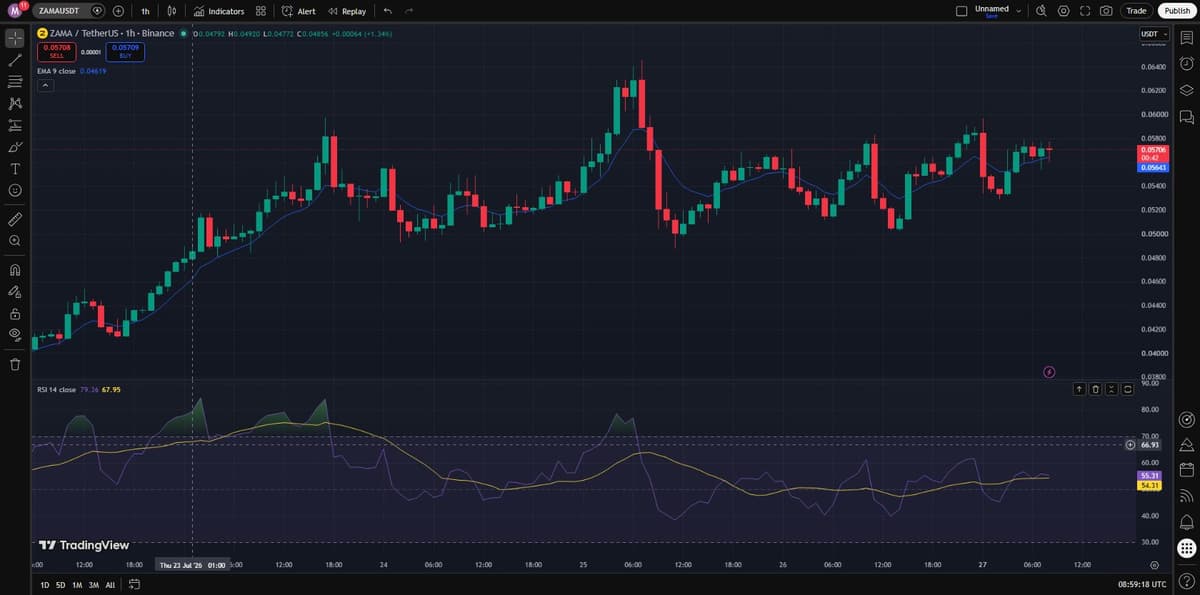
Coinglass’s own funding chart shows the pullback did more damage to short sellers than the original breakout did. The OI-weighted funding rate on ZAMA perpetuals printed its steepest negative reading of the entire move during Sunday’s dip, deeper than the negative print that accompanied the initial rally a week earlier.
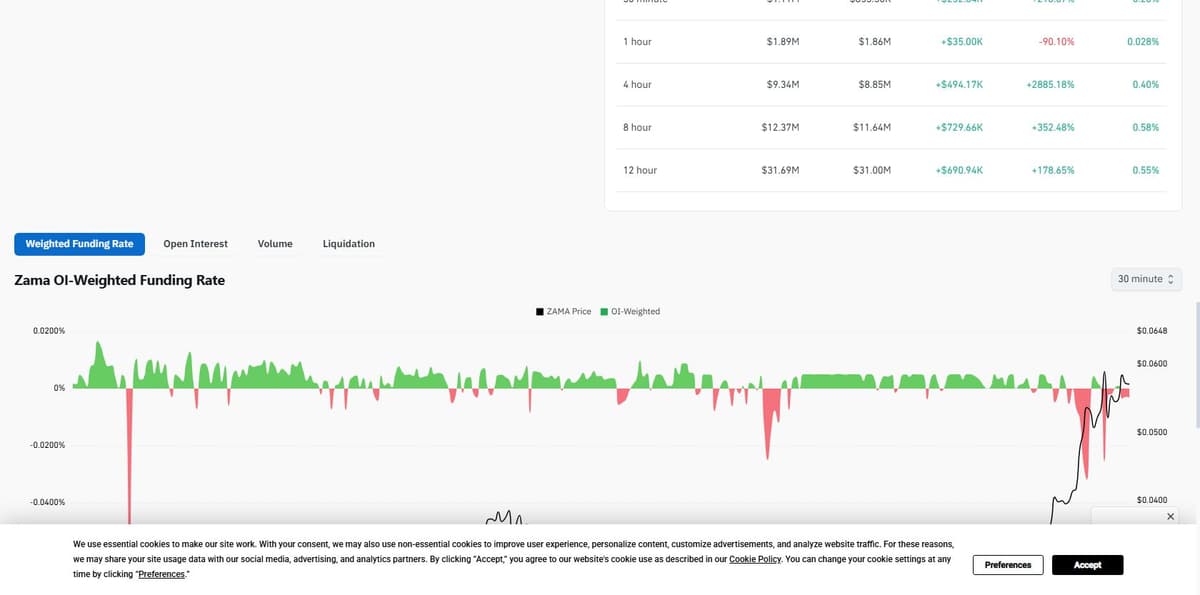
Shorts still absorbed the bigger share of Monday’s liquidations, $237,220 against $202,690 in longs on a $439,910 total, but that gap has narrowed considerably from the lopsided split seen during the original breakout. Binance’s own top traders remain net long at 1.46 on position size, and 1.55 on account count.
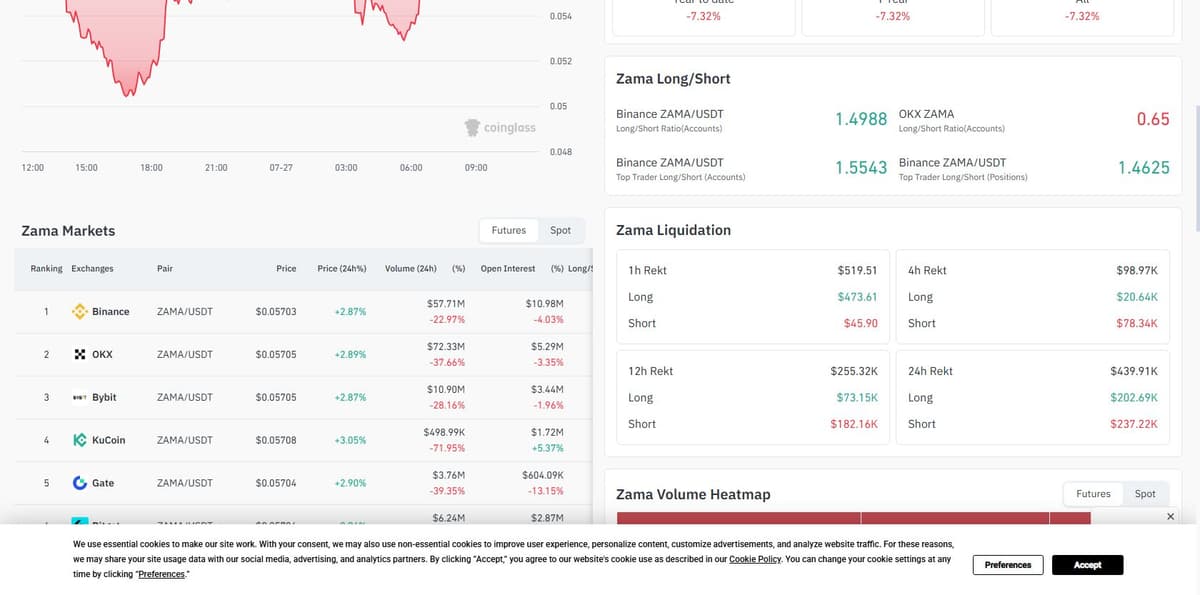
Trading activity itself is fading faster than the price is. Coinglass’s exchange table shows 24-hour futures volume down 23% on Binance, 38% on OKX, 28% on Bybit and 39% on Gate.io from the prior session, four of ZAMA’s five largest venues all cooling at once even as the token holds above $0.057.
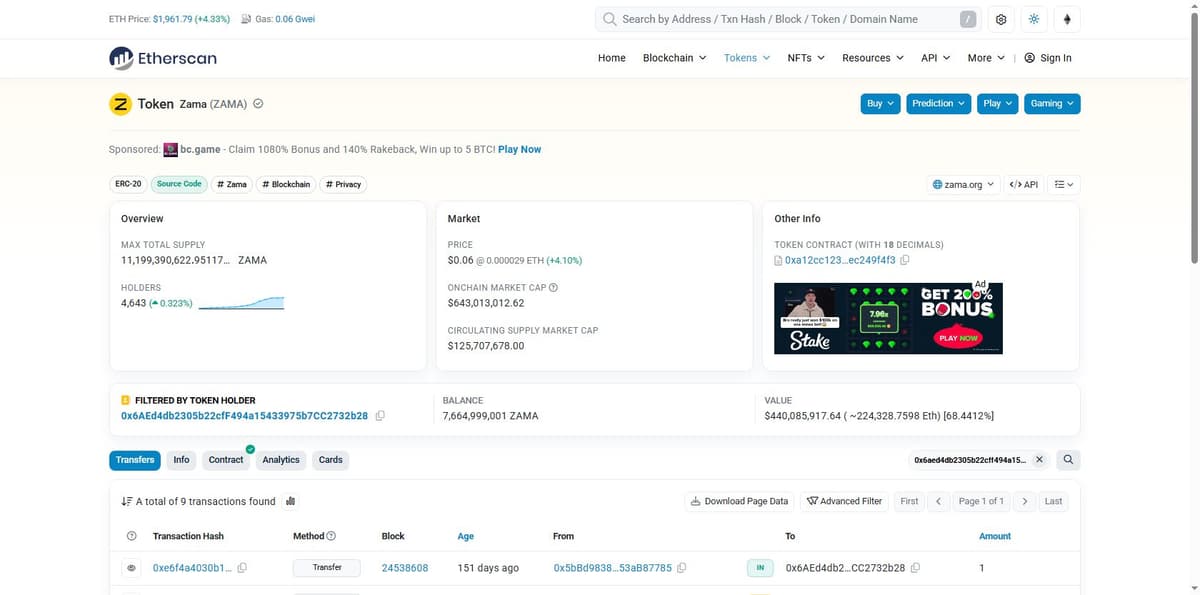
One thing hasn’t changed. The wallet holding 68.44% of ZAMA’s total supply, the allocation that keeps roughly three-quarters of the token locked, has not moved in 151 days, per its own transaction history on Etherscan. Whatever direction the next leg takes, it isn’t coming from that wallet yet.
Two exchanges, two readings of the same chart. Binance’s traders are betting the recovery holds. OKX’s are betting it doesn’t. Volume thinning out on both books means neither side has much room left to prove its point before the next real move settles it.