The last time Binance had a clear presence in the Philippines, the SEC ordered internet service providers to block it entirely. That was March 2024.
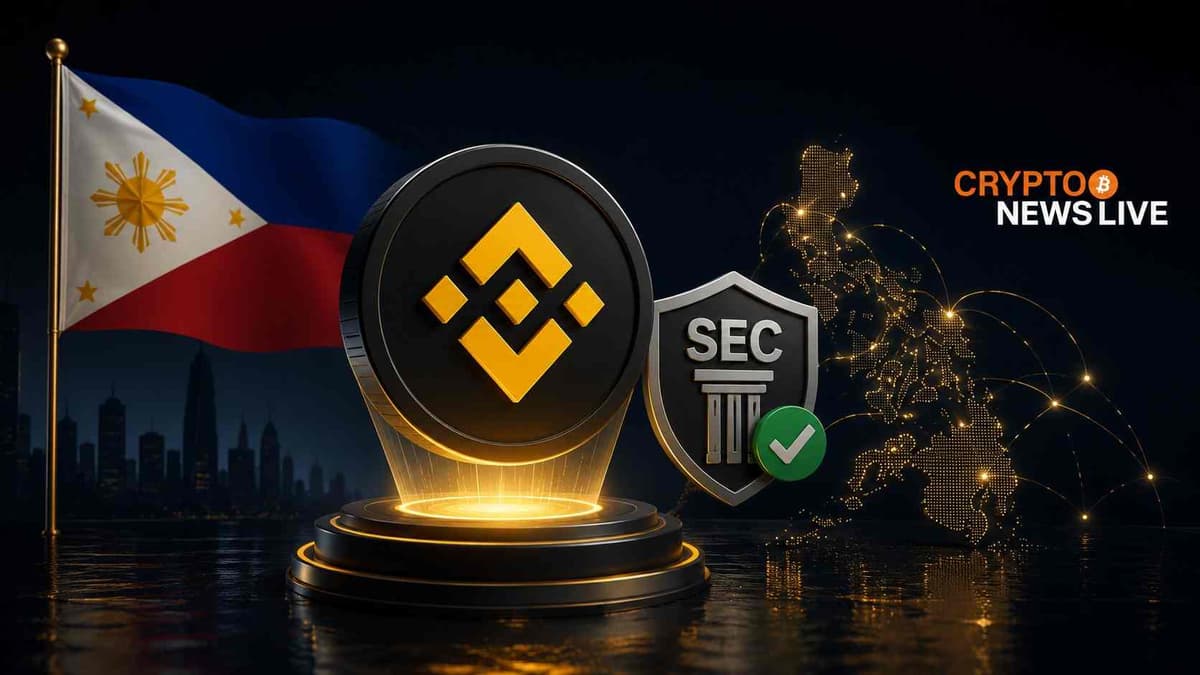
Now the exchange is back. And it brought a Philippine SEC registration with it.
Binance announced on Tuesday a formal partnership with BlockShoals Technologies Inc., a locally registered firm that holds approval under the SEC’s Crypto Asset Intermediary framework. BlockShoals will serve as Binance’s designated local service provider, operating within the SEC’s Strategic Sandbox, known as StratBox.
Two Years of Paperwork Before a Single Trade
BlockShoals did not just walk in. The company went through more than 24 months of regulatory engagement with the Philippine SEC before receiving in-principle approval from the Commission En Banc in November 2025.
That process was built around compliance, not convenience. BlockShoals is a registered Crypto Asset Intermediary under the SEC’s Crypto Asset Service Provider rules, which require firms to meet strict anti-money laundering and investor protection standards before getting anywhere near sandbox participation.
Anthony Te, who owns BlockShoals, brings a background in banking, commodities, and capital markets. He currently serves as a director at a local stock exchange and a commercial bank. Nicholas Te, CEO of BlockShoals, said the partnership is designed to show how global platforms and local regulatory oversight can work side by side.
“BlockShoals and its principals were selected for their deep experience across capital markets, banking, and commodities, as well as their understanding of local governance and regulatory expectations.” — Binance official statement
Binance’s global strategy in new markets follows a consistent pattern: enter through a regulated local partner with real financial services experience. The Philippines is the latest application of that model, not an exception to it.
CZ Noticed
Binance founder Changpeng Zhao reacted to the announcement on X. As CZ posted on X, quoting InsiderPH’s report, he included a Philippine flag and a love emoji. Short. No statement. But the signal was clear enough.
The announcement itself came through InsiderPH, which broke the story on May 26, reporting that the collaboration follows structured regulatory engagement and is designed to bring Binance’s operations into a compliant local framework.
For Filipino retail crypto users who had been locked out of Binance since 2024, accessing a regulated version of the world’s largest exchange through a locally accountable entity is a meaningful shift.
What StratBox Actually Means
The SEC StratBox is not a loophole. It is a controlled testing environment established under SEC Memorandum Circular No. 9, Series of 2024, where firms run live products under regulatory supervision before any broader public launch.
BlockShoals is one of four entities currently inside the sandbox. The others are testing U.S. equity offerings and tokenised real estate. BlockShoals is the only one operating with a global crypto exchange partner.
The sandbox phase is expected to begin in the second half of 2026 and run for a minimum of two years. The SEC can shorten or extend it after the first year based on periodic review. Regulatory relief on specific compliance requirements can also be granted during testing, though the SEC holds that discretion, not the firms.
Binance said the SEC’s decision reflects “the maturity of the SEC as an Asian regulator” and described the framework as a path toward stronger investor protection in the country.
The firms also pushed back against unregulated operators, pointing out that exchanges running outside regulatory oversight leave users exposed to gaps in anti-money laundering protections and limited legal recourse if something goes wrong. That framing is pointed, given how many Filipinos used offshore platforms after the 2024 ban.
Not Without Risk
The sandbox structure is supervised, but it is still a test phase. Nicholas Te acknowledged this framing when he said the goal is to demonstrate responsible integration, not to rush a full rollout.
Full product configurations for the Philippine market will follow the initial testing phase. Nothing launches broadly until BlockShoals clears its approved testing plan first. That sequencing could move slowly if regulators flag issues during the pilot.
The Philippines has ranked consistently among the top crypto adoption markets globally, which creates both demand and scrutiny. Sustainable growth, as Binance put it in its statement, depends on trust, compliance, and a working relationship with local stakeholders. That is not a guarantee. It is the goal.