eCash slid 15% on Saturday while the wider market barely moved. The rally the drop is eating was never about eCash in the first place.
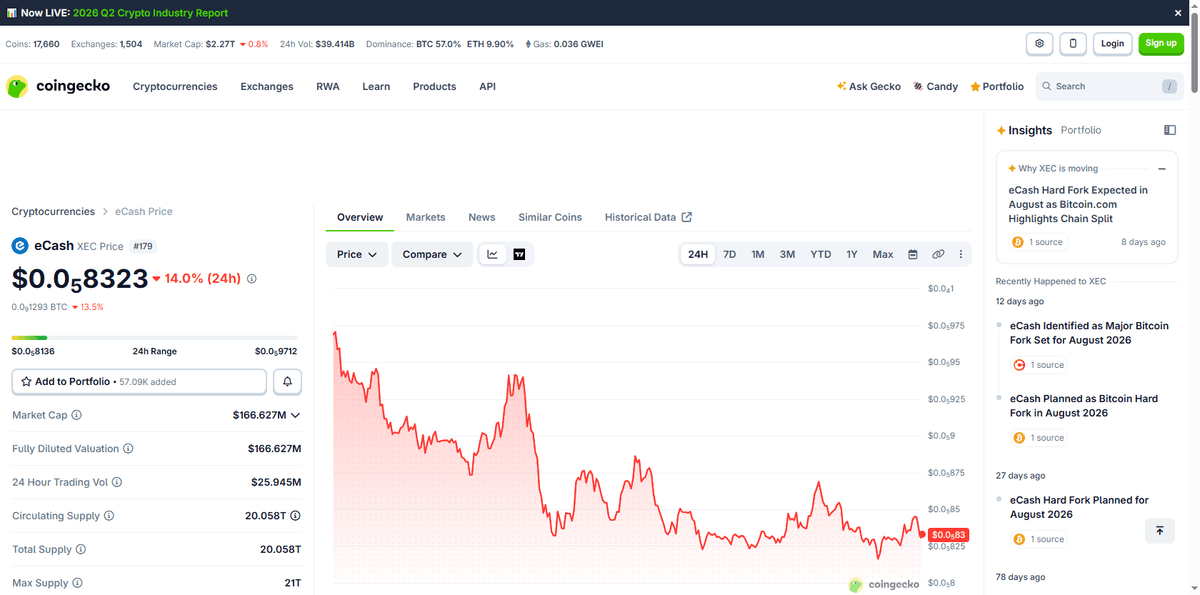
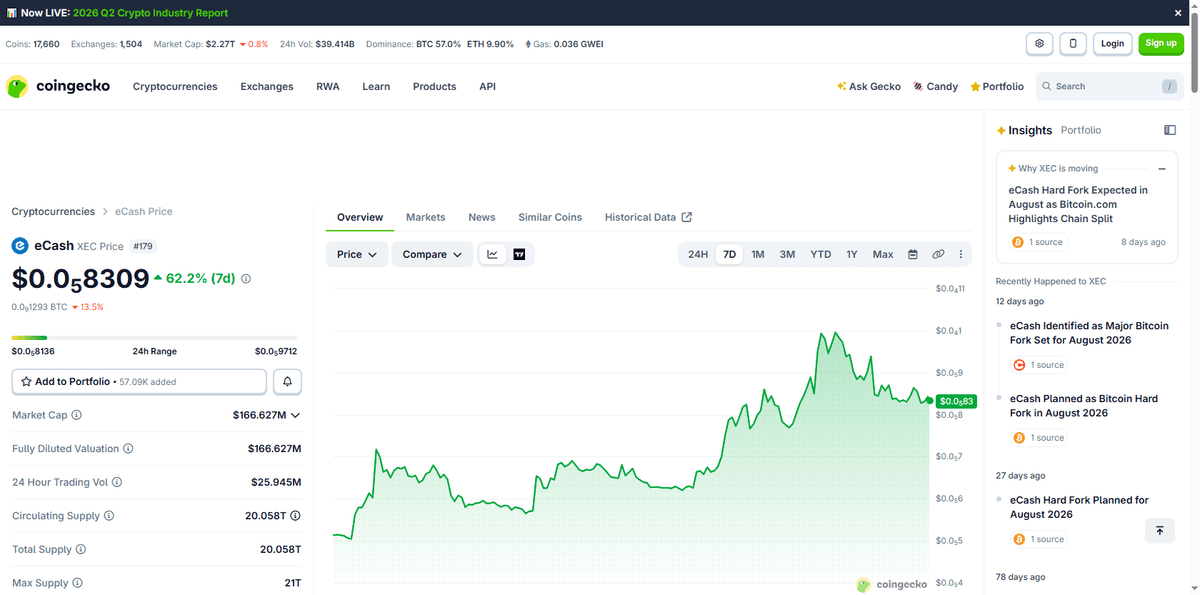
XEC printed $0.0000083 by evening, roughly a fifth below the peak it set Friday near $0.00001. Seven days earlier the coin was the single best weekly performer in crypto. CoinCodex scored the week at plus 81%, ahead of DigiByte and Decred. Market cap now sits at $166 million, ranked 179 on CoinGecko.
The August Fork That Has Nothing to Do With XEC
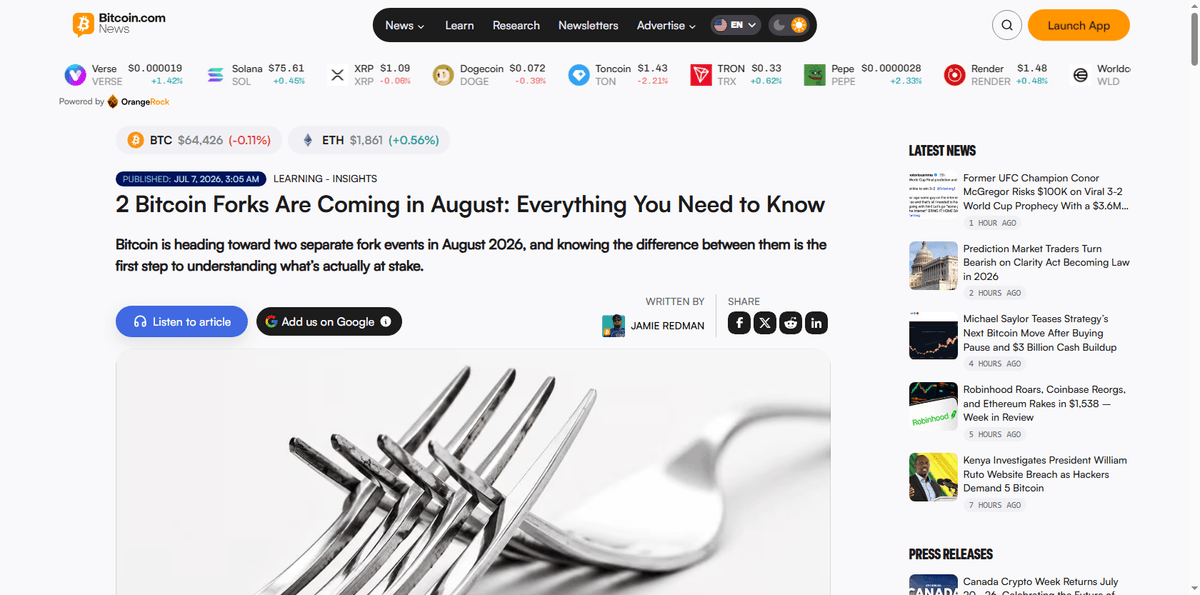
On July 7, Bitcoin.com’s Jamie Redman published a breakdown of two fork events heading toward Bitcoin in August. One is a proposed soft fork, BIP-110. The other is a hard fork called eCash, backed by Drivechain architect Paul Sztorc. It splits from Bitcoin at block 964,000, expected around August 21, and every BTC holder receives the new asset 1:1 at the snapshot. Cointribune ran its own version the same week.
That project shares nothing with eCash the coin except the branding. A name, nothing more. XEC, the asset trading on Upbit and Binance, forked away from Bitcoin Cash in November 2020 and rebranded from BCHA the following July. Holding XEC earns exactly nothing from the August snapshot. Zero.
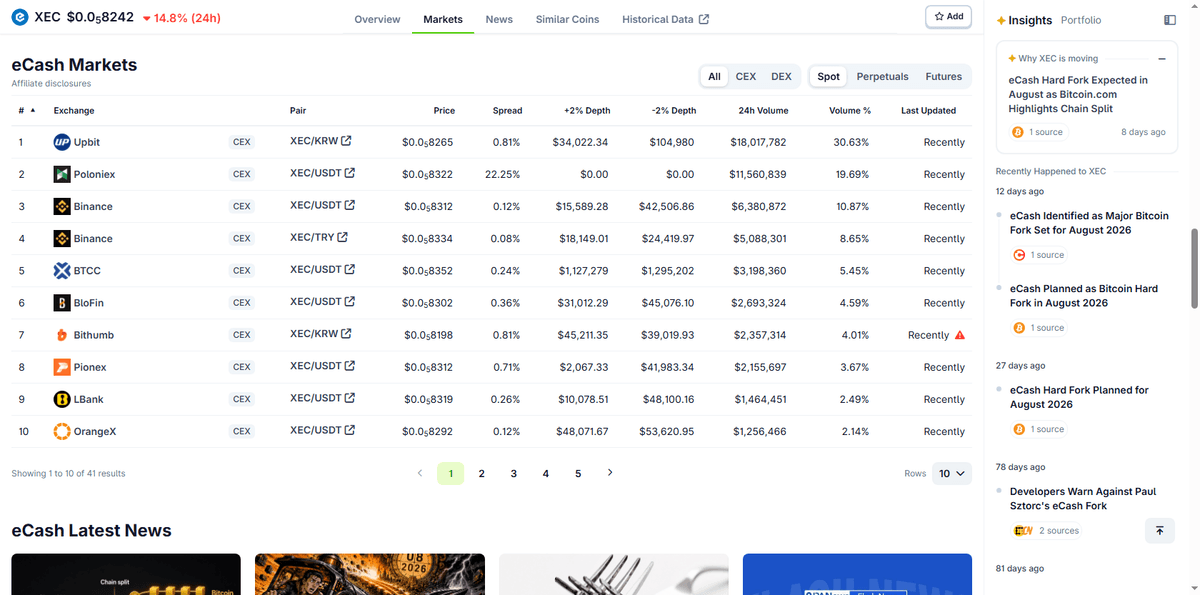
CoinGecko’s XEC page treats them as one story anyway. The site’s automated “Why XEC is moving” box pins the Bitcoin.com fork coverage directly onto the coin’s chart, and every item in the page’s recent-news feed going back three months points at Sztorc’s project, including a warning from developers filed 81 days ago.
A Rally With a Timestamp
The sequence is tight. Fork explainers circulated between July 7 and July 11. XEC had bottomed at an all-time low of $0.0000048 on July 1, its own five-year rebrand anniversary, and sat flat. On July 13 it ignited. Sam Mti of MTI Trading logged a buy signal that day at $0.00000506 and was posting about a 60% gain by July 17.
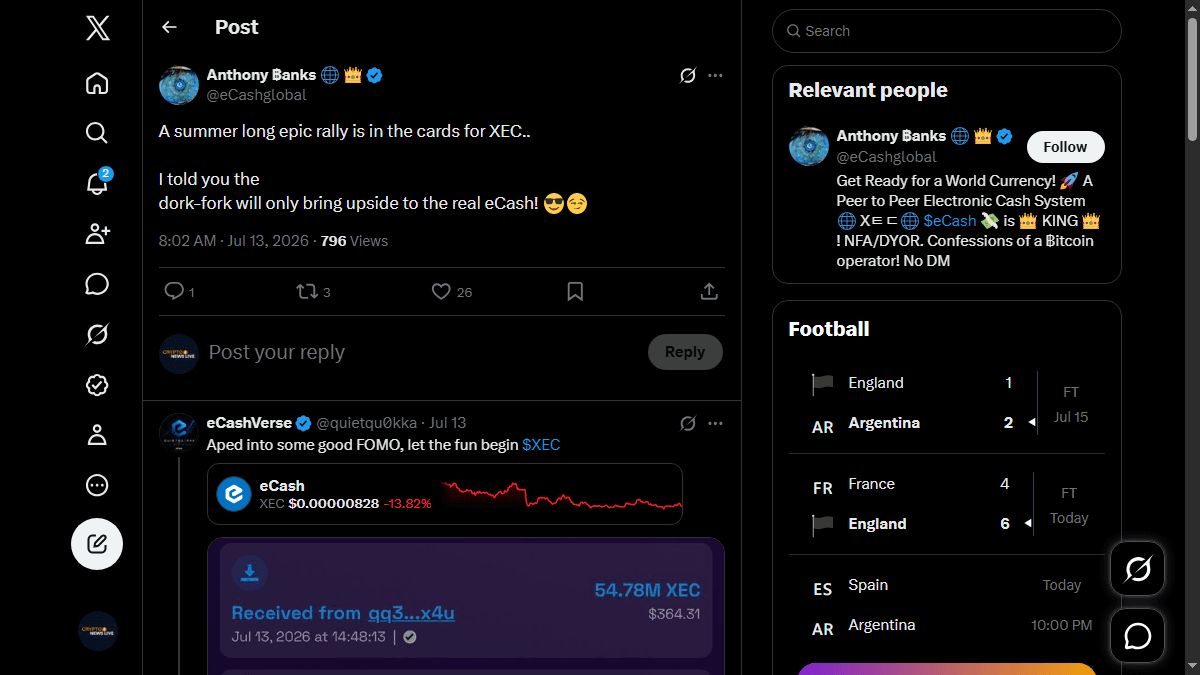
The community said the quiet part out loud. “A summer long epic rally is in the cards for XEC.. I told you the dork-fork will only bring upside to the real eCash!” Anthony Banks posted on X the morning of July 13. An account called eCashVerse replied that it had “aped into some good FOMO.” Confusion was not a side effect of this trade. It was the fuel.
What the eCash Dump Is Not
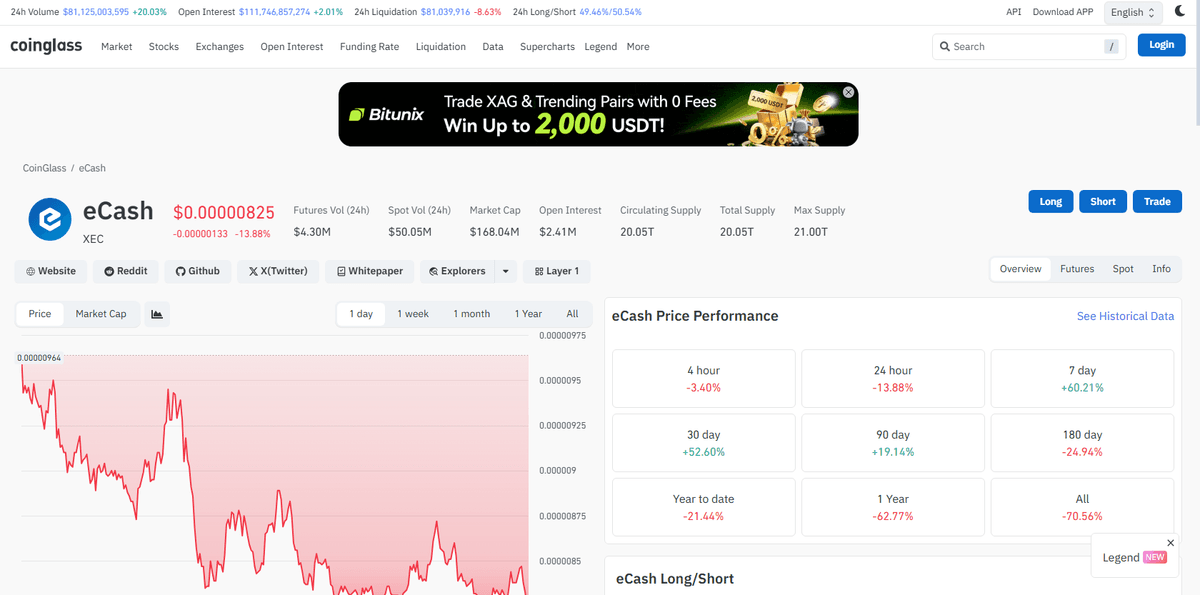
It is not a liquidation cascade. Coinglass has XEC open interest at $2.41M against a market cap of $168 million, with futures turning over $4.3 million in a day next to $50 million of spot. When Alchemist AI collapsed earlier this month, the futures market broke first. Here the order books did the work. Holders sold, and they sold on exchanges. Mostly in Korea. The Upbit KRW pair cleared 30.6% of global XEC volume on its own, with Bithumb adding another 4%.
One reported number deserves open distrust. Poloniex claims $11.6 million of daily XEC volume while quoting a 22.25% spread over an order book with zero measurable depth. The normalized volume figure CoinGecko publishes, roughly half the headline number, quietly says the same thing. A similar tape pattern showed up around Audiera’s surge this month.
The Fork Trade Rotated, It Did Not Die
Bitcoin Gold jumped 24 percent on Saturday while XEC bled. DigiByte added 28% on the week. Decred, 13%. The airdrop-anticipation money that reached XEC first is now bidding the laggards of the fork family, and the early leader is funding that rotation. XEC led this trade on the way up. It is leading on the way back down.
Through all of it, the team behind XEC announced nothing new. The chain’s last shipped milestone, Avalanche Pre-Consensus with roughly two-second finality, went live before July 1. The official account spent the rally week reposting price coverage rather than shipping news.
The Name Collision Has a Deadline
The confusion driving all of this expires on a schedule. Bitcoin’s BIP-110 proposal enters its mandatory signaling window near block 961,632 around August 8, and Sztorc’s chain splits at block 964,000 on or near August 21. Every headline those events generate will carry the word eCash.
Whether aggregators keep filing those stories under XEC decides if the mistaken bid gets a second run. The first one just cost latecomers 15% in a day.
Disclaimer: this article reports verified market data and public statements. It is not investment advice. Crypto assets are volatile. Do your own research before trading.