- A U.S. court reversed the $12.5M USDC freeze on Zama’s cUSDC contract, calling the TRO unwarranted.
- The freeze originated from an Overnight Finance civil dispute; one deposit held over 99% of cUSDC TVS.
- Zama will now mirror Circle freeze actions on cUSDC and appoint a dedicated compliance council.
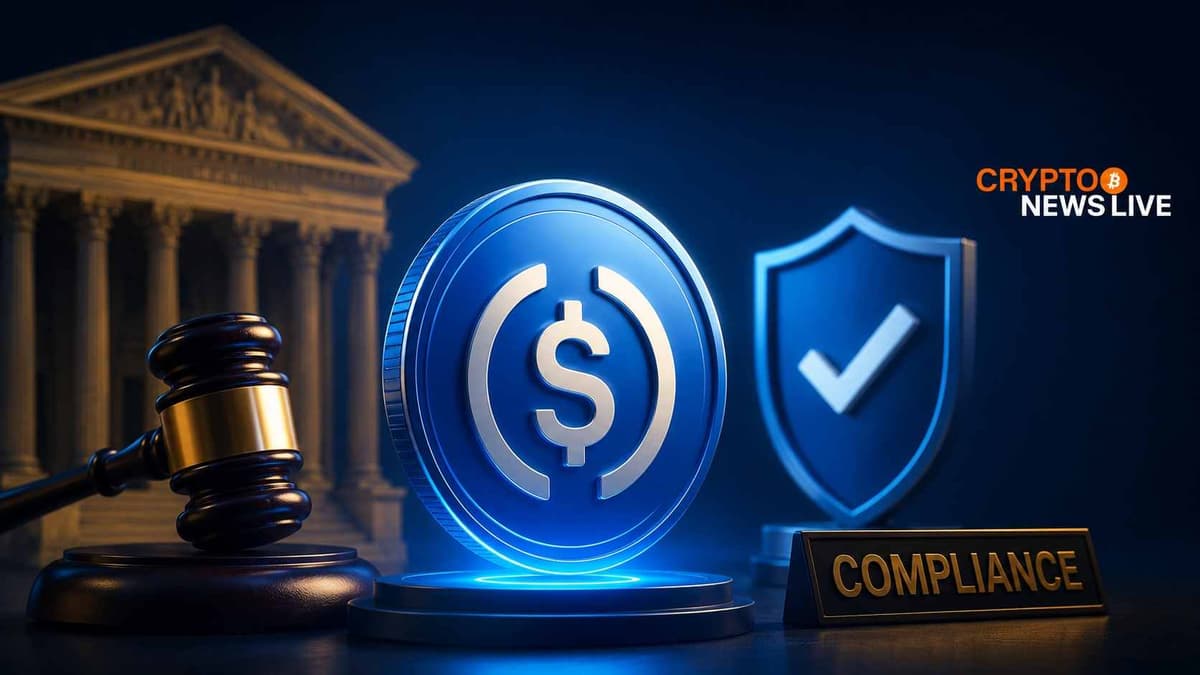
A U.S. court has reversed the temporary restraining order that froze $12.5 million in USDC inside Zama’s confidential USDC contract. The freeze, which CryptoNewsLive reported when it was first executed on May 30, lasted only days before the same court determined it was unwarranted.
Zama co-founder and CEO Rand Hindi confirmed the reversal on June 1, 2026. The cUSDC contract and all USDC held in it are now fully operational. Hindi said the swift resolution came through direct collaboration between all involved parties and Zama’s legal teams.
The original freeze was not aimed at Zama. It connected to a civil dispute between stakeholders of an entirely separate protocol, Overnight Finance, filed in the Northern District of California. Newton AC/DC Fund LP sued Maxim Ermilov, alleging he moved more than $15.77 million out of Overnight Finance’s treasury wallets just before a governance vote that would have distributed those funds to OVN token holders.
One Deposit, One Protocol, One Frozen Pool
On May 11, 2026, a wallet tied to those disputed Overnight Finance treasury operations deposited roughly 12.4 million USDC into Zama’s cUSDC wrapper contract. The deposit passed Zama’s standard compliance screening, and no sanctions flags came up. But because cUSDC was a newly supported asset with minimal prior deposits, that single inflow represented over 99% of the contract’s total value shielded.
Plaintiffs in the Overnight Finance lawsuit sought a blanket freeze through Circle. The court granted a TRO on May 29, and Circle executed the blacklist at 1:08 UTC on May 30 without any advance notice to Zama. That timing matters, because cUSDC is a pooled wrapper. Circle’s action locked not just the disputed funds but every user’s balance in the same contract.
Judge P. Casey Pitts presided over the case. A full hearing was scheduled for June 1, 2026, at which the court reversed its earlier order.
According to Rand Hindi on X, the court “determined that it was unwarranted” and all systems have now returned to normal.
Hindi’s post also drew a clear distinction between what Zama does and what a mixer does. Funds inside cUSDC sit in regular EVM wallet addresses, making them attributable. Transactions are traceable onchain. The protocol only encrypts balances and transaction amounts, not sender or recipient identity. Hindi’s analogy: Tor hides who you are, HTTPS hides what you’re sending. Zama is the latter.
Compliance Overhaul Now Underway
The reversal does not close the question of what happens next time a pooled protocol gets caught in a civil dispute not its own. Zama’s response is architectural.
Going forward, confidential tokens will automatically mirror the compliance actions of the underlying asset. If Circle freezes a USDC address, the corresponding cUSDC balance held by that same address freezes too. Zama says this transitive compliance model will apply to every token on the protocol that supports freezing functions.
The protocol will also appoint a dedicated compliance council in the coming weeks, responsible for reviewing and responding to legal requests. Zama is working with multiple KYT providers to integrate them in a privacy-preserving way and plans to join industry organizations involved in fighting criminal activity onchain.
Hindi was direct about what institutions require before they will use the protocol. Without strong compliance and AML features, payment providers, exchanges, custodians, banks, and hedge funds will simply not integrate it, as he heard repeatedly in conversations with prospective partners.
US counsel Mike Frisch of Croke Fairchild Duarte and Beres handled the case. Swiss counsel Romedi Ganzoni of MME also worked through the weekend to reach a resolution.
cUSDC Launch Still Scheduled, $5M Treasury Shield Planned
Despite the disruption, Zama is pressing forward. The protocol confirmed it will proceed with the planned cUSDC product launch later in June. As part of that launch, Zama will shield $5 million in USDC from its own treasury.
The incident, as Hindi noted on X, could have hit any protocol holding freezable assets. AMMs, lending protocols, and bridges all carry the same exposure if a single depositor’s wallet becomes the subject of a court order. Zama’s compliance overhaul is a direct response to that structural gap in how DeFi protocols handle pooled, freezable collateral.
Hindi wrote on X that the freeze “does not reflect Circle’s posture, or that of any other stablecoin issuer, on freezing assets held by a protocol” and said doing so would raise real concerns about composability between onchain financial services.
The broader question, one this episode surfaces plainly, is whether any pooled smart contract protocol that holds USDC is one court order away from the same situation. Zama’s new compliance framework is built on the assumption that it will happen again. The protocol wants to be ready when it does.