The clock is running. The XRP Ledger’s fixCleanup3_1_3 amendment activates tomorrow, May 27, and any validator still running software older than version 3.1.3 gets cut off from the network the moment it does.
This is not a debate about whether it will happen. It is already in motion.
Not a Hard Fork. Something More Specific.
Ripple CTO Emeritus David Schwartz addressed the framing this week, explaining that XRPL experiences more events that look like technical hard forks than most public ledgers do. The reason is structural: XRPL consensus works through trusted validator lists rather than mining weight or staking power. When an amendment activates, servers without the new code no longer understand the rules the rest of the network follows.
What that produces is not a chain split in the Bitcoin sense. Outdated nodes become amendment blocked. They stop processing transactions, stop validating ledgers, and lose their ability to vote on future amendments.
That mechanism exists by design. It keeps bad or outdated interpretations of ledger state off the network entirely.
Vet, an XRPL validator operator, posted on X that roughly 40% of the network had already upgraded as of May 22, flagging the remaining validators still in the queue. As Vet (@Vet_X0) posted on X:
“An update to further strengthen the foundation your $XRP is living on. Have to say, AI powered Red/Blue Team and Attackathons/Bug Bounties have delivered strong results! Another highlight – name transition from rippled -> xrpld.”
The rippled 3.1.3 release was authored by Ed Hennis, engineer at Ripple, with the version commit dated May 6, 2026.
The Fixes That Validators Are Actually Upgrading For
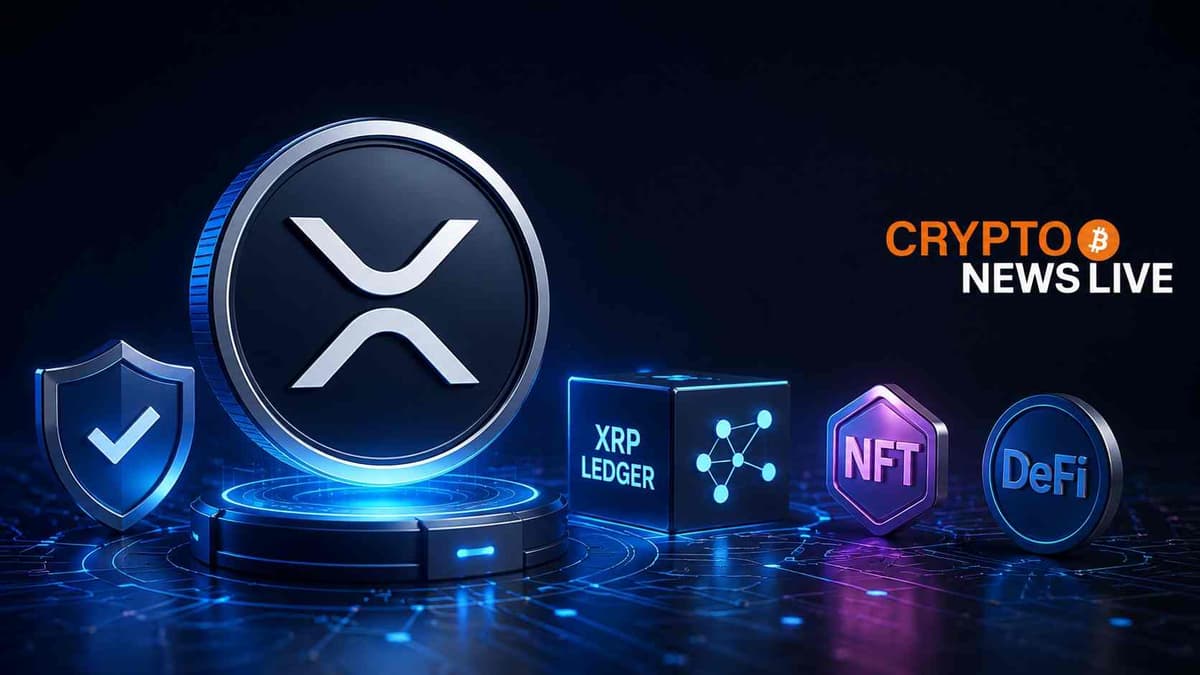
The fixCleanup3_1_3 amendment is a bundle. Four protocol areas get patched in one activation.
NFTs. Expired NFTokenOffer entries have been sitting on the ledger without being removed. With the amendment live, running an NFTokenAcceptOffer transaction on an expired offer now deletes it automatically during processing. For NFT project developers on XRPL, this matters because ledger bloat from stale offer objects has been a known issue. The amendment removes that accumulation.
Bitcoin open interest climbed 12% to $18.4 billion on May 13, per Coinglass data, and DeFi across chains kept attracting builder attention that same month. The XRPL Lending Protocol sits inside that wider DeFi context. Which is why the loan accounting fix in this amendment matters to the builders running it.
Lending Protocol. Loan accounting information was not updating correctly in Loan, LoanBroker, and Vault entries when a loan was defaulted, impaired, or unimpaired. That is not a minor edge case for a protocol handling real assets. The amendment corrects it. Separately, a LoanPay error that was returning temINVALID_FLAG on overpayment attempts now returns tecNO_PERMISSION, which is the accurate error for that scenario.
Vaults. A trust line token limit check was being skipped entirely on VaultWithdraw transactions. With the amendment enabled, any VaultWithdraw specifying either vault shares or vault assets will now respect the trust line token limit of the destination address. There is also a new check ensuring LoanBroker’s listed CoverAvailable exactly matches assets held in its associated pseudo-account.
Permissioned Domains. An invariant check now prevents Permissioned Domains from being modified by failed transactions. Before this fix, a failed transaction could still alter domain state.
One More Change Validators Should Know About
The 3.1.3 release also adds a verify_endpoints parameter to the rippled configuration file. Default value is 1, which keeps address validation active for peer connections. Setting it to 0 lets through addresses that are not publicly routable. Useful for local test environments. It should never be turned off on Mainnet.
The Peer Crawler API also sees a breaking change. The port field now returns an integer consistently for both inbound and outbound peers. Previously outbound peers returned it as a string, inbound as an integer. Developers consuming that API need to account for it.
For XRPL node operators, DeFi builders on the Lending Protocol, and NFT project developers managing offer lifecycles on the ledger, the upgrade path is documented at the XRP Ledger install and update guide. The window to stay connected closes tomorrow.
Should upgrade volume fall short and a significant portion of validators miss the deadline, the practical outcome is fragmented validator sets operating on different rule sets until they update. David Schwartz noted that scenario would require matching validator list configurations and code distributions to keep producing ledgers, which underlines why the default vote on fixCleanup3_1_3 was set to Yes, not left to individual operator discretion.