Pendle’s own competitor just fell eight percent. The protocols hosting its trade didn’t.
Spectra Finance, another yield-tokenization protocol chasing the same corner of DeFi Pendle carved out years ago, dropped 8.8% in the past day.
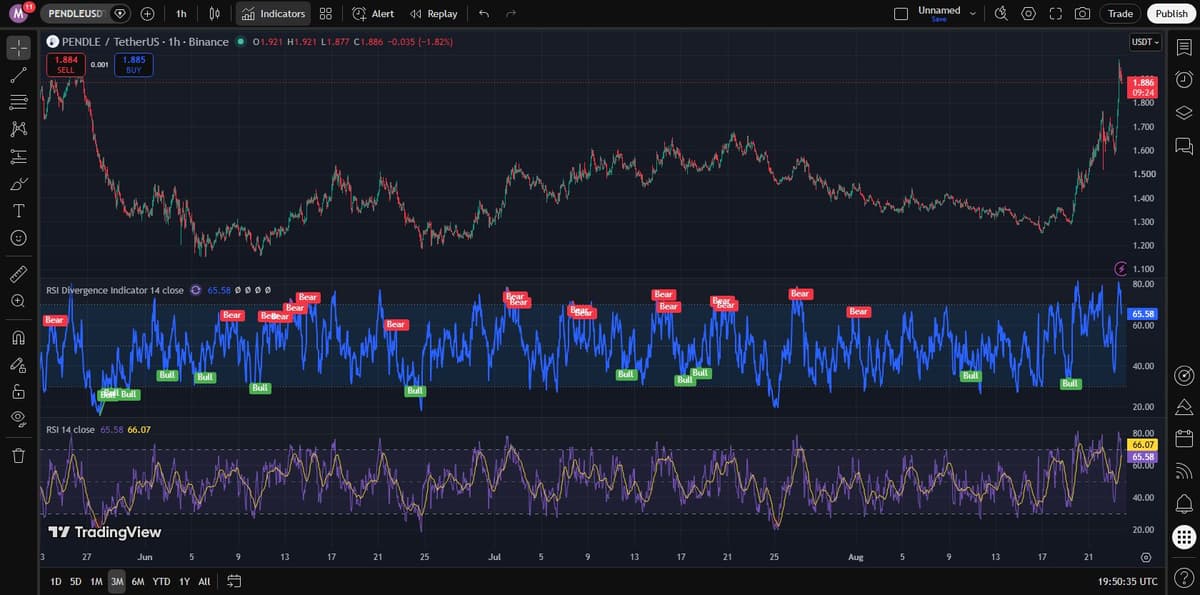
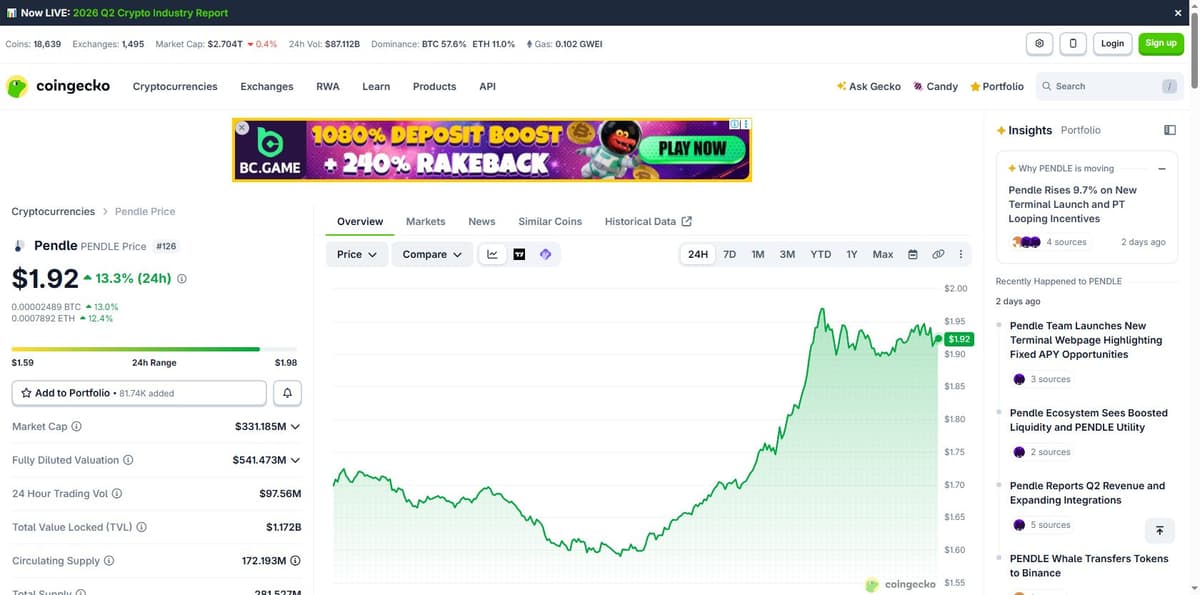
PENDLE jumped 13.3% to $1.92 the same day, touching a fresh three-month high near $1.98 before easing back. CoinGecko puts the week’s gain at 49.6%.
That split matters more than the headline number.
A $500K Incentive Grew Thirtyfold
Pendle’s core mechanic splits a yield-bearing deposit into two pieces, a Principal Token that locks in a fixed rate and a Yield Token that floats on the variable rate underneath it. PT Looping lets a user post that Principal Token as collateral on a lending market, borrow against it, buy more PT with the borrowed funds, and repeat the loop.
Pendle pays an extra 2% APY for doing it, calculated before any multiplier gets applied.
On August 17, Pendle raised the incentive caps on two of those pools, PT-USD3 on Morpho and PT-USDG across both Aave and Morpho, to $15 million combined. Crypto.news reported the program had started as low as $500,000 in earlier rounds. At a 10x loop that base 2% compounds into roughly 20% extra yield, and the maximum blended APY across the two pools now reaches 53.7%, per the same report. The window runs through August 27.
Four days later, Pendle’s own account posted a new PT looping market on Euler, live on the Monad network, tied to a Saturn Credit vault maturing January 2027. Another 2% boost before any multiplier, another venue for the same trade.
The Lenders Moved With It
Here is the part that separates a real capital flow from a coincidence.
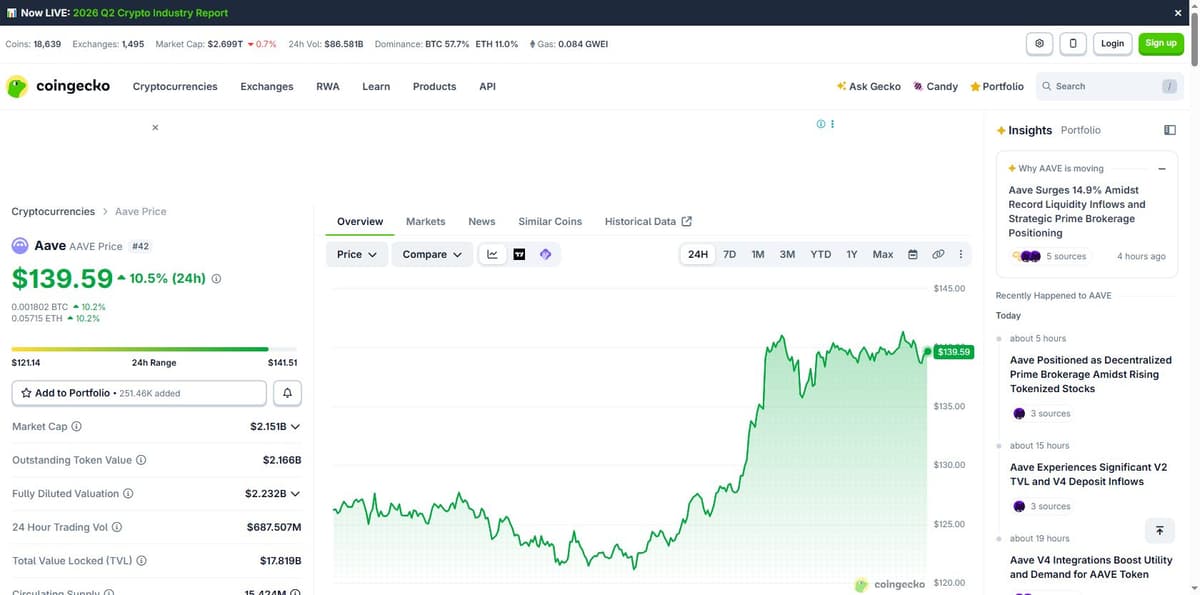
Aave jumped 10.5% on its own CoinGecko page the same day, the coin’s insight feed citing fresh V2 TVL and V4 deposit inflows logged within hours of the move. Morpho, the other PT-USDG host, gained more than 20%. Euler, the newest venue for the trade, rose 6.2%.
Bitcoin barely moved, down 0.04%. Ether added roughly half a percent. Neither explains a cluster of DeFi lenders spiking together on the same afternoon a direct rival running a near-identical product fell. The correlation here isn’t with the wider market. It’s with three protocols that happen to host Pendle’s own incentive program this week.
Fixed Yield, Not a Squeeze
None of this looks like a squeeze.
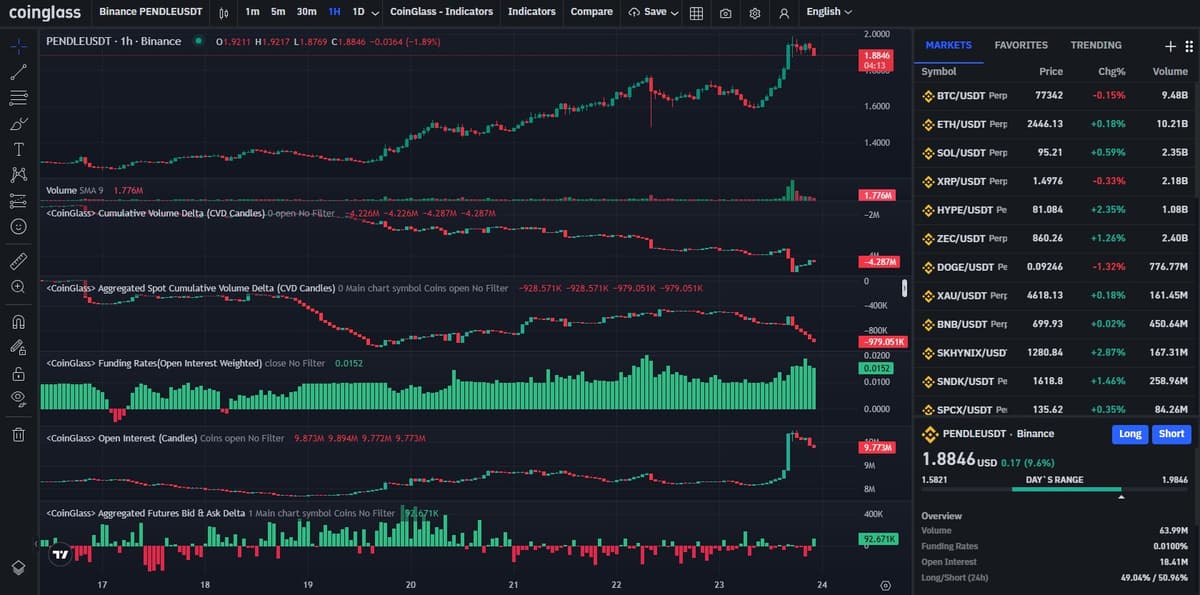
Binance’s PENDLEUSDT funding rate sat at a flat 0.0100% through the move, open interest near $18.46 million, longs and shorts split almost evenly at 49.03% to 50.97%, Coinglass data shows. Whatever pushed the price came from spot demand stacked into the incentive window, not traders piling into perpetuals on borrowed margin.
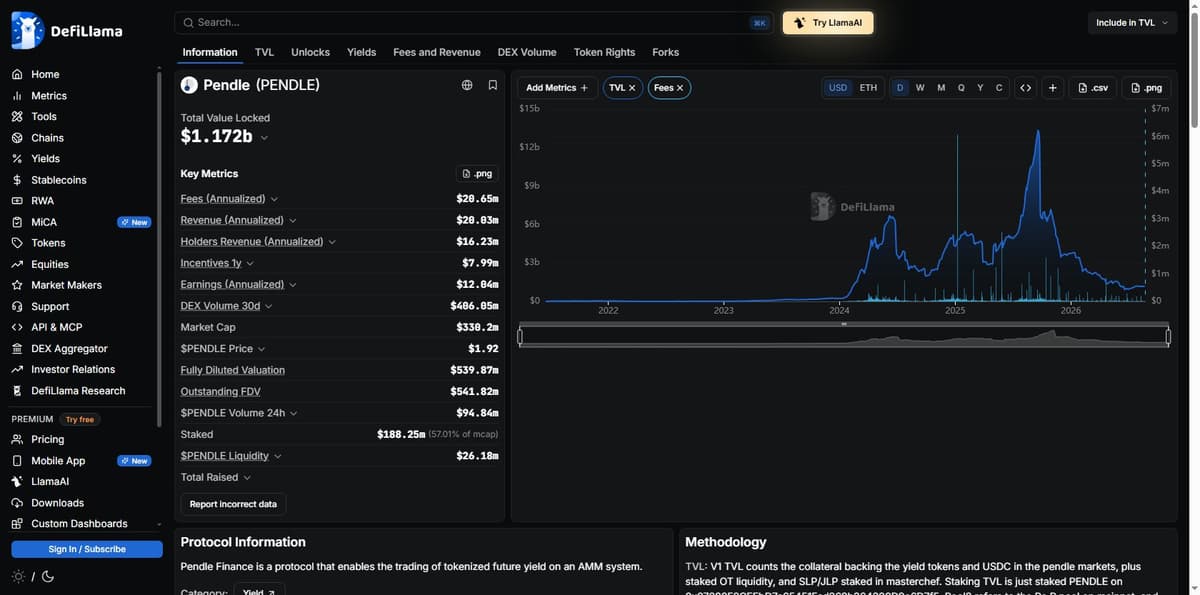
Pendle’s own numbers back the real-usage read further. DeFiLlama shows $1.172 billion locked in the protocol against a market cap of just $330.2 million, better than three and a half times covered. More than $188 million of PENDLE, 57% of that market cap, sits staked as vePendle or sPENDLE rather than parked on an exchange ready to sell.
The Revenue Line Doesn’t Match the Chart
A counterweight is worth stating plainly.
Pendle’s gross protocol revenue peaked near $12.93 million in the first quarter of 2025. It fell to $3.85 million last quarter, and the partial figure for the current quarter sits at just $1.03 million so far, DeFiLlama’s income statement shows. Trading fees and yield capture have been shrinking for over year even as the token price does the opposite today. An incentive program can pull fresh capital into a protocol without the underlying revenue growing to match it, and Pendle’s own quarterly numbers say that is exactly what is happening here.
Who Actually Holds the Token
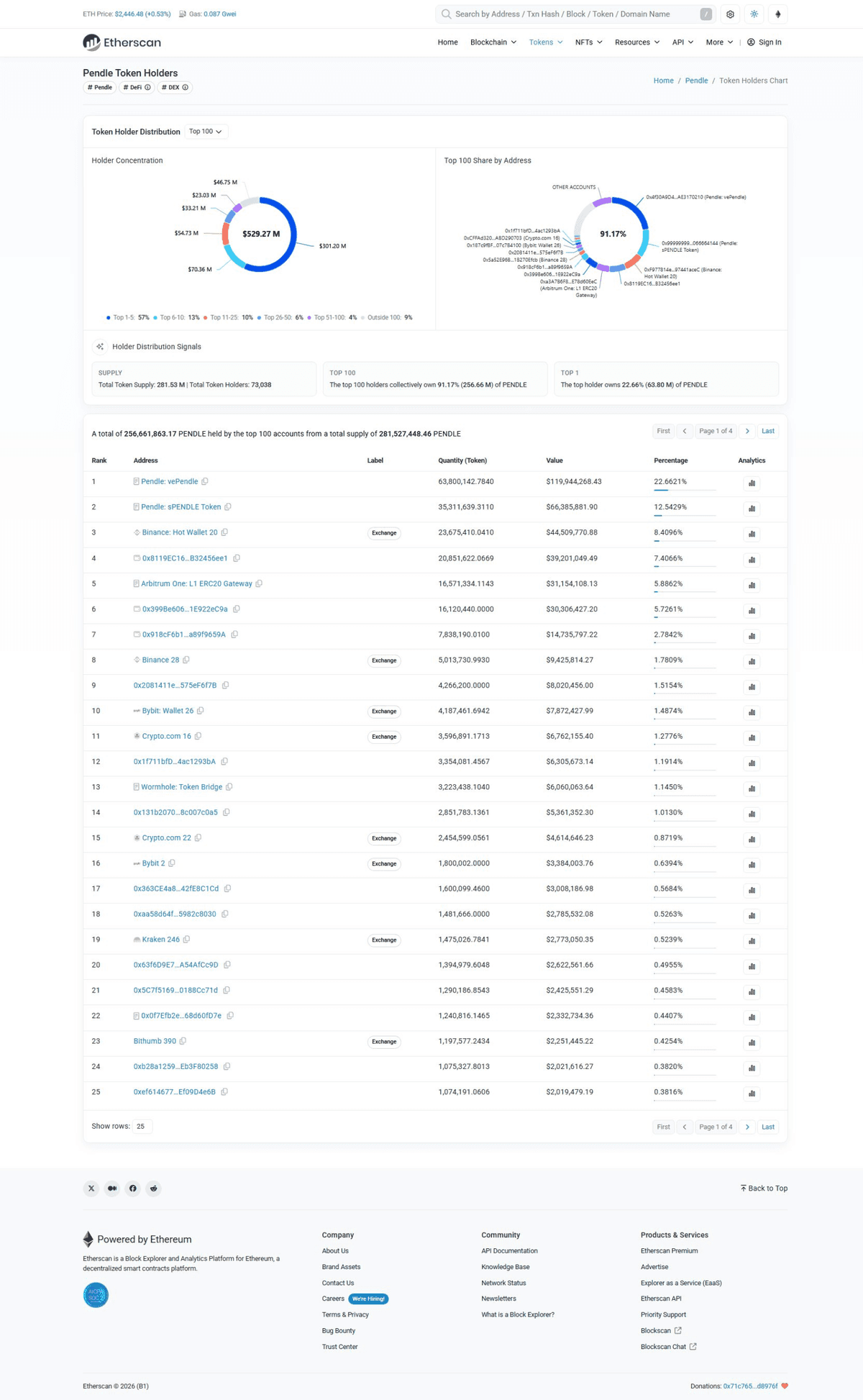
Etherscan’s holder chart puts the top spot at Pendle’s own vePendle staking contract, 22.66% of supply, with the sPENDLE staking token close behind at 12.54%. The next largest wallets are labeled: Binance Hot Wallet 20, Binance 28, Bybit, Kraken, Bithumb, Crypto.com, the Arbitrum bridge, Wormhole’s token bridge.
Ninety-one percent of supply sits with the top 100 addresses. Almost none of it anonymous.
The three-month chart tells its own plain story. PENDLE spent June and July grinding inside a $1.20 to $1.75 band, failing on the top of that range more than once. Today’s candle finally cleared it, with the RSI(14) reading 65.58, elevated but short of the 70 line that usually marks overbought. Whether that old range holds as new support, or PENDLE gives back the gains the way Spectra already has, depends on what happens after August 27, when the current incentive window closes and the extra 2% disappears with it.