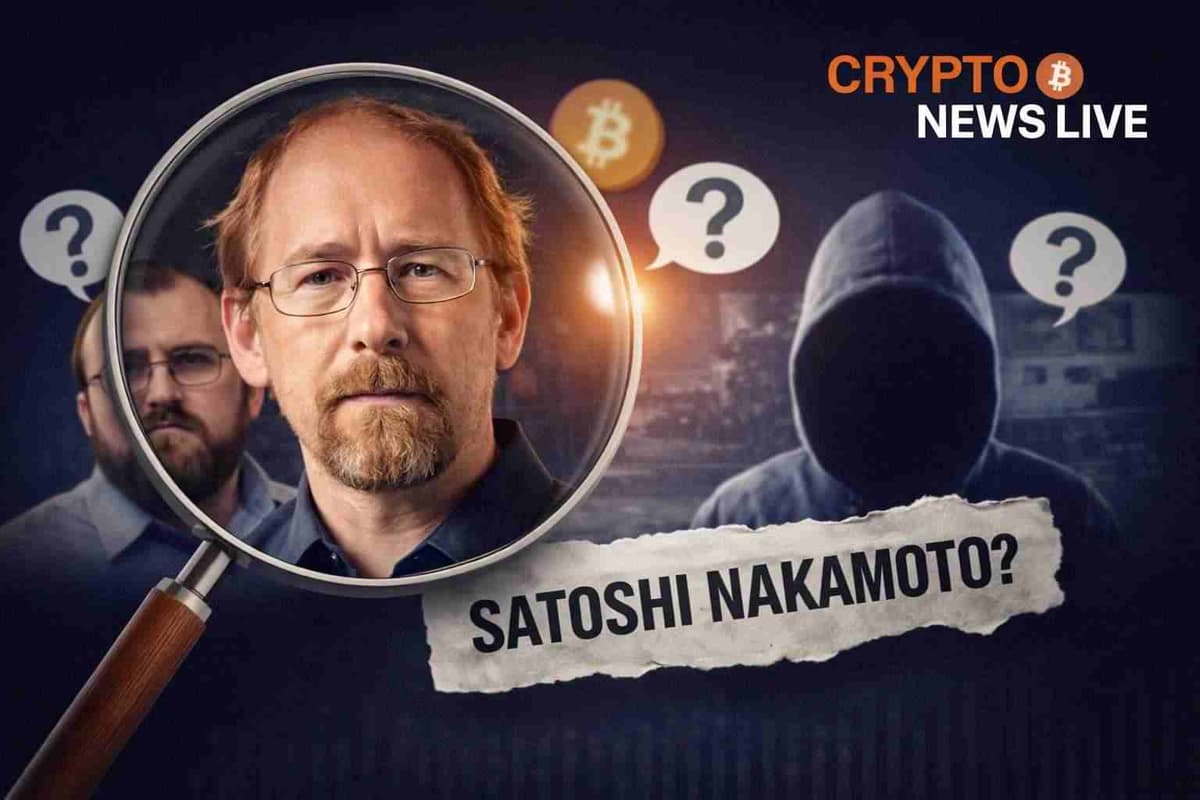
The New York Times published an 18-month investigation on April 8, naming British cryptographer and Blockstream CEO Adam Back as the most likely identity behind Satoshi Nakamoto, Bitcoin’s pseudonymous creator. Reporter John Carreyrou, known for breaking the Theranos fraud story, spent over a year sifting through thousands of decades-old forum posts, court records, and email archives to build his case.
Back denied it. Then denied it again. Then several more times after that.
The piece leans on stylometric analysis of 134,308 posts pulled from three cypherpunk mailing lists. Carreyrou worked with NYT AI projects editor Dylan Freedman to run three separate writing analyses. Back came back as the top match in each one.
The Prediction That Was Already Out There
What most outlets did not pick up: Cardano co-founder Charles Hoskinson flagged Back as his Occam’s razor candidate four years ago. On the Lex Fridman podcast, Hoskinson said Back was “the right place, right time, right age, right skill set.” He pointed to Back’s creation of Hashcash, the proof-of-work predecessor to Bitcoin mining, his time at Microsoft which aligned with the Windows-developed early Bitcoin code, and his disappearance from active cypherpunk discussions during the exact window Satoshi was building the network.
Hoskinson also mentioned stylometric code analysis as a tool the community could use. Specifically, a US Army paper on code stylometry he cited claimed roughly 94 percent accuracy in fingerprinting how individuals write code.
After the NYT story dropped, Hoskinson pointed back to that Fridman conversation. As Charles Hoskinson wrote on X:
“I did mention this on @lexfridman 4 years ago”
Not exactly a surprise for people who had been paying attention.
What the NYT Actually Found
The stylistic fingerprints Carreyrou catalogued were specific. Satoshi double-spaced after periods. Used British spellings. Hyphenated “double-spending” in a pattern that matched Back’s archived posts almost exactly. Linguist Florian Cafiero found Back the closest match among 12 suspects when comparing writing to the Bitcoin white paper.
The timeline gaps also drew attention. Back had been a consistent voice in cypherpunk discussions about electronic cash for years. Then silence, right when Bitcoin launched between 2008 and 2010. His first public comment about Bitcoin came six weeks after Satoshi went dark in April 2011.
There are also the emails. Back submitted five messages between himself and Satoshi as evidence during the 2024 COPA vs. Craig Wright trial in London. In those exchanges, Satoshi contacted Back in August 2008 before releasing the white paper, asking to confirm the Hashcash citation. Carreyrou suggested Back may have sent those emails to himself as a cover story. He offered no evidence that happened.
Back addressed this in a post on X, saying the overlap between his work and Satoshi’s writing is explained by a shared background and shared ideas, not shared identity. As Adam Back wrote on X:
“i’m not satoshi, but I was early in laser focus on the positive societal implications of cryptography, online privacy and electronic cash”
Blockstream issued a formal statement saying the investigation was “built on circumstantial interpretation of select details and speculation, not definitive cryptographic proof.”
The Community Was Not Impressed
David Schwartz, Chief Technology Officer at Ripple and known on X as JoelKatz, posted a dry response after investigative reporter John Carreyrou’s announcement:
“Finally we have the definitive answer that will certainly end the debate forever.”
Schwartz followed up separately. As JoelKatz posted on X:
“It does seem likely that whoever Satoshi Nakamoto is or was, nobody alive today has access to the keys.”
That second point carries more weight than the investigation itself for many in the community. The 1.1 million BTC attributed to Satoshi has not moved. Casa co-founder and chief security officer Jameson Lopp was sharper in his reaction, writing that the NYT had “painted a huge target on Adam’s back with such weak evidence.”
Not everyone in crypto was staying up to process the news. As dgt10011 wrote on X:
“My wife woke me up this morning, gasping ‘They found Satoshi Nakamoto!’ I groaned half asleep in a confused slumber, ‘huh?’ She said, ‘yeah the NYTimes report —’ And I immediately went back to sleep”
The Bitcoin community’s standard position has not shifted. Without Back signing a message using Satoshi’s genesis-era private keys, no investigation changes anything. Stylometry, timeline gaps, shared hyphenation habits — none of it is cryptographic proof.
This is not the first time someone has claimed the answer. A 2024 HBO documentary named Canadian developer Peter Todd. That fell apart quickly. Nick Szabo, Hal Finney, and Len Sassaman have all faced the same scrutiny over the years.
The NYT investigation is 12,000 words. Back’s denial is seven.