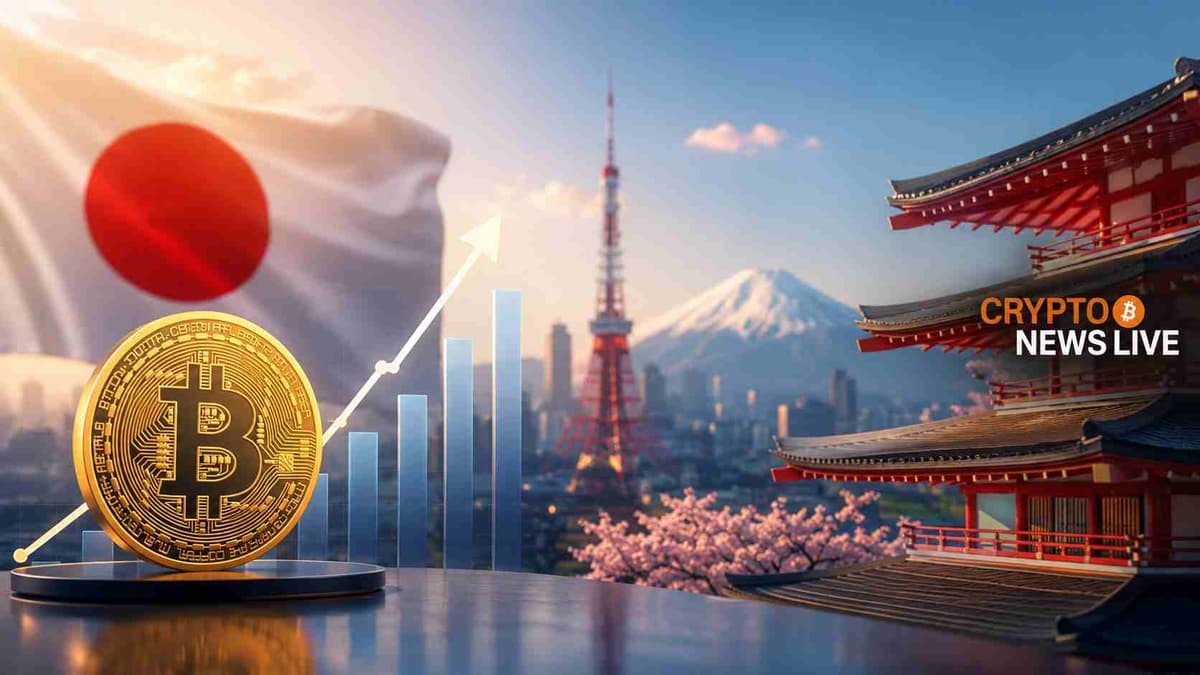
Japan’s two largest online brokerages are not just opening a door. They are changing the floor underneath it.
SBI Securities and Rakuten Securities confirmed plans to develop and sell cryptocurrency investment trusts, built entirely in-house, covering everything from product design through to distribution. The announcement came alongside a separate government move that could cut the tax rate on crypto gains from a maximum of 55% down to 20%.
The Tax Number Nobody Led With
That figure is not background noise. It is the actual force behind the institutional stampede.
Under Japan’s current tax structure, gains from cryptocurrency sales are classified as miscellaneous income. A high-earning investor hands over more than half of their returns to the government. Japan’s cabinet approved a bill on April 10 to amend the law, reclassifying crypto under the Financial Instruments and Exchange Act, putting it on the same footing as stocks and bonds. If passed in the current parliamentary session, the law takes effect in fiscal 2027.
For a retail Bitcoin holder in Nairobi watching which jurisdiction gets this right first, the Japanese model is worth tracking closely.
SBI Securities plans to distribute products developed by group company SBI Global Asset Management, spanning exchange-traded funds and investment trusts tied to Bitcoin and Ethereum, with the group handling the full chain internally. Rakuten Securities is building its own line through Rakuten Investment Management, designed for trading directly through smartphone apps.
Thirteen Firms Waiting at the Gate
Nikkei surveyed 18 major securities companies on their intentions. Beyond SBI and Rakuten, 11 firms said they would enter the market once regulations are finalised. That list includes Nomura Securities, Daiwa Securities, SMBC Nikko Securities, Mizuho Securities, Mitsubishi UFJ Morgan Stanley Securities, Matsui Securities, Monex, Okasan Securities, Tokai Tokyo Securities, Mitsubishi UFJ eSmart Securities, and IwaiCosmo Securities.
Nomura and Daiwa have already announced in-house development plans. SMBC Group formed a cross-division task force specifically to study the space. Asset Management One, under Mizuho Financial Group, has started early-stage exploration.
That is nearly the entire Japanese financial establishment moving in one direction at the same time.
The products work by giving retail investors crypto exposure without requiring a separate exchange account or a digital wallet. Until now, buying crypto in Japan meant navigating an exchange signup or setting up private key management. Investment trusts sit inside existing brokerage accounts, the same accounts already used for stocks and bonds. As of the end of April, global cryptocurrency market capitalisation stood at $2.55 trillion. Bitcoin ETFs have traded in the U.S. since 2024, with similar products available in Canada, Hong Kong and Australia.
What the FSA Timeline Actually Says
Japan’s Financial Services Agency is moving to revise the enforcement order of the Investment Trust Act by 2028. That revision formally adds cryptocurrencies to the list of specified assets that investment trusts can legally hold.
The FSA is also expected to tighten custody requirements. Trust banks and institutions handling crypto in investment operations will face mandatory management standards under the proposed rules. Stricter controls on exchanges to prevent unauthorised outflows are also part of the package.
Authorities may strengthen tax incentives and investor protection measures beyond the headline rate cut, per the Nikkei report.
The question for investors sitting outside Japan is simpler than the regulatory language suggests. When a country’s largest brokerages build crypto products from scratch and its government simultaneously cuts crypto tax rates by more than half, the policy direction is not ambiguous.