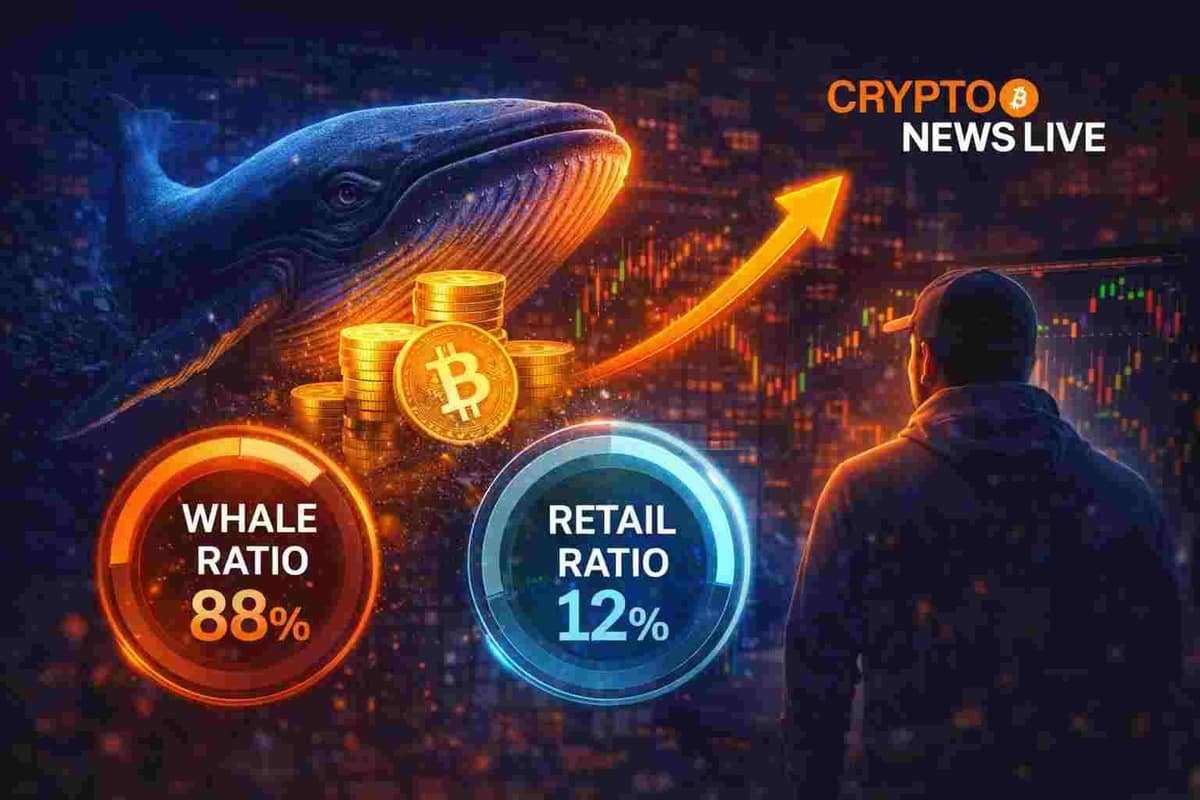
Bitcoin whale activity on exchanges has surged to levels not recorded in six years. The exchange whale ratio, which measures how much of the BTC flowing into exchanges originates from large holders versus smaller ones, is flashing readings that have not appeared since 2019.
CryptoQuant data shows the metric is now at its highest level in six years, with retail investor participation sitting at corresponding lows. The divergence between the two groups is sharp and historically uncommon.
Whales In, Retail Out
According to CryptoQuant, when the exchange whale ratio climbs to peak levels, it has consistently marked the start of an uptrend rather than a continuation of selling pressure.
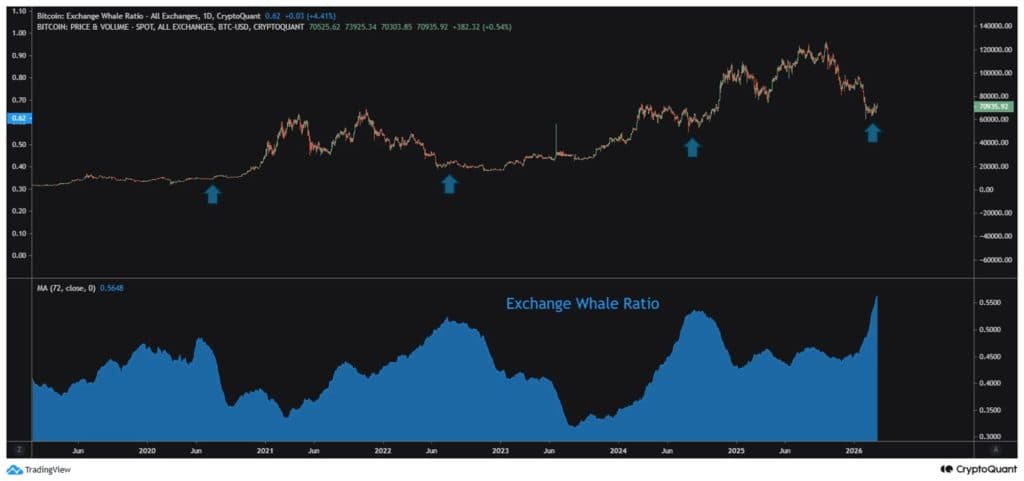
The platform’s on-chain read is direct:
“Whales buy at low prices and sell at high. Conversely, retail investors buy at high prices and sell at low. When the exchange whale ratio increases, it marks a short-term bottom.”
On X, CryptosR_Us pointed to the same setup, noting in a post that the whale ratio just hit its highest reading in six years while retail activity sits near cycle lows and BTC trades around $70K following a sharp drawdown. According to CryptosR_Us on X, previous cycles produced comparable conditions near local bottoms, before the next leg higher kicked in.
The pattern holds a specific logic. Large holders sending BTC to exchanges at elevated ratio levels suggests positioning rather than panic. Retail stepping back removes selling pressure from the equation entirely.
What the Data Is Actually Saying
CryptoQuant’s on-chain indicators are pointing toward the current level as a bottom zone. Their reading states the ratio of retail investors is at its lowest point over the past six years, while whales are accumulating at a pronounced pace. Both metrics arriving at extremes simultaneously is the condition their model flags as a potential uptrend trigger.
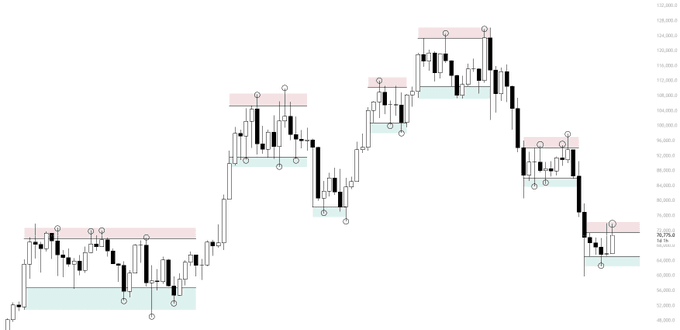
KillaXBT, posting on X, offered a broader trading context around the same period. According to KillaXBT on X, the past two years of BTC price action have been largely mechanical, driven by textbook ranges with corrections and impulsive moves typically lasting only two to three weeks. That framing puts the current drawdown inside a familiar structural pattern rather than outside one.
Still, a high whale ratio does not guarantee direction. It flags positioning. What those large holders do next determines whether the on-chain signal plays out.
BTC’s price at the time of these readings sits near $70K, down from prior highs. The whale ratio and retail divergence now sit at levels the market has not seen since before the 2019-to-2021 cycle began in earnest.