Key Takeaways:
- Courts can now seize Bitcoin and digital assets tied to organized crime in Brazil under Lei No. 15.358.
- Gang leaders face 20 to 40 years with no bail, no parole, and mandatory max-security imprisonment.
- A national crime database must be built within 180 days, with state integration tied to federal funds.
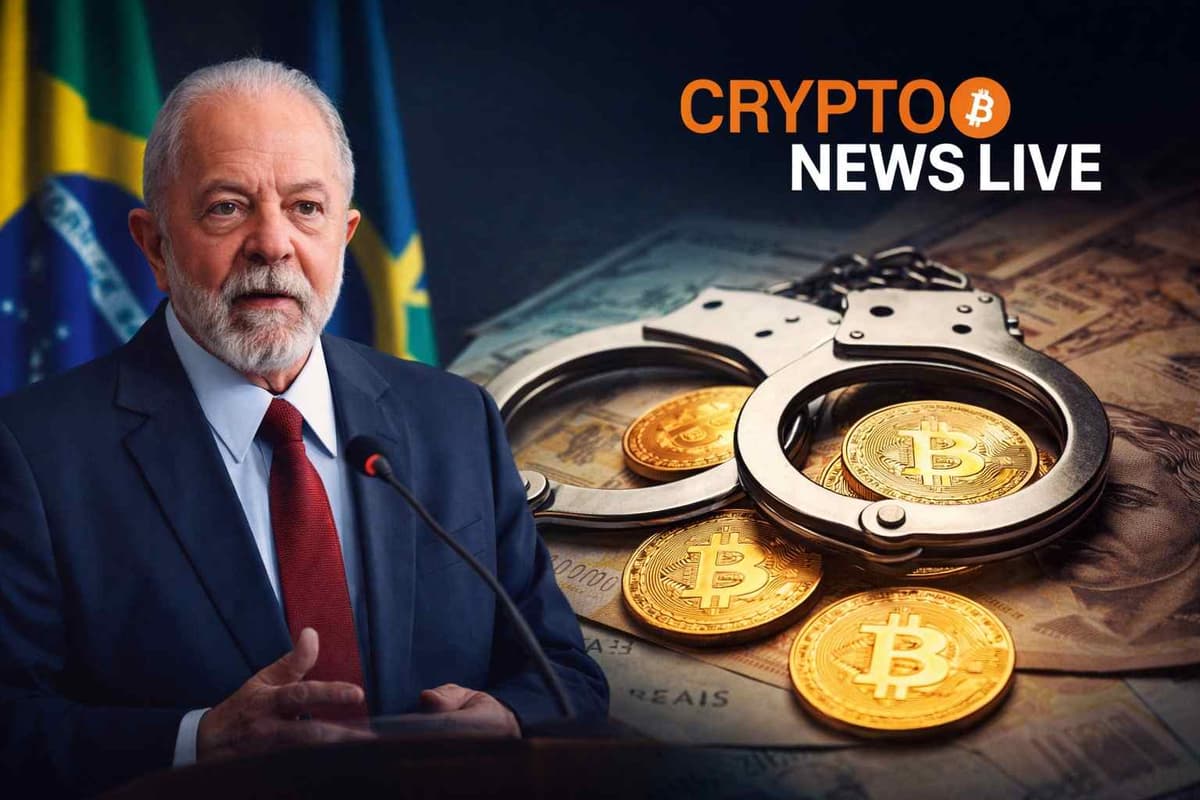
President Luiz Inácio Lula da Silva signed Lei No. 15.358 into law on March 24. The legislation establishes Brazil’s new legal framework against organized crime, covering ultraviolent criminal groups, paramilitaries, and private militias. It was submitted to Congress in November 2025 and cleared both chambers by February 24 before landing on Lula’s desk.
The law draws a hard line around what prosecutors can now reach. Courts may order the seizure, freezing, or confiscation of digital and virtual assets, Bitcoin included, where there is sufficient evidence linking them to serious criminal conduct. Funds recovered go directly toward public security.
Jail Terms, No Bail, No Parole for Gang Bosses
Sentences for the core offenses run from 20 to 40 years. Gang leaders who direct operations, even without personally carrying out the acts, face the upper end of that range. No amnesty. No bail. No conditional release. The official Planalto press release confirmed leaders will serve time only in maximum-security federal prisons.
Repeat offenders convicted of heinous crimes must complete 85% of their sentence before any review. For first offenders in that category, the floor sits at 70%. Those running collective commands in violent criminal factions need to reach 75% before anything is considered.
The statute defines a criminal faction as any group of three or more people using violence, serious threats, or coercion to hold territorial or social control. Attacking critical infrastructure, blocking police operations with barricades, seizing transport, cutting government data systems. All of it covered.
Bitcoin, Crypto Platforms, and the Asset Freeze Toolbox
The Bitcoin seizure provision sits inside a broader package of financial chokehold measures. Courts can block access to payment systems, Pix transactions, and operations on crypto asset brokerages without prior notice to the target. The law applies delayed contradiction rights, meaning the suspect gets to contest after the freeze, not before.
Justice Minister Wellington Lima framed it plainly. The law, he said, was built around attacking the financial top of criminal structures with tools that match the complexity those organizations have built up. The focus, he added, is on the command layers, not the foot soldiers.
Proceeds from asset liquidations flow to state or federal public security funds, depending on which police force ran the investigation. Federal Police cases route proceeds to the National Public Security Fund. Joint operations split the proceeds evenly.
A National Crime Database and Cross-Border Reach
One piece that got less attention: the law creates a National Database of Ultraviolent Criminal Organizations. States must build interoperable local databases within 180 days. Failure to integrate cuts them off from federal security transfer funds.
The registry entry alone carries administrative weight. A person or company listed is presumed connected to a criminal organization for purposes of data sharing, access restrictions, and preventive security measures. That presumption sticks unless actively challenged.
The law also formally recognizes Integrated Task Forces for Fighting Organized Crime, known as FICCOs, as a legal structure. These bring federal and state law enforcement under a shared operational frame, with court orders processed under secrecy rules and communications restricted to essential personnel.
International cooperation gets cleaner too. When crimes show transnational links, the Federal Police can pursue cooperation agreements with foreign counterparts under existing treaties and reciprocity principles. Asset recovery abroad is now explicitly part of the mandate.
Two Vetoes and What They Reveal
Lula applied two vetoes before signing. One clause would have exposed people outside criminal organizations to the same penalties as confirmed members, an overlap with existing Penal Code provisions the presidency described as creating legal insecurity and double liability.
The second veto blocked states and the Federal District from receiving a share of federal asset forfeitures. The current framework routes all forfeiture proceeds exclusively to the Union. Adding state recipients, the veto explanation held, would cut federal security fund revenue at a moment when demand for those resources is rising.
The law is named in honor of Raul Jungmann, a former defense and public security minister. It amends the Penal Code, the Code of Criminal Procedure, the Heinous Crimes Law, the Prison Execution Law, and several other statutes simultaneously.