Ethereum short squeeze conditions are building fast. ETH has gained more than 30% from its February 6 low, and the bears are still doubling down.
Funding rates on Binance have stayed persistently negative since late January. The monthly average now sits at -0.0018, a figure that CryptoQuant contributor Darkfost flagged on X as comparable to only one prior stretch — November 2022, when FTX collapsed and the last bear market bottomed out.
The altcoin market didn’t escape the earlier downturn either. TOTAL2, which tracks total altcoin market cap excluding Bitcoin and stablecoins, fell more than 51% from peak. ETH itself dropped around 65% from its last high before the recovery began.
Bears Keep Paying Despite the Rebound
What makes the current setup unusual is the persistence of that bearish conviction through a rising price environment.
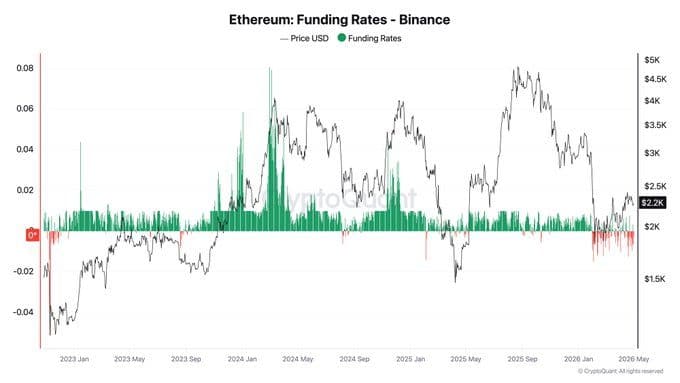
As Darkfost noted on X, despite ETH climbing more than 30% above its February low, the majority of traders on Binance remain positioned for a correction. Funding rates dropping below -0.01% — the level now reached — are relatively rare. They point to a large buildup of short positions held by traders who still don’t believe the rebound is real.
“Observing such negative levels, with funding rates dropping below -0.01%, is relatively rare and indicates a significant buildup of short positions while investors remain in disbelief,” Darkfost wrote on X. “When this level of consensus forms, it is not uncommon for the market to move against the majority.”
The irony is mechanical. Negative funding means shorts are paying longs to hold their positions, according to Binance’s own published rate definitions. The longer this continues into a rally, the more costly those short bets become.
Liquidations Already Forcing Bears Out
The squeeze isn’t theoretical anymore. Short positions worth more than $3 million were liquidated twice within a single hour on Binance, Darkfost reported on X. That kind of forced exit is already pushing price higher.
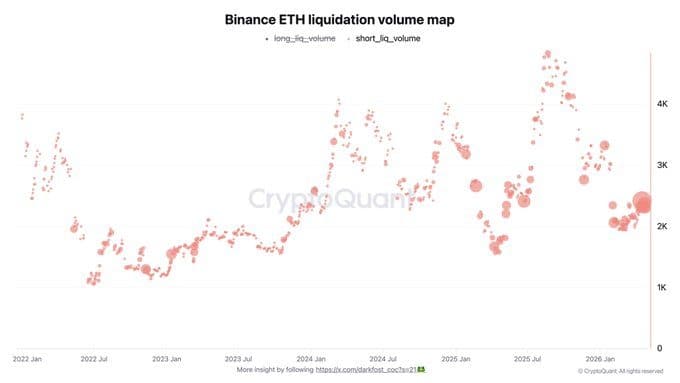
Binance ETH open interest added roughly 350,000 ETH since February, according to the same analysis — a 37% share of the market, now worth over $1 billion. The positioning is overwhelmingly short even as ETH trades up.
The FTX Parallel That Matters
The November 2022 comparison carries weight here. That period marked both the FTX collapse and the terminal phase of the previous bear market. Funding at those levels then turned out to be a contrarian signal of the highest order.
Today’s environment isn’t a replay of FTX, but the funding dynamic mirrors it closely. A monthly average of -0.0018 sitting alongside a price that has already recovered more than 30% creates exactly the kind of misalignment that ends with short sellers capitulating in waves.
Darkfost on X put it plainly: markets rarely reward strong consensus among bears. Rising short liquidation volumes are already confirming that pattern is forming.
What Happens Next
Funding rates were beginning to tick toward +0.01% at the time of writing, Darkfost noted, though data for the full day wasn’t complete. If that shift holds, it would signal a change in market structure — traders starting to follow the trend rather than fight it.
Short liquidations, if they accelerate, become their own buying pressure. Each forced exit adds incremental demand, pushing price into the next cluster of exposed positions. That cascading effect is what turns a rebound into a proper squeeze.
ETH was trading at $2,318 at the time Darkfost published the analysis on X. The altcoin market, still well below its prior highs, is watching the same dynamic from a distance.