Anton Astafiev, CTO at Near One, put it plainly in a May 6 blog post. The blockchain industry assumed it had time. It does not. Things that looked years away have landed in months, and the NEAR Protocol post-quantum push is the first serious Layer-1 response to that reality.
The Near One team is adding FIPS-204 (ML-DSA) — a lattice-based signature scheme NIST formally standardized in August 2024 — as NEAR’s first post-quantum signing option. Testnet launch is planned before the end of Q2 2026. Once live, any NEAR account holder runs one transaction and their keys are rotated. Quantum-safe.
That sounds simple. Getting the rest of the stack there is not.
One Transaction. Every Other Chain Has No Equivalent Path
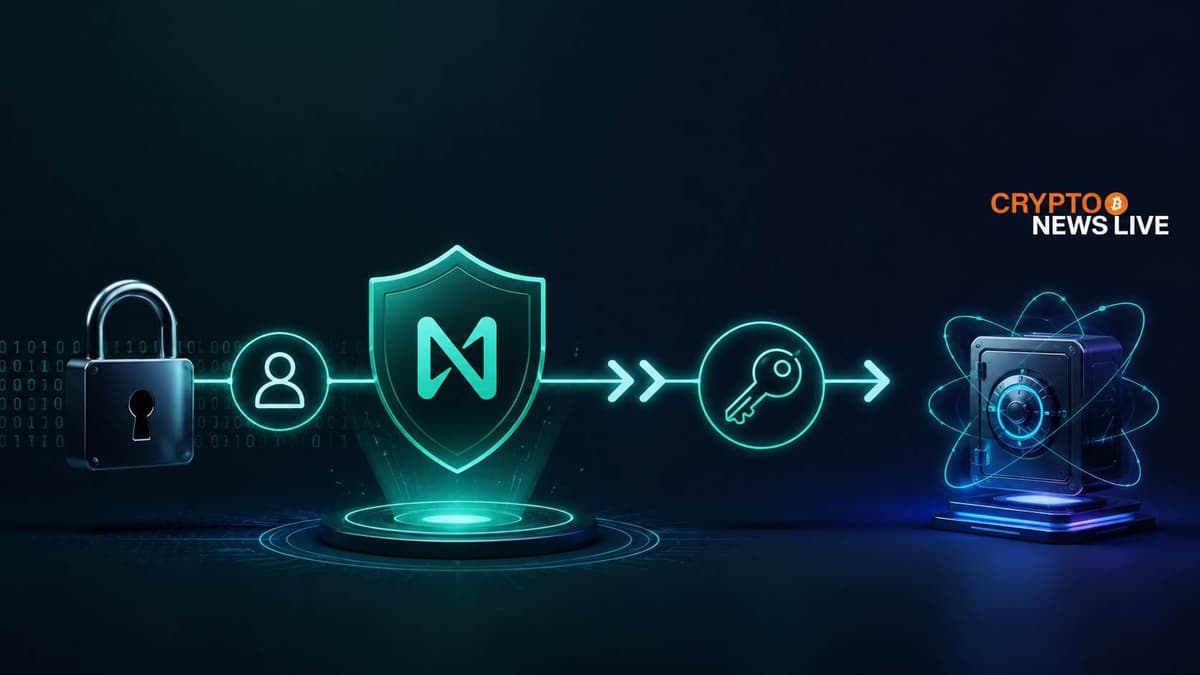
Bitcoin and Ethereum addresses are built directly on top of cryptographic keypairs that quantum computers could eventually break. There is no clean migration route. NEAR Protocol stated on X that NEAR’s account model was designed differently from the start — accounts are decoupled from cryptography and controlled through rotatable access keys, not locked to a single keypair.
That architectural decision, made at NEAR’s founding, is now a structural advantage. Rotating to a quantum-safe scheme on NEAR is a user-level action. On Bitcoin or Ethereum it would require a hard fork or emergency protocol-level response.
NEAR currently defaults to EdDSA (Ed25519) and also supports ECDSA (secp256k1). Neither is quantum-safe. Adding a third scheme is straightforward by design — the protocol was built expecting cryptography to change.
Illia Polosukhin, co-founder of NEAR, confirmed the timeline and the thinking behind it. As @ilblackdragon posted on X:
“We originally built the protocol with the expectation cryptography will need to change. NEAR allows multiple signing schemes by design and users will be able to use whichever one they prefer.”
Hardware Wallets Are the Problem Nobody Has Fixed Yet
Adding FIPS-204 at the protocol level is the easier half of the work. The harder part is everything downstream — wallets, APIs, hardware devices, user workflows. ML-DSA signatures run roughly 2,400 bytes. A public key sits around 1,300 bytes. An ECDSA signature on secp256k1 is about 71 bytes. The size difference alone forces every part of the stack to adapt.
Hardware wallets are the most exposed layer. Today’s devices — including Ledger — do not support quantum-safe signing at all. Near One confirmed it is already working with both software and hardware wallet builders to align on post-quantum plans. For holders who use cold storage as their primary security layer, this gap is the most immediate risk, not some future abstraction.
It may not even be physically possible for all existing hardware wallets to support quantum-safe signing. The Near One team flagged this directly and said the goal is to work with manufacturers to bring new solutions to market before the problem becomes a crisis.
As NEAR Protocol noted on X, unless new signing endpoints and APIs are made available to wallet builders, account owners will not actually be able to use quantum-safe schemes even after the protocol supports them.
Chain Signatures, 35 Chains, and a Zero-Knowledge Fallback
NEAR also supports threshold signatures across 35-plus external chains via its Chain Signatures MPC network. The Defuse team is building quantum-safe Chain Signatures for NEAR Intents users regardless of which chain they come from. If competing chains are slow to adopt post-quantum cryptography, NEAR’s infrastructure can serve as a fallback environment for users across ecosystems.
There is also a separate research thread running in parallel. The Near One team is exploring a zero-knowledge proof mechanism. The logic runs like this: a hashing step sits between a seed phrase and its derived private key, and that hashing step is not broken by quantum computing. So a protocol facing a quantum-capable attacker could block standard transactions as a precaution but still allow users to prove ownership by demonstrating knowledge of the original seed phrase through a ZK proof, without exposing the keys themselves.
That fallback matters. When a quantum computer arrives, protocols face a binary choice — block all assets or enter a situation where ownership cannot be verified. The ZK approach creates a third option.
Near One said deeper technical updates will follow at blog.nearone.org. The Defuse team will separately publish progress on Chain Signatures and NEAR Intents. The broader message from the team is that the rest of the blockchain industry needs to start preparing now. Not after the quantum computer exists. Now.