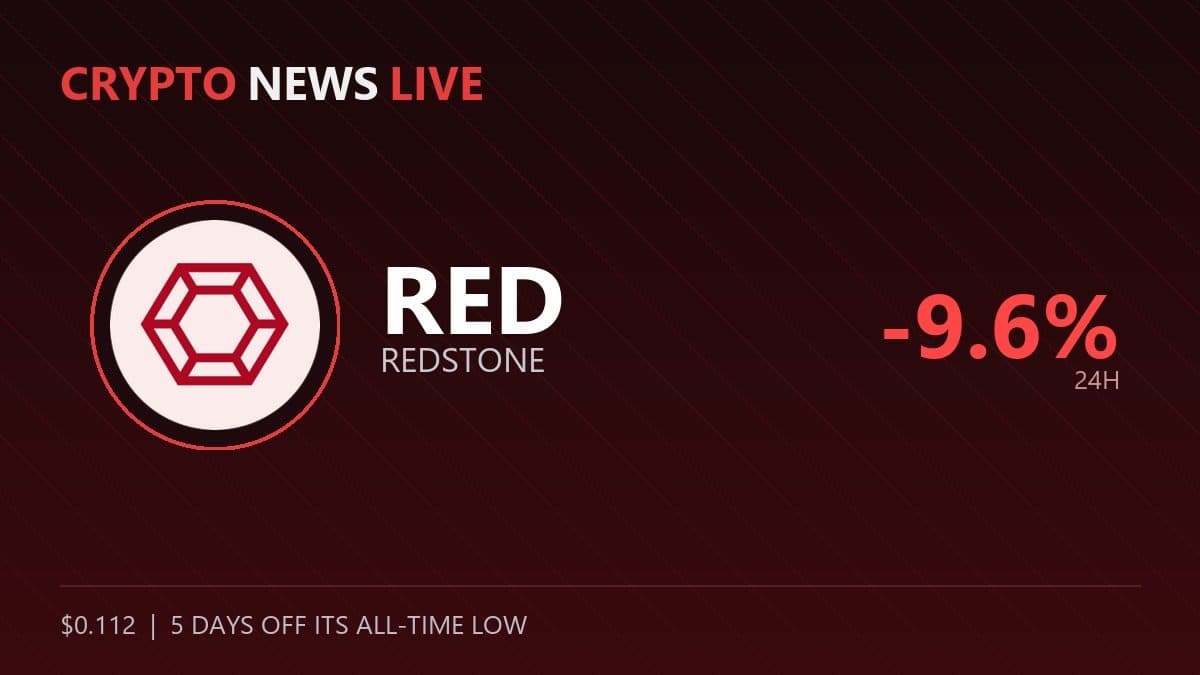
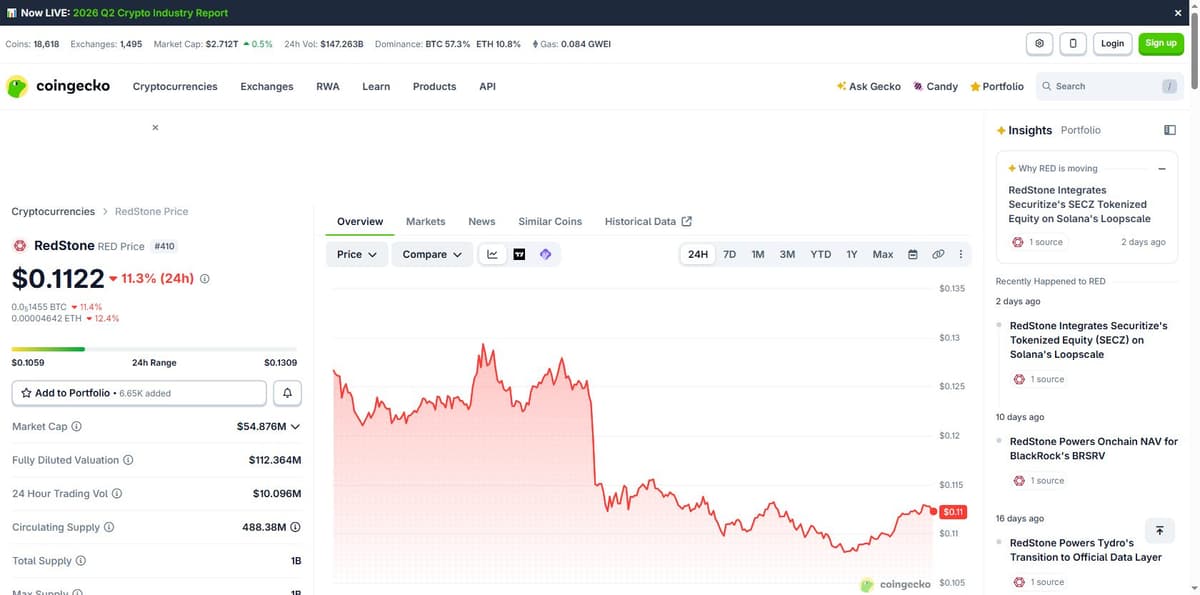
Five days ago, RedStone‘s RED token bottomed at $0.0824, a fresh all-time low. It has spent the days since clawing back more than half of that loss, only to hand a chunk of the recovery straight back today.
RED traded near $0.112 on Saturday. Down about 9.6% in 24 hours. Less than a day earlier it had touched $0.128, a four-day high, before the reversal started.
The rally that got RED there was real. Securitize, the tokenization firm that took its own shares public on the NYSE under the ticker SECZ on July 2, chose RedStone as the price feed wiring that stock into Loopscale, a Solana lending market, on August 20. Both RedStone’s own blog post and a matching thread from its X account carry the same timestamp.
A NYSE Stock Enters DeFi Lending
The integration is not cosmetic. RedStone’s end-of-day price feed lets eligible SECZ holders post the tokenized stock as collateral and borrow stablecoins against it at a fixed rate, the same NAV-marking model traditional finance already uses for margin desks. Loopscale screens every price update through what it calls a BEAM adapter, checking staleness and confidence before a number ever touches anyone’s loan health. The lending protocol has grown to roughly 92.5 million dollars in total value locked since its April 2025 launch, with $53.6M of that already out in active loans, per the same blog post.
Tokenization has grown more than 500% since January 2025 by RedStone’s own count, pushing over $38 billion of real-world assets onchain. Only about 10 percent of that, roughly $3B, actually gets used inside DeFi. That gap between issuing a tokenized asset and making it useful is exactly what RedStone is positioning as its territory.
The Charts Were Already Fading
Coinglass’s own order flow data on Binance’s REDUSDT market tells an uncomfortable second story. Cumulative volume delta, a running tally of whether takers are net buying or net selling, had been sliding negative since August 18, even as the price climbed toward its August 21 peak. Open interest roughly doubled over the same stretch, then started unwinding right as the top printed.
Selling pressure was building underneath the rally before the rally had even finished.
A short squeeze likely lit the first leg. Funding on Binance’s RED perpetual flipped sharply negative around August 18, the signature of shorts getting run over off the fresh low. By Saturday it had drifted back near flat, with longs and shorts sitting close to even at 51.93% to 48.07%.
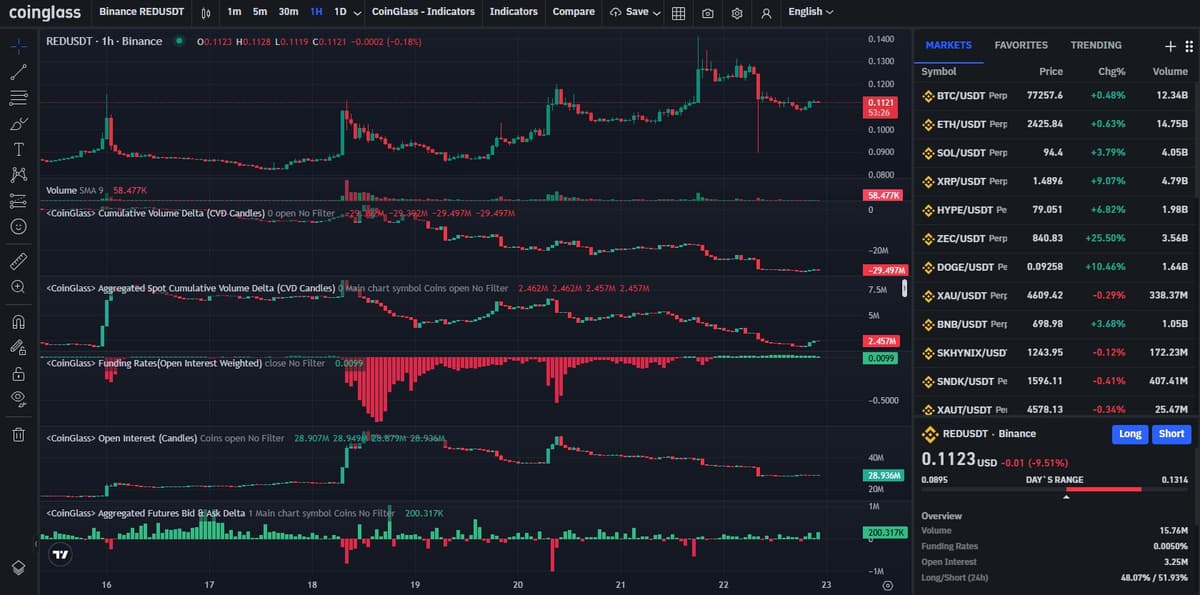
Bitcoin was flat and Ether was up under a percent the same day RED fell 9.6%, which rules out a market-wide selloff as the cause. Other altcoins were still ripping. Zcash gained close to 25%, Polygon’s POL rose 23%, Dash added nearly 20%, all in the same 24-hour window CoinGecko tracked. RED’s own slide sits apart from that, a token-specific unwind rather than a broad risk-off move.
Five Wallets, Almost Half the Coin
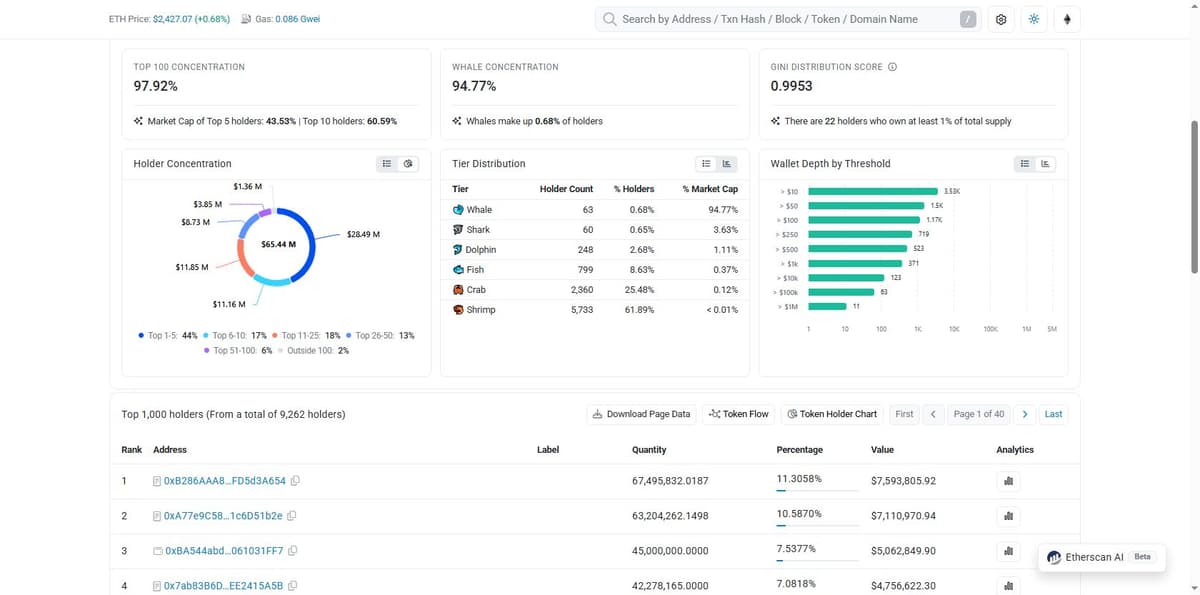
Etherscan’s holder data on RED’s Ethereum contract shows the top five wallets controlling 43.53% of supply, the top ten holding 60.59%, and a Gini score of 0.9953 out of a possible 1. None of the four largest wallets carries an exchange or vesting label CryptoNewsLive could find, which means the concentration sits with unidentified addresses rather than known custodians. It is a standing risk rather than something that moved today’s price, but it shapes how hard a coordinated exit could hit the order books RED actually trades on.
Where RED Actually Trades
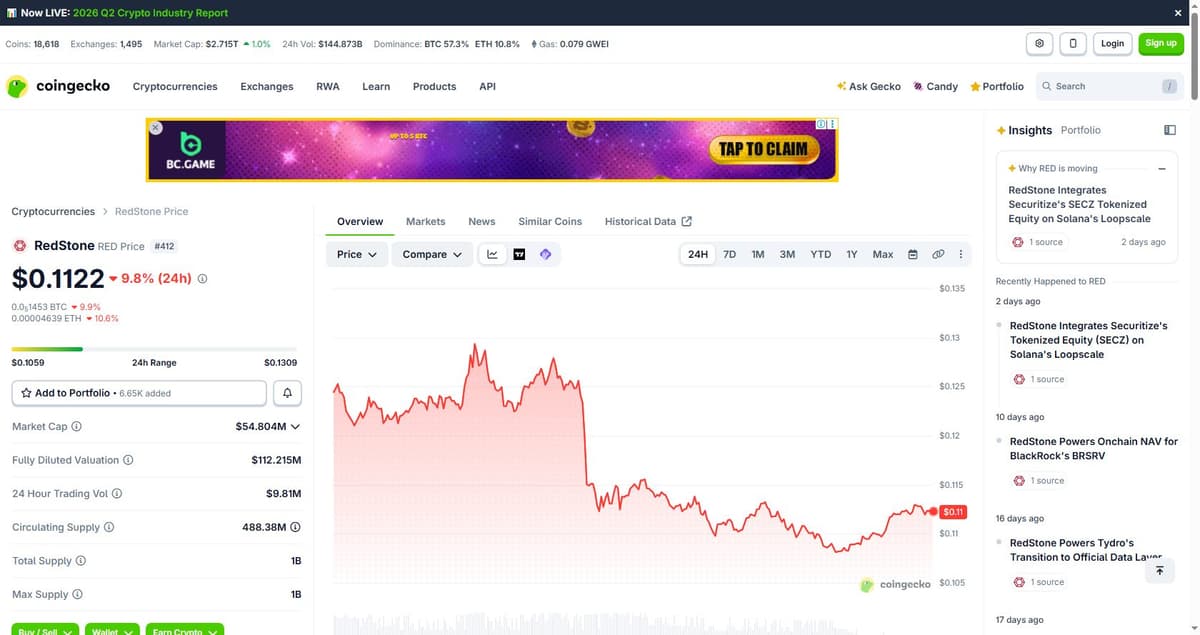
Almost all of that trading happens on centralized exchanges. Binance alone cleared 2.5 million dollars of RED volume in the last 24 hours, with Coinbase, Gate, Bybit and more than 45 other venues splitting the rest; onchain liquidity across every DEX pool barely registers next to it. Binance, Coinbase and eight more major exchanges list RED with real volume behind it, the kind of built-in audience a genuinely obscure token never gets.
The Business Keeps Shipping
RedStone’s blog has posted a new integration roughly every week this month. An onchain NAV feed for Neuberger Berman’s tokenized fund four days ago. A data layer for BlackRock’s BRSRV ten days ago. A commodity-trading partnership with Temple Digital Group in early August. None of that shipping cadence shows up in today’s price, which is either the market underpricing real business traction or a reminder that oracle tokens rarely trade on fundamentals in the short run.
RED is still trading 87.9% below the $0.9325 high it set in March last year, five days removed from the cheapest price it has ever seen. Whether Saturday’s pullback is the start of a longer fade or just the market exhaling after a real piece of news gets decided by whether Loopscale’s SECZ market actually draws borrowers, not by anything RedStone’s own blog announces next.